What is the difference between Sunni and Shia Islam?
Question 1109
Question
What is the difference between Sunni and Shia Muslims in history, belief, and practice, and do they recognize each other as Muslims?
Summary of answer
Sunni and Shia Muslims share faith in one God, the Prophet Muhammad ﷺ as the final messenger, the same Quran, and the five daily prayers, Ramadan, zakat, and hajj. They differ over who should have led the community after the Prophet ﷺ, and on the authority of the Imams from his family. Al-Azhar's Shaykh Mahmud Shaltut recognized Jaʿfari Shia law, and the Amman Message affirmed that followers of eight Sunni, Shia, and Ibadi schools are all Muslims.
﴿إِنَّمَا ٱلۡمُؤۡمِنُونَ إِخۡوَةٞ فَأَصۡلِحُواْ بَيۡنَ أَخَوَيۡكُمۡۚ وَٱتَّقُواْ ٱللَّهَ لَعَلَّكُمۡ تُرۡحَمُونَ﴾
The believers are brothers and sisters, so make peace between your brothers, and be mindful of Allah, so that you may receive mercy.
Answer
الحمد لله Praise be to Allah.
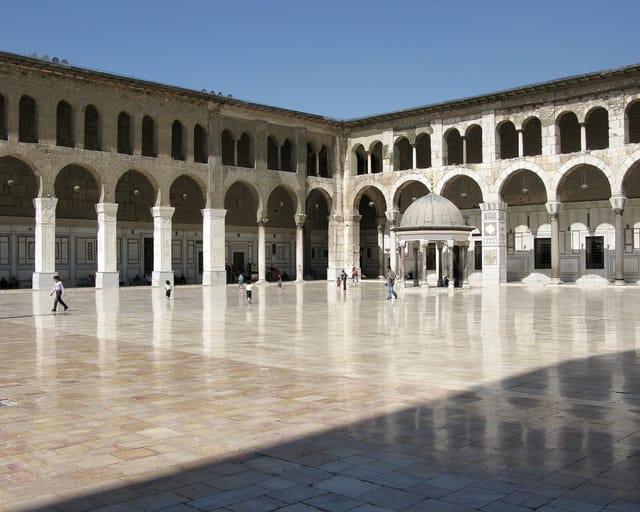
Sunni and Shia Muslims pray toward the same Kaʿba, recite the same Quran, and send blessings on the same Prophet ﷺ in every prayer. The difference between Sunni and Shia Islam began with a question of leadership after the Prophet ﷺ died in 632, and over the centuries it grew into two traditions of law, theology, and devotion. Sunni Muslims are the large majority; Shia Muslims make up roughly 10 to 13 percent of the world’s Muslims, and form the majority in Iran, Iraq, Azerbaijan, and Bahrain. The great scholars of both have recognized one another as Muslims, and the Quran calls all believers one family.
How did the Sunni and Shia split begin?
When the Prophet ﷺ died in Medina, the Companions gathered and chose his closest friend, Abu Bakr, as the first caliph (khalīfa, successor in leading the community). Those who accepted this choice, and the later caliphs Umar, Uthman, and Ali, became known as the people of the Sunna and the community (ahl al-sunna wa-l-jamāʿa).
Another group held that the Prophet ﷺ had already named his cousin and son-in-law, Ali ibn Abi Talib, as his successor. They were called the party of Ali (shīʿat ʿAlī), and in time the Shia. They point above all to a sermon the Prophet ﷺ gave at the pool of Khumm on his way home from his final pilgrimage:
«مَنْ كُنْتُ مَوْلاَهُ فَعَلِيٌّ مَوْلاَهُ»
“Whoever I am the mawlā of, Ali is his mawlā.”
Sunni scholars also narrate this hadith, which al-Albani graded sahih. They understand mawlā as “beloved friend and helper”, while Shia scholars understand it as “guardian and leader”. Ali became the fourth caliph in 656. In 680, his son al-Husayn, the Prophet’s grandson, was killed with his family and companions at Karbala, in Iraq, on the tenth of Muharram. Shia Muslims mourn him every year on that day, ʿĀshūrāʾ, and Sunni Muslims grieve him too.
What do Sunni and Shia Muslims believe in common?
Nearly everything that makes a person a Muslim is shared. Both believe in the oneness of Allah (tawḥīd), in the prophets and in Muhammad ﷺ as the last of them, in the angels and the revealed books, and in the Day of Judgment. Both pray five daily prayers, fast Ramadan, give zakat, and make the pilgrimage to Mecca. Both love the Prophet’s family (ahl al-bayt): every Sunni prayer asks Allah to bless “Muhammad and the family of Muhammad”. The Quran’s command speaks to both:
وَٱعۡتَصِمُواْ بِحَبۡلِ ٱللَّهِ جَمِيعٗا وَلَا تَفَرَّقُواْ
“Hold fast to the rope of Allah, all of you together, and do not be divided.”
What are the main differences in belief?
The central difference is the imamate (imāma). Twelver Shia Muslims, the largest Shia branch, believe that Allah appointed twelve Imams from the Prophet’s family, beginning with Ali and his sons al-Hasan and al-Husayn, as protected guides of the community. They believe the twelfth Imam, Muhammad al-Mahdi, was hidden by Allah in the ninth century and will return. The Ismailis, led today by the Aga Khan, and the Zaydis of Yemen are the other main Shia branches. Sunni Muslims honor the same members of the Prophet’s family as saints and scholars, and look to the consensus of scholars for religious authority.
The two traditions also differ on the Companions. Sunni Muslims honor all of them; Shia Muslims evaluate some of them critically for how they treated Ali and the Prophet’s daughter Fatima. They have their own hadith collections: Sunnis rely on Bukhari, Muslim, and the other canonical books, and Twelver Shia on four books including al-Kāfī of al-Kulaynī (d. 941). Our answer on whether all hadith are authentic explains how both weigh reports.
How are Sunni and Shia prayers different?
The prayers have the same structure, and the differences are small:
- Hands. Shia Muslims pray with their arms at their sides, as many Maliki Sunnis in North and West Africa do.
- Prostration. Shia Muslims place their forehead on natural earth, often a small tablet of clay (turba).
- Joining prayers. Shia Muslims often pray the noon and afternoon prayers together, and the sunset and night prayers together, so they gather three times a day for five prayers. Sahih Muslim reports that the Prophet ﷺ prayed the noon and afternoon prayers together, and the sunset and night prayers together, when he was neither traveling nor in danger (Sahih Muslim 705a). See Can you combine prayers?
- The call to prayer. The Shia adhan adds “come to the best of deeds” (ḥayya ʿalā khayr al-ʿamal).
Shia law follows the Jaʿfari school, named for Imam Jaʿfar al-Ṣādiq (d. 765), a descendant of the Prophet ﷺ in the fifth generation, through al-Ḥusayn. Abu Hanifa and Malik both narrated knowledge from him, and Malik included his reports in al-Muwaṭṭaʾ. Shia Muslims also pay khums, a fifth of yearly surplus income, alongside zakat.
Do Sunni and Shia scholars recognize each other?
Yes. In the twentieth century, Shaykh Mahmud Shaltut, Grand Imam of al-Azhar (1958–1963), issued a fatwa that Islam requires no one to follow a particular school, and that the Jaʿfari school may be followed in worship like the Sunni schools. He helped found the Cairo House of Rapprochement between the Schools (Dār al-Taqrīb), where Sunni and Shia scholars worked side by side.
In 2004, King Abdullah II of Jordan issued the Amman Message, and in July 2005 an international conference of scholars in Amman confirmed its three points. It recognized eight schools of law (the Hanafi, Maliki, Shafiʿi, Hanbali, Jaʿfari, Zaydi, Ibadi, and Zahiri), declared that their followers are Muslims, and forbade declaring any of them an unbeliever (takfīr). Hundreds of scholars from al-Azhar, Qom, Najaf, and every part of the Muslim world endorsed it.
Every year at the hajj, Sunni and Shia pilgrims circle the Kaʿba together and stand together at ʿArafa. Families across Iraq, Lebanon, and Pakistan join Sunni and Shia in marriage (Can Sunni and Shia marry?). Many Sunni Muslims also walk the Sufi paths that trace their chains of teachers back to Ali (What is Sufism?).
A closing duʿāʾ
The Quran teaches every believer a prayer for those who came before in faith, and for a heart free of rancor toward anyone who believes:
رَبَّنَا ٱغۡفِرۡ لَنَا وَلِإِخۡوَٰنِنَا ٱلَّذِينَ سَبَقُونَا بِٱلۡإِيمَٰنِ وَلَا تَجۡعَلۡ فِي قُلُوبِنَا غِلّٗا لِّلَّذِينَ ءَامَنُواْ رَبَّنَآ إِنَّكَ رَءُوفٞ رَّحِيمٌ
“Our Lord, forgive us and our brothers and sisters who came before us in faith, and leave no rancor in our hearts toward those who believe. Our Lord, You are Most Kind, Most Merciful.”
May Allah unite the hearts of the Sunni and the Shia in love for His Prophet ﷺ and his family, and make the believers one family once more.
And Allah knows best. والله أعلم
Frequently asked questions
Are Shia Muslims?
Yes. The Amman Message, endorsed by hundreds of scholars from across the Muslim world, affirmed that followers of the Jaʿfari and Zaydi Shia schools are Muslims and that declaring them unbelievers is forbidden.
Can a Sunni pray behind a Shia imam, or a Shia behind a Sunni?
Yes. Every Muslim's prayer faces the same qibla with the same words of the Quran. During hajj, Shia pilgrims pray behind the Sunni imams of Mecca and Medina, and many scholars on both sides affirm such shared prayer.
Do Sunni and Shia Muslims have the same Quran?
Yes. Sunni and Shia Muslims recite the same Quran in the same order, and the copies printed in Tehran and Cairo match word for word.
Why do Shia Muslims pray three times a day?
Shia Muslims pray all five prayers, and they often join the noon and afternoon prayers and the sunset and night prayers. Sahih Muslim reports that the Prophet ﷺ joined prayers in Medina when he was neither traveling nor in danger (705a).
Can Sunni and Shia Muslims marry each other?
Yes. Both are Muslims, and marriages between Sunni and Shia families have been common for centuries in Iraq, Lebanon, Pakistan, and elsewhere.
Related questions
Sources
- The Amman Message and its Three Points (2004–2006)
- Mahmud Shaltut, fatwa on following the Jaʿfari school (al-Azhar)
- Pew Research Center, Sunni and Shia Muslims (2011)
- Jamiʿ al-Tirmidhi 3713 (the hadith of Ghadir Khumm)
- Wilferd Madelung, The Succession to Muhammad: A Study of the Early Caliphate (Cambridge University Press, 1997)
Image: Vyacheslav Argenberg, Courtyard of the Umayyad Mosque, Damascus, 2008. CC BY 4.0, via Wikimedia Commons.. Image credits
