Do non-Muslims go to hell?
Question 1031
Question
Do people of other religions, or people who never heard of Islam, go to hell after death?
Summary of answer
Non-Muslims are not damned for being non-Muslim. The Quran promises that Jews, Christians, Sabians and believers who trust in Allah and the Last Day and do good will have their reward (2:62, 5:69), and that Allah punishes no one before a messenger has truly reached them (17:15). Al-Ghazali taught that most people of other faiths fall within Allah's mercy, whose reach outstrips His wrath.
Answer
الحمد لله Praise be to Allah.
Many Muslims ask this question about the people they love most: a Christian grandmother, a Hindu best friend, a neighbor who has never opened a Quran. The answer of the Quran is full of hope. Non-Muslims do not go to hell for being non-Muslim. Allah promises reward to sincere believers among the Jews, the Christians and others, He punishes no one before His message has truly reached them, and His mercy outstrips His wrath.
What does the Quran say about Jews, Christians and other faiths?
The Quran addresses this question directly, and it does so twice, in almost the same words:
إِنَّ ٱلَّذِينَ ءَامَنُواْ وَٱلَّذِينَ هَادُواْ وَٱلنَّصَٰرَىٰ وَٱلصَّـٰبِـِٔينَ مَنۡ ءَامَنَ بِٱللَّهِ وَٱلۡيَوۡمِ ٱلۡأٓخِرِ وَعَمِلَ صَٰلِحٗا فَلَهُمۡ أَجۡرُهُمۡ عِندَ رَبِّهِمۡ وَلَا خَوۡفٌ عَلَيۡهِمۡ وَلَا هُمۡ يَحۡزَنُونَ
“Those who believe, and those who are Jews, and the Christians, and the Sabians: whoever believes in Allah and the Last Day and does good will have their reward with their Lord. No fear will be on them, and they will not grieve.”
The promise is repeated in Sūrat al-Māʾida (Quran 5:69). The measure in both verses is faith in Allah, faith in the Last Day, and righteous deeds. Sūrat Āl ʿImrān adds that the People of the Book “are not all alike”: among them is a community that recites Allah’s verses through the night, bows down in prayer, commands what is right, and hastens to do good, “and they are among the righteous” (3:113–114). The next verse promises that none of the good they do will be denied them (3:115).
Does Allah punish people the message never reached?
The Quran sets a firm principle of divine justice:
وَمَا كُنَّا مُعَذِّبِينَ حَتَّىٰ نَبۡعَثَ رَسُولٗا
“We never punish until We have sent a messenger.”
Abu Hamid al-Ghazali (d. 1111), the great Shafiʿi jurist and theologian, drew out what this means in his treatise Fayṣal al-Tafriqa (The Decisive Criterion). He divided non-Muslims into three groups. The first never heard the name of Muhammad ﷺ at all, and they are excused. The second heard of him truly, of his character and his signs, and rejected him out of stubbornness: these alone he held to be blameworthy. The third heard his name but only through slander, that he was an impostor and a liar. Al-Ghazali placed this third group with the first, because what reached them was a caricature of the message.
From this he concluded that most of the Byzantine Christians and the Turks of his own day fell within Allah’s mercy. If that was true in al-Ghazali’s day, it applies all the more to people today, who meet Islam mostly through news headlines and the conduct of individual Muslims.
What about the verse “whoever seeks a religion other than Islam”?
Some scholars have read Sūrat Āl ʿImrān (3:85), “Whoever seeks a religion other than islām, it will not be accepted from him,” as closing the door that 2:62 opens, and some early exegetes held that 3:85 abrogated the earlier verse. This is a recognized opinion, and many Muslims hold it with sincerity.
The stronger view keeps both verses in force. The word islām in the Quran means surrender to the one God, the religion the Quran ascribes to Abraham, Moses and Jesus (peace be upon them) and their followers alike (3:52, 2:131–133). A promise from Allah about the reward of believers is a report of His own mercy, and the scholars of uṣūl held that reports of this kind are not abrogated. The Quran also tells us that religious difference is part of Allah’s design:
لِكُلّٖ جَعَلۡنَا مِنكُمۡ شِرۡعَةٗ وَمِنۡهَاجٗاۚ وَلَوۡ شَآءَ ٱللَّهُ لَجَعَلَكُمۡ أُمَّةٗ وَٰحِدَةٗ وَلَٰكِن لِّيَبۡلُوَكُمۡ فِي مَآ ءَاتَىٰكُمۡۖ فَٱسۡتَبِقُواْ ٱلۡخَيۡرَٰتِ
“For each of you We have made a law and a way. Had Allah willed, He would have made you one community, but He tests you through what He has given you. So race one another in doing good.”
What did the classical scholars say about the fate of others?
Mohammad Hassan Khalil’s study Islam and the Fate of Others (Oxford University Press, 2012) traces this question through four of the tradition’s great minds. Al-Ghazali, as we saw, made damnation the exception. Ibn ʿArabi (d. 1240) taught that every path leads to God and that mercy has the last word. Ibn Taymiyya (d. 1328) and his student Ibn al-Qayyim (d. 1350) argued that the fire itself will one day come to an end, a teaching explored in Is hell eternal in Islam?. In the modern era the reformer Muhammad Rashid Rida (d. 1935), in his Quran commentary Tafsīr al-Manār, carried this hope forward; Khalil calls him a cautious universalist.
Behind all of them stands one hadith, which the Prophet ﷺ narrated about the moment of creation:
«إِنَّ اللَّهَ لَمَّا قَضَى الْخَلْقَ كَتَبَ عِنْدَهُ فَوْقَ عَرْشِهِ إِنَّ رَحْمَتِي سَبَقَتْ غَضَبِي»
“When Allah completed creation, He wrote with Him above His Throne: My mercy outstrips My wrath.”
In the version in Sahih Muslim, the words are “My mercy prevails over My wrath” (Sahih Muslim 2751a). A Lord whose mercy outruns His anger judges every soul knowing where and to whom it was born, and what truly reached it.
What does Shia theology say?
Imami Shia scholars reach a similar place. They distinguish the unbeliever who is excused (qāṣir, قاصر), because something outside their control kept them from faith, from the one who is blameworthy (muqaṣṣir, مقصر), who saw the truth clearly and turned from it out of hostility. Ayatollah Murtada Mutahhari (d. 1979), in his book Divine Justice (ʿAdl-i Ilāhī), argued that good deeds done by non-Muslims for the sake of God are rewarded, and he cited Avicenna and Mulla Sadra for the view that most people who have not accepted the truth are excused before Allah.
How should Muslims think about their non-Muslim family and friends?
- Leave judgment to Allah. No human being knows the heart of another or the final state of any soul. “To Allah is your return, all of you, and He will tell you about the things in which you differed” (5:48).
- Love and honor them. The Quran permits and praises kindness and justice toward non-Muslims who live in peace with you (60:8). See Can Muslims be friends with non-Muslims?.
- Pray for them. Make duʿāʾ for their health, their happiness and their guidance as you understand it, and for Allah’s mercy upon them.
- Let your conduct speak. If you hope others will see the beauty of Islam, let them see it in you.
For the Quran’s wider teaching on the People of the Book, see What does the Quran say about Christians and Jews? and Do Muslims and Christians worship the same God?.
A closing word
The question of who goes to hell can make a Muslim anxious for others, and that anxiety is a sign of love. The Quran answers it with the widest promise it could give: “My mercy embraces all things” (7:156). Trust the One who made your friends and your family, who knows their hearts better than you do, and whose love for them is greater than yours (see Does Allah love everyone?). May Allah gather all of us, and all whom we love, under the shade of His mercy.
And Allah knows best. والله أعلم
Frequently asked questions
Will my Christian or Jewish friends go to heaven?
The Quran says that Jews and Christians who believe in Allah and the Last Day and do good will have their reward with their Lord, with no fear upon them (2:62, 5:69). Their final state belongs to Allah, and the Quran's own words give every reason for hope.
What happens to people who never heard of Islam?
Allah does not punish anyone before a messenger has reached them (17:15). Al-Ghazali added that people who heard only a distorted picture of the Prophet ﷺ stand in the same place as those who never heard of him at all.
Can a Muslim say that a particular person is in hell?
No. The fate of every soul is known to Allah alone, and Muslims are taught to leave judgment to Him and to pray for the people they love.
What is the Shia view on the salvation of non-Muslims?
Imami scholars distinguish the unbeliever who is excused (qāṣir) from the one who is blameworthy (muqaṣṣir). Murtada Mutahhari, in his book Divine Justice, held that good deeds done by non-Muslims for the sake of God are rewarded.
Related questions
Sources
- Abu Hamid al-Ghazali, Fayṣal al-Tafriqa bayn al-Islām wa-l-Zandaqa
- Mohammad Hassan Khalil, Islam and the Fate of Others: The Salvation Question (Oxford University Press, 2012)
- Muhammad Rashid Rida, Tafsīr al-Manār
- Murtada Mutahhari, Divine Justice (ʿAdl-i Ilāhī)
- Sahih al-Bukhari 7422
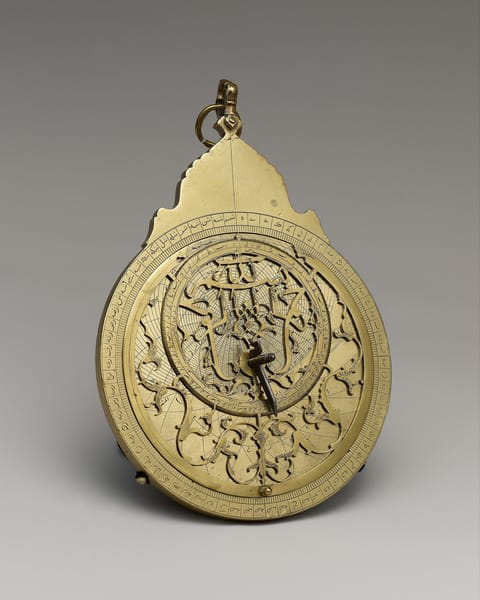
Image: Muhammad Zaman al-Munajjim al-Asturlabi, Planispheric astrolabe, Mashhad, 1654–1655. Metropolitan Museum of Art, New York. CC0, via Wikimedia Commons.. Image credits
