Why did Allah create us?
Question 1039
Question
Why did Allah create human beings, and what is the purpose of our life according to Islam?
Summary of answer
Allah created human beings to know Him and worship Him (51:56), which the early exegete Mujahid explained as "to know Me." Ibn ʿAbbās read Sūrat Hūd (11:119) to mean that Allah created people for mercy and not for punishment, and the Quran names humankind His steward (khalīfa) on the earth (2:30). Allah needs nothing from us; the purpose of our creation is our own good.
Answer
الحمد لله Praise be to Allah.
Why did Allah create us? Every thoughtful person asks it at some point, often at night, often after a loss. The Quran answers in more than one verse, and the answers fit together. Allah created human beings to know Him and worship Him (51:56), to receive His mercy (11:119), and to care for the earth as His stewards (2:30). He created us out of generosity, since He needs nothing, and the life He gave is a gift meant to be lived toward Him.
What does the Quran say about why Allah created humans?
The verse most often quoted on the purpose of life comes in Sūrat al-Dhāriyāt:
وَمَا خَلَقۡتُ ٱلۡجِنَّ وَٱلۡإِنسَ إِلَّا لِيَعۡبُدُونِ
“I created jinn and humankind only so that they would worship Me.”
The word for worship, ʿibāda (عبادة), comes from the same root as ʿabd, servant. In the Quran and Sunnah it reaches far beyond ritual. The Prophet ﷺ said, “Every kindness is a charity” (Sahih al-Bukhari 6021), and the scholars have long taught that earning a living, caring for parents, and raising children become worship when they are done for Allah’s sake.
The early exegete Mujahid ibn Jabr (d. 722), the foremost student of Ibn ʿAbbās, explained “to worship Me” as “to know Me” (li-yaʿrifūn). Al-Baghawi and al-Qurtubi record his reading in their commentaries, and Ibn Kathir reports the same from Ibn Jurayj. Worship and knowledge grow together: a person comes to know Allah by turning to Him, and turns to Him more as they come to know Him.
Does Allah need our worship?
The verse right after closes off a misunderstanding: “I want no provision from them, and I do not want them to feed Me” (51:57). Allah is al-Ghanī, the Self-Sufficient. “O people, you are the ones in need of Allah, and Allah is the Rich, the Praised” (Quran 35:15). In a long hadith qudsi, Allah says:
«يَا عِبَادِي لَوْ أَنَّ أَوَّلَكُمْ وَآخِرَكُمْ وَإِنْسَكُمْ وَجِنَّكُمْ كَانُوا عَلَى أَتْقَى قَلْبِ رَجُلٍ وَاحِدٍ مِنْكُمْ مَا زَادَ ذَلِكَ فِي مُلْكِي شَيْئًا»
“My servants, if the first of you and the last of you, your humans and your jinn, all had the heart of the most God-fearing man among you, it would add nothing to My dominion.”
Worship, then, is for the worshipper. Prayer steadies the heart, fasting frees it from its appetites, and charity widens it. A creature made to know its Maker finds its rest in Him, the way a river finds the sea. The same hadith opens with Allah’s promise to guide, feed, clothe, and forgive anyone who asks.
Did Allah create us out of mercy?
Sūrat Hūd speaks of the differences among people and then says of those who receive Allah’s mercy: “and for that He created them” (وَلِذَٰلِكَ خَلَقَهُمۡ, 11:119). Ibn Kathir (d. 1373) records the explanation of Ibn ʿAbbās (may Allah be pleased with him), through his student ʿIkrima: “He created them for mercy, and He did not create them for punishment.” Mujahid, Qatāda, and al-Ḍaḥḥāk read the verse the same way, and Ṭāwūs said Allah created people “for unity and mercy.” Other exegetes took “that” to refer to people’s differences; the reading of Ibn ʿAbbās follows the mention of mercy that comes right before it.
The Prophet ﷺ described the moment of creation in the same light:
«لَمَّا قَضَى اللَّهُ الْخَلْقَ كَتَبَ فِي كِتَابِهِ، فَهْوَ عِنْدَهُ فَوْقَ الْعَرْشِ إِنَّ رَحْمَتِي غَلَبَتْ غَضَبِي»
“When Allah decreed the creation, He wrote in His Book, which is with Him above the Throne: My mercy prevails over My wrath.”
He also said that Allah made mercy in a hundred parts, kept ninety-nine with Him, and sent one part down to earth, and that from this one part a mare lifts her hoof so as not to hurt her foal (Sahih al-Bukhari 6000). We were created inside that mercy and for the rest of it. More on this in Does Allah love everyone?
What does it mean that humans are Allah’s khalīfa on earth?
Before Adam (peace be upon him) was created, Allah told the angels:
إِنِّي جَاعِلٞ فِي ٱلۡأَرۡضِ خَلِيفَةٗ
“I am placing a steward on the earth.”
The angels asked why He would place there a creature who would spread corruption and shed blood, while they glorified Him. Allah answered, “I know what you do not know,” and then taught Adam “the names, all of them” (2:31). The human being is the creature who learns, names, and chooses. The Quran calls this the trust (amāna) that the heavens, the earth, and the mountains declined to carry and that humankind took up (33:72).
Stewardship (khilāfa) means caring for what belongs to Allah: other people, animals, rivers, and land. The Quran’s teaching on that care is set out in What does Islam say about the environment and climate change?
Why did Allah create us if He knew we would sin?
The angels’ question is the one many people still ask. The Prophet ﷺ gave an answer that surprises many readers:
«وَالَّذِي نَفْسِي بِيَدِهِ لَوْ لَمْ تُذْنِبُوا لَذَهَبَ اللَّهُ بِكُمْ وَلَجَاءَ بِقَوْمٍ يُذْنِبُونَ فَيَسْتَغْفِرُونَ اللَّهَ فَيَغْفِرُ لَهُمْ»
“By the One in whose hand is my soul, if you did not sin, Allah would take you away and bring a people who sin, then ask Allah’s forgiveness, and He forgives them.”
The hadith gives no license to sin. It shows that Allah wanted a creature who could fall and turn back to Him, so that His names al-Ghafūr, the Forgiving, and al-Tawwāb, the One who turns toward His servants, would be known in human lives. Angels glorify without stumbling; human beings stumble and return, and their return is loved. See Does Allah forgive all sins?
Is “I was a hidden treasure” a real hadith?
A saying often quoted on this question runs: “I was a hidden treasure and loved to be known, so I created creation in order to be known.” Sufi masters, Ibn ʿArabi (d. 1240) among them, quoted it often, and it gave generations of poets a language for divine love.
The hadith scholars found no chain of transmission for it. Ibn Taymiyya said it is not a saying of the Prophet ﷺ and has no known chain, and al-Zarkashi and Ibn Hajar al-ʿAsqalani agreed. It should be quoted as a Sufi saying and never as a hadith. Its meaning survives in sound sources: Mujahid’s “to know Me” says much the same thing, and the Quran itself calls the creation of the heavens and the earth a sign for those who reflect (3:190).
A closing word
The purpose of a life is lived in ordinary days: in a prayer said with presence, a debt forgiven, a child comforted, a tree watered. Each of these is a way of knowing Allah and of answering the mercy that made us. The people of understanding, the Quran says, look at the heavens and the earth and say:
رَبَّنَا مَا خَلَقۡتَ هَٰذَا بَٰطِلٗا سُبۡحَٰنَكَ
“Our Lord, You did not create all this in vain. Glory be to You.”
May Allah let each of us know Him, and find in that knowledge the reason we were made. To begin with the basics of who He is, read Who is Allah?
And Allah knows best. والله أعلم
Frequently asked questions
Does Allah need our worship?
No. The Quran calls Allah al-Ghanī, the Self-Sufficient, and tells people that they are the ones in need of Him (35:15). In a hadith qudsi He says that the piety of every human and jinn together would add nothing to His dominion (Sahih Muslim 2577a).
Is "I was a hidden treasure" a hadith?
It has no known chain of transmission, and hadith scholars such as Ibn Taymiyya, al-Zarkashi and Ibn Hajar said it cannot be attributed to the Prophet ﷺ. Its meaning, that Allah created us to know Him, matches the early reading of 51:56 by Mujahid.
Why did Allah create us if He knew we would sin?
The Prophet ﷺ said that if people did not sin, Allah would bring a people who sin, seek forgiveness, and are forgiven (Sahih Muslim 2749). Allah created a creature who can choose, stumble, and return, so that His forgiveness would be known.
Why did Allah create jinn?
The same verse names jinn and humans together: both were created to know and worship Allah (51:56). Jinn are a separate creation with their own free will, described in the answer on what jinn are.
Related questions
Sources
- Ibn Kathir, Tafsīr al-Qurʾān al-ʿAẓīm (on 11:119 and 51:56)
- al-Baghawi, Maʿālim al-Tanzīl (on 51:56, the reading of Mujahid)
- Sahih Muslim 2577a (the hadith qudsi "O My servants")
- Sahih Muslim 2749 (a people who sin and seek forgiveness)
- Sahih al-Bukhari 3194 (My mercy prevails over My wrath)
- Ibn Taymiyya, Majmūʿ al-Fatāwā (on reports circulated by storytellers)
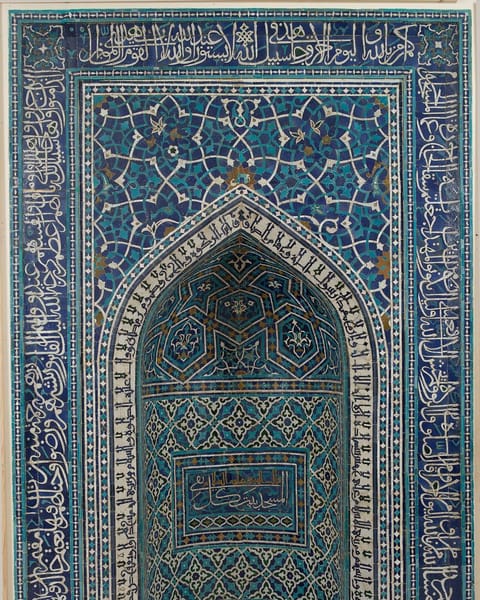
Image: Unknown tile makers, Mihrab from the Madrasa Imami, Isfahan, 1354–1355. Metropolitan Museum of Art, New York. CC0, via Wikimedia Commons.. Image credits
_MET_DP235035.jpg)