What is tawhid?
Question 1120
Question
What does tawhid mean in Islam, and how does belief in the oneness of God shape a Muslim's life?
Summary of answer
Tawhid (توحيد) is the affirmation that Allah is One: one Creator and Sustainer, the only One worthy of worship, with no equal in His names and attributes. Sūrat al-Ikhlāṣ states it in four verses, and the Prophet ﷺ said that surah equals a third of the Quran. Because Allah alone is Lord, tawhid frees people from every idol of wealth, power, and desire, and places every human being on the same level before Him.
Answer
الحمد لله Praise be to Allah.
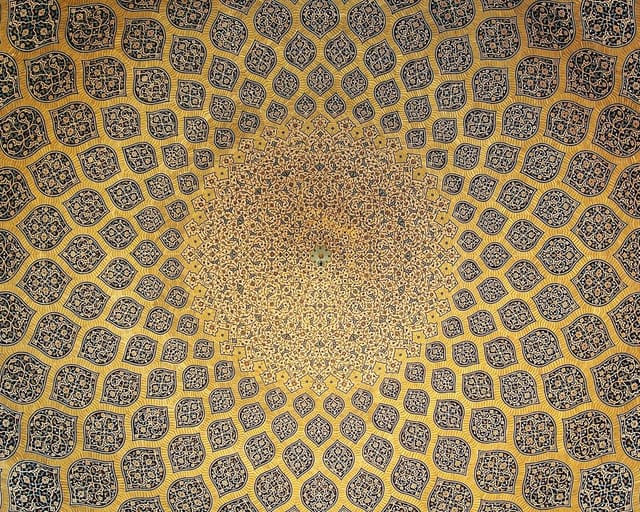
Tawhid (توحيد) is the oneness of Allah, and it is the heart of Islam. Every prayer opens with it, every new Muslim enters the faith by declaring it, and Muslims hope to die with its words on their lips: lā ilāha illā Allāh, there is no god but Allah. Tawhid means that Allah alone creates and sustains all things, that He alone is worthy of worship, and that nothing resembles Him. It also means that no person, power, or possession may take His place in a human heart, and that is why tawhid has always been a teaching of freedom.
What does tawhid mean?
The Arabic word comes from the root w-ḥ-d, “one,” and means to affirm oneness. The Quran gives its clearest statement in a surah of four verses:
قُلۡ هُوَ ٱللَّهُ أَحَدٌ ٱللَّهُ ٱلصَّمَدُ لَمۡ يَلِدۡ وَلَمۡ يُولَدۡ وَلَمۡ يَكُن لَّهُۥ كُفُوًا أَحَدُۢ
“Say: He is Allah, the One. Allah, the Eternal Refuge. He has not begotten, nor was He begotten. And there is none comparable to Him.”
This surah is called al-Ikhlāṣ, “sincere devotion.” When a Companion mentioned a man who recited it over and over through the night, as if it were too little, the Prophet ﷺ said that it equals a third of the Quran (Sahih al-Bukhari 5013). Elsewhere the Quran says, “There is nothing like Him, and He is the All-Hearing, the All-Seeing” (42:11). Allah is beyond body, gender, and every likeness (Does Allah have a gender?), and He is also the One who hears every whisper.
What are the kinds of tawhid?
The scholars described tawhid in more than one way. The Ashʿari and Maturidi theologians, whose creeds are taught across most of the Sunni world, speak of Allah’s oneness in His essence (dhāt), His attributes (ṣifāt), and His acts (afʿāl): He has no parts, no attribute of His resembles a created one, and nothing acts in the world except by His power. Ibn Taymiyya (d. 1328) and those who followed him used a threefold division that many mosques teach today: oneness of lordship (rubūbiyya), oneness of worship (ulūhiyya), and oneness of names and attributes (al-asmāʾ wa-l-ṣifāt). These are two maps of one country.
Imam al-Ghazali (d. 1111) went further, into tawhid as an experience of the heart. In the Book of Divine Unity and Trust in his Iḥyāʾ ʿUlūm al-Dīn, he compared tawhid to a walnut. Its outer shell is saying “there is no god but Allah” with the tongue alone. Its inner shell is believing it in the heart. Its kernel is seeing, by the light of faith, that all things come from the One. And its oil, the finest part, is the state of those who see nothing in existence but the One, their own selves forgotten in Him. Tawhid in this sense is the root of trust in Allah (tawakkul): a heart that knows all things come from Him stops trembling before anything else.
How does tawhid set people free?
If Allah alone is God, then nothing else may be served as a god: wealth, status, a nation, a ruler, or one’s own appetites. The Quran names this hidden idolatry:
أَفَرَءَيۡتَ مَنِ ٱتَّخَذَ إِلَٰهَهُۥ هَوَىٰهُ
“Have you seen the one who has taken his own desire as his god?”
The Quran’s call to the People of the Book makes the social side of tawhid explicit: that “we worship none but Allah, associate nothing with Him, and do not take one another as lords besides Allah” (3:64). No human being may stand as lord over another. This was felt first by the poorest believers of Mecca. Bilāl ibn Rabāḥ, an enslaved Abyssinian, was laid under a heavy rock in the desert heat by his master to force him to renounce his faith, and he answered with a single word: “One, One” (aḥad, aḥad). Tawhid had made him free before Abu Bakr bought his freedom.
Because Allah alone is the Lord, injustice between His servants is an offense against Him. In a hadith qudsi He says:
«يَا عِبَادِي إِنِّي حَرَّمْتُ الظُّلْمَ عَلَى نَفْسِي وَجَعَلْتُهُ بَيْنَكُمْ مُحَرَّمًا فَلاَ تَظَالَمُوا»
“O My servants, I have forbidden injustice for Myself and made it forbidden among you, so do not wrong one another.”
What is the tawhidic paradigm?
Modern Muslim thinkers have drawn out what tawhid means for society. Ismaʿil al-Faruqi (d. 1986) wrote in Al Tawhid: Its Implications for Thought and Life (1982) that the oneness of God is the principle that orders knowledge, ethics, and the whole of human life. The scholar Amina Wadud named what she called the “tawhidic paradigm” in Inside the Gender Jihad (2006). If Allah alone stands above, she argued, then no human being stands above another, and men and women meet as equals on the same level before their Lord. Any order that sets one person as lord over another, man over woman, master over servant, one race over another, sets up in practice a partner beside Allah.
The Quran says the same in its own words: all humanity was created from a single soul (4:1), and the noblest in Allah’s sight is the one most mindful of Him (49:13). When Muslims stand shoulder to shoulder in the rows of prayer, the banker beside the cleaner, they are living tawhid with their bodies.
How do Muslims live tawhid every day?
Tawhid is lived whenever a Muslim turns directly to Allah in duʿāʾ, with no intermediary needed; whenever they bow in prayer to no one but Him; whenever they refuse to flatter the powerful or despise the weak; and whenever they see the world as His signs. The Prophet ﷺ said that the best remembrance of Allah is “lā ilāha illā Allāh” (Jamiʿ al-Tirmidhi 3383, graded hasan by al-Albani). The opposite of tawhid, associating partners with Allah, is explained in What is shirk?, and the faith that grows from tawhid in What are the six articles of faith? The God whom tawhid affirms is the God of Abraham, worshipped also by Jews and Christians (Do Muslims and Christians worship the same God?).
A closing word
The Quran joins the declaration of oneness to the name of mercy:
وَإِلَٰهُكُمۡ إِلَٰهٞ وَٰحِدٞۖ لَّآ إِلَٰهَ إِلَّا هُوَ ٱلرَّحۡمَٰنُ ٱلرَّحِيمُ
“Your God is One God. There is no god but He, the All-Merciful, the Most Merciful.”
The One whom tawhid affirms is the All-Merciful. May Allah fill our hearts with His oneness until nothing else can frighten us, and nothing else can own us.
And Allah knows best. والله أعلم
Frequently asked questions
What are the three types of tawhid?
Many teachers divide tawhid into oneness of lordship (rubūbiyya), oneness of worship (ulūhiyya), and oneness of names and attributes (al-asmāʾ wa-l-ṣifāt), a scheme associated with Ibn Taymiyya. Ashʿari and Maturidi theologians speak instead of oneness in Allah's essence, attributes, and acts. Both describe the same truth.
What is the opposite of tawhid?
The opposite of tawhid is shirk: associating partners with Allah in worship or treating anything created as a god. The Quran also warns against the hidden shirk of making one's own desires into a god (45:23).
What is tawhid in Shia Islam?
Tawhid is the first of the five principles of religion (uṣūl al-dīn) in Twelver Shia theology, followed by divine justice (ʿadl), prophethood, the imamate, and the return to Allah (maʿād).
Is tawhid the same as monotheism?
Tawhid includes belief in one God and goes further: it means worshipping Him alone, trusting Him alone, and letting His oneness shape how a person treats every other creature.
Related questions
Sources
- al-Ghazali, Iḥyāʾ ʿUlūm al-Dīn, Kitāb al-Tawḥīd wa-l-Tawakkul (The Book of Divine Unity and Trust)
- Sahih al-Bukhari 5013 (Sūrat al-Ikhlāṣ equals a third of the Quran)
- Sahih Muslim 2577a (O My servants, I have forbidden injustice for Myself)
- Ismaʿil Raji al-Faruqi, Al Tawhid: Its Implications for Thought and Life (1982)
- Amina Wadud, Inside the Gender Jihad: Women's Reform in Islam (Oneworld, 2006)
Image: Phillip Maiwald (Nikopol), The inner dome of the Sheikh Lotfollah Mosque, Isfahan, 2008. CC BY-SA 3.0, via Wikimedia Commons.. Image credits
