Does Allah have a gender?
Question 1040
Question
Is Allah male or female, and why do the Quran and Muslims refer to Allah as "He"?
Summary of answer
Allah has no gender. The Quran says "there is nothing like Him" (42:11) and that He neither begets nor is begotten (112:3), and Sunni and Shia theologians agree that Allah is unlike anything created. The pronoun "He" (huwa) follows Arabic grammar, which has no neuter, and the Quran also speaks of Allah as "I" and "We." Allah's name al-Raḥmān shares its root with raḥim, the womb.
Answer
الحمد لله Praise be to Allah.
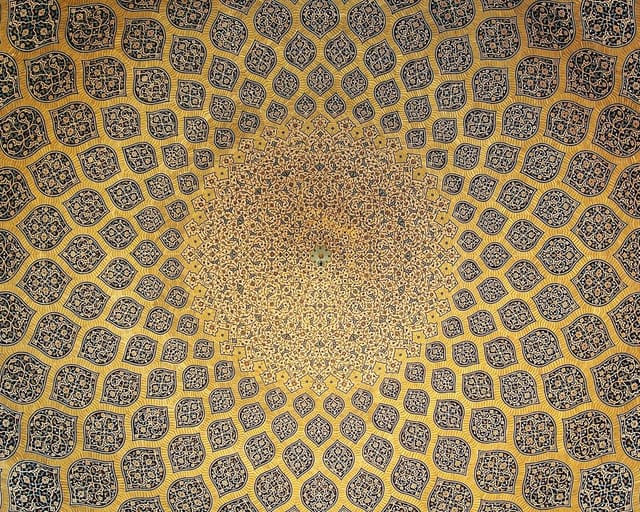
Does Allah have a gender? The answer of the Quran and of Muslim theology is clear: Allah is neither male nor female. Gender belongs to created beings, and Allah is the Creator of every being. Muslims say “He” for Allah because the Quran’s Arabic does, and Arabic grammar has no neuter. The pronoun is a feature of language. It tells us nothing about Allah’s nature, which no created likeness can describe.
Is Allah male or female?
The Quran’s clearest statement on Allah’s otherness comes in Sūrat al-Shūrā:
لَيۡسَ كَمِثۡلِهِۦ شَيۡءٞۖ وَهُوَ ٱلسَّمِيعُ ٱلۡبَصِيرُ
“There is nothing like Him, and He is the All-Hearing, the All-Seeing.”
The same verse begins by describing how Allah made human beings and animals in pairs (azwāj). Pairing belongs to the creation: “Of everything We created pairs, so that you may reflect” (51:49). The One who made male and female is not one of the pair. Sight cannot grasp Him (6:103), and He “does not beget, nor was He begotten” (112:3). The great majority of Sunni and Shia theologians hold that Allah has no body, and all agree that He resembles nothing in creation; male and female are features of created bodies. This belief in Allah’s utter oneness and uniqueness is the heart of tawḥīd.
Why does the Quran call Allah “He”?
Every noun in Arabic is either masculine or feminine. There is no “it” for persons, and the masculine is the default, unmarked form. The sun (shams) is grammatically feminine and the moon (qamar) masculine, and nobody concludes anything about the sun and moon from that. Many words for divine realities are feminine: mercy (raḥma), wisdom (ḥikma), power (qudra), and the word theologians use for Allah’s very essence, dhāt.
The Quran itself moves freely among pronouns for Allah. He speaks as “I”: “I created jinn and humankind only so that they would worship Me” (51:56). He speaks as “We”: “We have sent down the Reminder, and We will guard it” (Quran 15:9). And the Quran speaks of Him as “He.” The “We” never meant that Allah is many, and the “He” never meant that Allah is a man. Both are the ways Arabic speaks of a majestic, personal Lord.
Is Allah called Father in Islam?
The Quran never calls Allah father or mother, and it turns away from every description of Allah as a parent:
لَمۡ يَلِدۡ وَلَمۡ يُولَدۡ وَلَمۡ يَكُن لَّهُۥ كُفُوًا أَحَدُۢ
“He does not beget, nor was He begotten, and there is none comparable to Him.”
The Quran criticizes the Meccans who called the angels Allah’s daughters (43:19; 53:27), and it equally rejects the claim that Allah took a son (19:92). Allah’s relationship to His creatures is closer than any family bond: He is “nearer to him than his jugular vein” (50:16). The Christian and Muslim ways of speaking of God are compared in Do Muslims and Christians worship the same God?
What does Allah’s mercy have to do with the womb?
Every sūra but one opens with the basmala, which calls Allah al-Raḥmān, the All-Merciful. The name comes from the root r-ḥ-m, which also gives raḥim, the womb. The Prophet ﷺ reported that Allah Himself drew the connection:
«قَالَ اللَّهُ أَنَا الرَّحْمَنُ وَهِيَ الرَّحِمُ شَقَقْتُ لَهَا اسْمًا مِنَ اسْمِي»
“Allah said: I am al-Raḥmān, and this is the raḥim. I drew its name from My own name.”
Sunan Abi Dawud 1694 (graded sahih by al-Albani)
When a captive woman in Medina found her lost baby and pressed him to her breast, the Prophet ﷺ asked his Companions whether she would ever throw her child into a fire. They said no. He said, “Allah is more merciful to His servants than this woman is to her child” (Sahih al-Bukhari 5999). The tradition’s own image of Allah’s love is a mother’s.
What did Ibn ʿArabi and the Sufis say about the divine feminine?
Muslim theologians grouped Allah’s names into names of beauty (jamāl), such as the Gentle, the Loving, and the Merciful, and names of majesty (jalāl), such as the Mighty and the Exalted. The Japanese scholar Sachiko Murata showed in The Tao of Islam (1992) how Muslim thinkers, from Ibn ʿArabi to the Persian poets, read these two sets of names as complementary, like the yin and yang of Chinese thought, and saw both reflected in men and women.
Ibn ʿArabi (d. 1240), in the chapter on the Prophet ﷺ in his Fuṣūṣ al-Ḥikam, reflected on the hadith “Women and perfume were made beloved to me in this world, and the coolness of my eyes was placed in prayer” (Sunan al-Nasa’i 3939). He taught that woman is the most perfect place in which Allah’s self-disclosure can be witnessed. A tradition that could say this never thought of Allah as male. More on this school in What is Sufism?
Can Muslims call Allah “She”?
The Quran’s Arabic uses huwa, and most Muslims keep “He” when they speak English, as a way of staying close to the revealed words. Some Muslim scholars use “She” at times. Amina Wadud, author of Qur’an and Woman, has argued that the masculine pronoun is no literal description of Allah and that hearing “She” can remind believers of this. Ayesha Chaudhry, in The Colour of God, uses both pronouns. All of these writers share the conviction of the tradition that no pronoun confines Allah.
The Quran offers a way through that every Muslim already uses:
قُلِ ٱدۡعُواْ ٱللَّهَ أَوِ ٱدۡعُواْ ٱلرَّحۡمَٰنَۖ أَيّٗا مَّا تَدۡعُواْ فَلَهُ ٱلۡأَسۡمَآءُ ٱلۡحُسۡنَىٰ
“Say: Call on Allah or call on the All-Merciful. Whichever you call on, to Him belong the most beautiful names.”
A closing word
Allah is beyond every image we make, and nearer than any image could be. Women and men alike carry the trace of His names, and both stand before Him with equal dignity, as the Quran affirms in What does the Quran say about women? When words fail, call Him by the names He gave Himself:
وَلِلَّهِ ٱلۡأَسۡمَآءُ ٱلۡحُسۡنَىٰ فَٱدۡعُوهُ بِهَا
“To Allah belong the most beautiful names, so call on Him by them.”
Yā Raḥmān, Yā Raḥīm: may the One whose mercy is named for the womb hold every reader as a mother holds her child, and more.
And Allah knows best. والله أعلم
Frequently asked questions
Is Allah a man?
No. Allah has no body, no sex, and no likeness among created things (42:11). Man and woman are both creations of Allah, made in pairs, and the Creator of the pairs stands beyond them.
Why does the Quran use "He" for Allah?
Arabic has only masculine and feminine nouns, with no neuter, and the masculine is the default form. The pronoun huwa is grammar, and the Quran also has Allah speak as "I" and "We" without implying more than one God.
Can you call Allah "She"?
The Quran's own Arabic uses huwa, and most Muslims keep "He" in English. Some Muslim scholars, Amina Wadud among them, at times use "She" to show that the pronoun is no description of Allah. Calling on Allah by His names, such as al-Raḥmān, sidesteps the question entirely (17:110).
What is the Shia view of Allah's gender?
Shia theology agrees that Allah has no body or gender. The first sermon of Nahj al-Balāgha, attributed to Imam ʿAli, teaches that Allah is beyond every description drawn from created things.
Related questions
Sources
- Sachiko Murata, The Tao of Islam: A Sourcebook on Gender Relationships in Islamic Thought (SUNY Press, 1992)
- Ibn ʿArabi, Fuṣūṣ al-Ḥikam (the chapter on the Prophet Muhammad)
- Sunan Abi Dawud 1694 (I am al-Raḥmān, and this is the raḥim)
- Sahih al-Bukhari 5999 (Allah is more merciful than a mother)
- Amina Wadud, Inside the Gender Jihad: Women's Reform in Islam (Oneworld, 2006)
- Ayesha S. Chaudhry, The Colour of God
Image: Phillip Maiwald (Nikopol), The inner dome of the Sheikh Lotfollah Mosque, Isfahan, 2008. CC BY-SA 3.0, via Wikimedia Commons.. Image credits
