What is Sufism?
Question 1110
Question
What is Sufism, what do Sufis believe and practice, and is Sufism part of mainstream Islam?
Summary of answer
Sufism (taṣawwuf) is the inner dimension of Islam, the striving for what the Prophet ﷺ called iḥsān: to worship Allah as though you see Him. It grew from the Quran's call to remembrance and love, was shaped by Rabiʿa, al-Junayd, al-Ghazali, Rumi, and Ibn ʿArabi, and lives today in orders such as the Qadiriyya, Naqshbandiyya, Shadhiliyya, Chishtiyya, and Mevleviyya. Ibn Khaldun counted it among the sciences of the sharia.
Answer
الحمد لله Praise be to Allah.
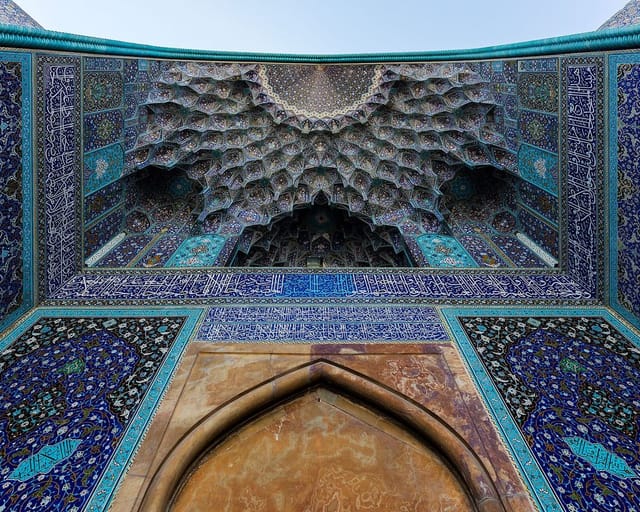
Sufism (taṣawwuf, تصوف) is the inner dimension of Islam: the path of purifying the heart, remembering Allah constantly, and coming to love Him. Its aim is the station the Prophet ﷺ called iḥsān, spiritual excellence. Sufism grew inside the mainstream of Islam, and for most of Muslim history the great jurists, theologians, and saints walked it together. It gave the world the poetry of Rumi and Hafez, the prayers of Rabiʿa, and the brotherhoods that carried Islam to India, Indonesia, and West Africa.
What does the word Sufism mean?
The most common explanation is that Sufi comes from ṣūf, wool, after the rough woolen cloaks worn by early ascetics in Iraq and Syria. Others connect it with ṣafāʾ, purity. The Sufis themselves cared less about the word than about the reality. They called their science the knowledge of the heart, and they traced it to a conversation recorded in Sahih Muslim, when the angel Gabriel came to the Prophet ﷺ in the form of a man and asked him about islām, īmān, and iḥsān. Of iḥsān, the Prophet ﷺ said:
«أَنْ تَعْبُدَ اللَّهَ كَأَنَّكَ تَرَاهُ فَإِنْ لَمْ تَكُنْ تَرَاهُ فَإِنَّهُ يَرَاكَ»
“That you worship Allah as though you see Him, and if you do not see Him, He sees you.”
The jurists teach islām, the outward practice; the theologians teach īmān, the articles of faith; and the Sufis teach iḥsān, the presence of the heart. All three are, in the Prophet’s words at the end of that hadith, “your religion”.
What do Sufis believe?
Sufis hold the same creed as other Muslims. What marks them is an emphasis on love, remembrance, and nearness. The Quran describes a people whom Allah “loves, and who love Him” (yuḥibbuhum wa-yuḥibbūnahu, Quran 5:54), and it tells every human being how close Allah is:
وَنَحۡنُ أَقۡرَبُ إِلَيۡهِ مِنۡ حَبۡلِ ٱلۡوَرِيدِ
“We are nearer to him than his jugular vein.”
The Sufis made these verses the center of their lives. They also treasured a hadith qudsi in which Allah describes the servant who draws near:
«وَمَا يَزَالُ عَبْدِي يَتَقَرَّبُ إِلَىَّ بِالنَّوَافِلِ حَتَّى أُحِبَّهُ، فَإِذَا أَحْبَبْتُهُ كُنْتُ سَمْعَهُ الَّذِي يَسْمَعُ بِهِ، وَبَصَرَهُ الَّذِي يُبْصِرُ بِهِ»
“My servant keeps drawing near to Me with voluntary deeds until I love him. And when I love him, I become the hearing with which he hears and the sight with which he sees.”
Who were the great Sufis?
- Rabiʿa al-ʿAdawiyya (d. c. 801) of Basra taught worship for love of Allah alone. The prayer later attributed to her by the Persian poet ʿAṭṭār asks: if I worship You for fear of hell, burn me in it; if for hope of paradise, shut me out of it; and if I worship You for Your own sake, do not withhold Your beauty from me.
- Al-Junayd of Baghdad (d. 910) taught a sober, disciplined Sufism. Al-Qushayri reports him saying that this knowledge of theirs is bound by the Book and the Sunna.
- Al-Ghazali (d. 1111), the great Shafiʿi jurist and theologian, left his professorship in Baghdad in spiritual crisis and found certainty on the Sufi path, as he tells in al-Munqidh min al-Ḍalāl. His Iḥyāʾ ʿUlūm al-Dīn (The Revival of the Religious Sciences) joined law and spirituality for every later generation.
- Ibn ʿArabi (d. 1240), born in Murcia and buried in Damascus, wrote al-Futūḥāt al-Makkiyya and the love poems of Tarjumān al-Ashwāq, where he says: “I follow the religion of love, wherever its camels turn; love is my religion and my faith.”
- Jalal al-Din Rumi (d. 1273), the Hanafi scholar of Konya, poured his love for Allah and for his companion Shams of Tabriz into the Masnavi, which Persian speakers have long called the Quran in Persian.
What are Sufi orders?
From the twelfth century, Sufism was organized into orders (ṭarīqa, plural ṭuruq), each with a chain of teachers (silsila) reaching back to the Prophet ﷺ, most often through Ali. Among the largest are the Qadiriyya, from ʿAbd al-Qādir al-Jīlānī (d. 1166) of Baghdad; the Naqshbandiyya of Central Asia; the Shadhiliyya of North Africa; the Chishtiyya, from Muʿīn al-Dīn Chishtī (d. 1236) of Ajmer in India; the Tijaniyya of West Africa; and the Mevleviyya, the order of Rumi. A student takes a pledge with a teacher (shaykh or murshid), keeps a daily litany (wird), and joins gatherings of remembrance.
Some critics, especially in modern Salafi circles, regard certain Sufi practices as innovation. Even Ibn Taymiyya (d. 1328), a sharp critic of some later practices, praised al-Junayd and wrote a commentary on part of ʿAbd al-Qādir al-Jīlānī’s Futūḥ al-Ghayb. Ibn Khaldun (d. 1406) classed Sufism in his Muqaddima among the sciences of the sharia that arose within Islam.
What is dhikr, and do Sufis use music?
The heart of Sufi practice is remembrance (dhikr): repeating the names of Allah, the testimony lā ilāha illā Allāh, and prayers on the Prophet ﷺ, alone or in a circle. The Quran promises what it brings:
أَلَا بِذِكۡرِ ٱللَّهِ تَطۡمَئِنُّ ٱلۡقُلُوبُ
“Truly, in the remembrance of Allah hearts find rest.”
Many orders also practice samāʿ, listening to sacred music and poetry. The Chishtis of India and Pakistan gave the world qawwali, and the Mevlevis of Konya the turning prayer of the whirling dervishes, recognized by UNESCO in 2008. Al-Ghazali devoted a book of the Iḥyāʾ to the etiquette of listening. Our answers on whether music is haram and whether dancing is haram explain why both are lawful. Sufi communities also lead the joyful celebration of the Prophet’s birthday (Is celebrating the Mawlid allowed?).
Can anyone follow the Sufi path?
Yes. Iḥsān is part of the religion of every Muslim. You can begin today: keep your five prayers with presence, add a few minutes of remembrance after them, read al-Ghazali or Rumi in a good translation, and look for a teacher whose character shows the mercy he teaches. The Sufis say the path is first of all good character (adab). For guidance on prayer from the heart, see How to make duʿāʾ.
A closing word
Rumi opens the Masnavi with the reed flute cut from its reed bed, whose music is a cry of longing to return. “Listen to the reed as it tells its tale,” he writes, “lamenting its separations.” Every human heart is that reed, made by Allah and longing for Him. May He tune your heart to His remembrance and fill it with the love that brings it home.
And Allah knows best. والله أعلم
Frequently asked questions
Is Sufism Sunni or Shia?
Most Sufi orders are Sunni, and their members follow the Hanafi, Maliki, Shafiʿi, or Hanbali schools of law. There are also Shia Sufi orders, such as the Niʿmatullahi order in Iran, and Shia scholars cultivate the same inner path under the name ʿirfān.
Is Sufism halal?
Yes. Sufism is the pursuit of iḥsān, which the Prophet ﷺ named as a part of the religion in the hadith of Gabriel. Al-Ghazali, al-Qushayri, and Ibn Khaldun all treated it as a science of the sharia.
Do you have to join a Sufi order to be a Sufi?
No. Many Muslims learn from a teacher in an order (ṭarīqa), and many others read al-Ghazali and Rumi, keep a daily litany of remembrance, and pursue sincerity and love on their own. Iḥsān belongs to every believer.
What is a Sufi whirling dervish?
The whirling dervishes are members of the Mevlevi order founded by the followers of Rumi in Konya. Their turning prayer, the sema, accompanied by the reed flute, was recognized by UNESCO as part of humanity's intangible heritage in 2008.
Related questions
Sources
- Sahih Muslim 8a (the hadith of Gabriel)
- Abu al-Qāsim al-Qushayrī, al-Risāla al-Qushayriyya (11th century)
- Abu Ḥāmid al-Ghazālī, Iḥyāʾ ʿUlūm al-Dīn and al-Munqidh min al-Ḍalāl
- Ibn Khaldūn, al-Muqaddima, chapter on the science of Sufism
- UNESCO, Mevlevi Sema ceremony (Representative List, 2008)
- Annemarie Schimmel, Mystical Dimensions of Islam (University of North Carolina Press, 1975)
Image: Diego Delso, The entrance iwan of the Shah Mosque, Isfahan, 2016. CC BY-SA 4.0, via Wikimedia Commons.. Image credits
