What is shirk?
Question 1215
Question
What does shirk mean in Islam, what counts as shirk, and can it be forgiven?
Summary of answer
Shirk (شرك) is associating partners with Allah: worshipping any created thing beside Him, or letting wealth, power, a ruler, or one's own desires take His place in the heart. The Quran calls it a great wrong (31:13), and it also promises that Allah forgives all sins to those who turn to Him (39:53). The Prophet ﷺ feared his community's love of the world more than idol worship, and he forbade Muslims from branding one another unbelievers.
Answer
الحمد لله Praise be to Allah.
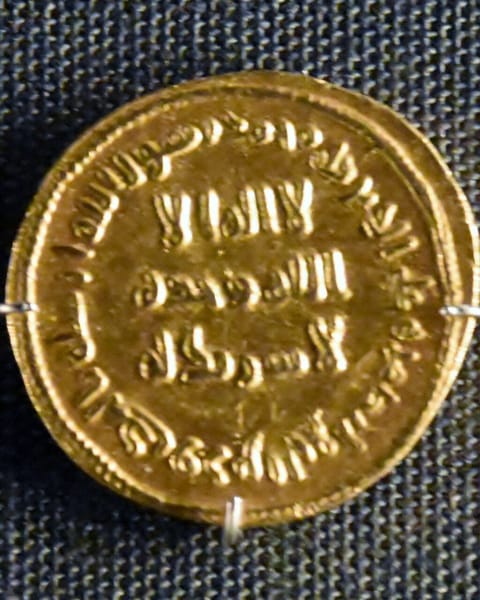
Shirk (شرك) means associating partners with Allah. It is the opposite of tawhid, the oneness of God, and the Quran treats it as the gravest wrong a person can do, because it gives the place of the Creator to something created. Luqman’s advice to his son puts it in one line: “My son, do not associate anything with Allah; associating partners with Him is a great wrong” (Quran 31:13). The word for “wrong” there is ẓulm, injustice: shirk is unjust to Allah, to the truth, and to the human soul that bows to what cannot save it.
The same Quran that warns against shirk opens the door back to Allah for everyone, including those who once committed it.
What counts as shirk?
The scholars describe two kinds.
Major shirk (al-shirk al-akbar) is worshipping something other than Allah, or beside Him: praying to idols, treating a created being as divine, or believing that some power other than Allah creates and sustains the world. This was the religion of the idols around the Kaʿba that the Prophet ﷺ came to end.
Minor shirk (al-shirk al-aṣghar) is subtler. Its main form is showing off in worship (riyāʾ): praying, giving, or fasting to be seen and praised. In a hadith qudsi Allah says:
«أَنَا أَغْنَى الشُّرَكَاءِ عَنِ الشِّرْكِ مَنْ عَمِلَ عَمَلاً أَشْرَكَ فِيهِ مَعِي غَيْرِي تَرَكْتُهُ وَشِرْكَهُ»
“I am the One most free of need of any partner. Whoever does a deed in which he sets another beside Me, I leave him to that partner.”
The cure for minor shirk is sincerity (ikhlāṣ): doing good for Allah’s sake and letting people’s opinions go.
Is wealth, power, or ego a kind of shirk?
The Quran and the Sunnah point to idols that have no statue. The Quran asks, “Have you seen the one who has taken his own desire as his god?” (Quran 25:43). It criticizes those who “took their scholars and monks as lords besides Allah” (9:31), and the Prophet ﷺ explained to ʿAdī ibn Ḥātim that they did so by letting those men declare lawful what Allah forbade and forbid what He allowed (Jamiʿ al-Tirmidhi 3095, graded hasan by al-Albani). Any human authority that claims the last word over right and wrong in Allah’s place has been made a lord.
The Prophet ﷺ was more worried about this hidden shirk among his followers than about idol worship. Near the end of his life he told them:
«وَإِنِّي وَاللَّهِ مَا أَخَافُ عَلَيْكُمْ أَنْ تُشْرِكُوا بَعْدِي، وَلَكِنْ أَخَافُ عَلَيْكُمْ أَنْ تَنَافَسُوا فِيهَا»
“By Allah, I do not fear that you will associate partners with Allah after me. What I fear for you is that you will compete with one another for this world.”
The scholar Amina Wadud has drawn out what she calls the “tawhidic paradigm”: if Allah alone stands above, no human being stands above another as a lord. On this reading, a man who sets himself up as the master of a woman, or one race or class that sets itself over another, gives itself a rank that belongs to Allah alone. Shirk is a matter of belief, and it is also a matter of how people treat one another. See What is tawhid?
Can shirk be forgiven?
Sūrat al-Nisāʾ says, “Allah does not forgive that partners be associated with Him, and He forgives anything less than that to whom He wills” (Quran 4:48, repeated in 4:116). The commentators read this together with the verses on repentance: it speaks of the person who meets Allah still holding to shirk. For everyone who turns back, the Quran is unambiguous:
۞قُلۡ يَٰعِبَادِيَ ٱلَّذِينَ أَسۡرَفُواْ عَلَىٰٓ أَنفُسِهِمۡ لَا تَقۡنَطُواْ مِن رَّحۡمَةِ ٱللَّهِۚ إِنَّ ٱللَّهَ يَغۡفِرُ ٱلذُّنُوبَ جَمِيعًاۚ إِنَّهُۥ هُوَ ٱلۡغَفُورُ ٱلرَّحِيمُ
“Say: My servants who have wronged their own souls, do not despair of Allah’s mercy. Allah forgives all sins. He is the Forgiving, the Merciful.”
Most of the Companions had worshipped idols before Islam, and Allah made them the best of generations. Of those who repent, He says, “Allah will change their evil deeds into good” (25:70). And He does not hold people to account for a message that never truly reached them: “We never punish until We have sent a messenger” (17:15). Imam al-Ghazali (d. 1111) argued in Fayṣal al-Tafriqa that many who never heard the message in its true form fall within Allah’s mercy. More in Does Allah forgive all sins? and Do non-Muslims go to hell?
Should Muslims accuse each other of shirk?
No. The word shirk has too often been thrown at other Muslims: at Sufis who visit shrines, at people who ask Allah by the honor of the Prophet ﷺ (tawassul), at Shia Muslims, at anyone whose practice looks unfamiliar. Most Sunni scholars across the centuries, Ashʿari, Maturidi, and Sufi, permitted tawassul and visiting the graves of the righteous, and those who objected to certain forms still owed their fellow Muslims good faith. The Prophet ﷺ warned that whoever calls his brother an unbeliever, the word returns to one of them (Sahih al-Bukhari 6104).
The Quran’s call to shun shirk is a call to examine one’s own heart. A believer who worries about shirk should look first at their own pride, their love of money, and their wish to be praised, and leave the hearts of others to Allah. On the place of Christians, whom the Quran treats as distinct from the idolaters, see Do Muslims and Christians worship the same God?
A closing word
Shirk divides the heart among many masters. Tawhid gathers it in One. The believer’s daily prayer, in Sūrat al-Fātiḥa, says it to Allah in four words: “You alone we worship, and You alone we ask for help” (1:5). May Allah free our hearts from every false master, and keep them turned to Him alone.
And Allah knows best. والله أعلم
Frequently asked questions
Can shirk be forgiven?
Yes, for everyone who turns back to Allah. Most of the Companions had worshipped idols before Islam, and the Quran promises that the evil deeds of those who repent are replaced with good ones (25:70).
What is the difference between major and minor shirk?
Major shirk is worshipping something other than Allah. Minor shirk includes showing off in worship (riyāʾ), doing a good deed for people's praise, which Allah says He leaves to the partner it was done for (Sahih Muslim 2985).
Is it shirk to ask the Prophet ﷺ for intercession?
Most Sunni scholars across the centuries allowed asking Allah by the honor of the Prophet ﷺ or the righteous (tawassul), and some later scholars objected to certain forms of it. No Muslim who prays to Allah alone should be called a mushrik for this disagreement.
Are Christians considered mushrik?
The Quran criticizes the doctrine of the Trinity, and it still treats the People of the Book as a group distinct from the idolaters (98:1), allowing Muslims to eat their food and marry among them (5:5).
Related questions
Sources
- Sahih Muslim 2985 (I am the most free of need of partners)
- Sahih al-Bukhari 1344, 6104
- Jamiʿ al-Tirmidhi 3095 (rabbis and monks as lords)
- al-Ghazali, Fayṣal al-Tafriqa bayn al-Islām wa-l-Zandaqa
- Amina Wadud, Inside the Gender Jihad: Women's Reform in Islam (Oneworld, 2006)
Image: Richard Mortel, Gold dinar of ʿAbd al-Malik ibn Marwan, dated AH 78 (697–698), 2017. David Collection, Copenhagen. CC BY 2.0, via Wikimedia Commons.. Image credits
,_The_David_Collection,_Copenhagen_(36240895662).jpg)