Can Muslims call Allah "Father"?
Question 1216
Question
Is it permissible for a Muslim to address Allah as "Father," as Christians do in prayer?
Summary of answer
Muslims do not call Allah "Father." The Quran says He "neither begets nor is begotten" (112:3), and Muslims address Him by the names He gave Himself, such as al-Raḥmān, the All-Merciful, and al-Wadūd, the Loving. The care that "Father" expresses is fully present in Islam: the Prophet ﷺ said Allah is more merciful to His servants than a mother to her child (Bukhari 5999). Christians who pray "Our Father" are speaking of that same nearness.
﴿لَمۡ يَلِدۡ وَلَمۡ يُولَدۡ﴾
He has not begotten, nor was He begotten.
Answer
الحمد لله Praise be to Allah.
Muslims do not call Allah “Father.” The reason lies in the Quran’s description of who Allah is, and it carries no coldness toward the love the word expresses. The Quran gives Allah’s nature in four short verses, and one of them rules out every kind of fatherhood and sonship:
قُلۡ هُوَ ٱللَّهُ أَحَدٌ ٱللَّهُ ٱلصَّمَدُ لَمۡ يَلِدۡ وَلَمۡ يُولَدۡ وَلَمۡ يَكُن لَّهُۥ كُفُوًا أَحَدُۢ
“Say: He is Allah, the One. Allah, the Eternal Refuge. He has not begotten, nor was He begotten, and there is none comparable to Him.”
At the same time, the tenderness that makes Christians and Jews call God “Father” is everywhere in Islam. Muslims express it with the names Allah gave Himself.
Why don’t Muslims call Allah Father?
There are two reasons, and both come from the Quran.
Allah has no offspring. The Quran repeatedly answers the belief that God has a son: “It is not fitting for the All-Merciful to take a son. There is no one in the heavens and the earth but comes to the All-Merciful as a servant” (Quran 19:92–93). “Father” in the language of the Church came to be bound up with the doctrine of the eternal Son, and Muslims avoid a word that could suggest Allah shares His nature with any creature.
People are not Allah’s children by birth or status. When some among the People of the Book said, “We are the children of Allah and His beloved,” the Quran answered: “You are human beings among those He created” (5:18). Every person stands before Allah as His servant (ʿabd), and that word, in the Quran, is a title of honor. The Prophet ﷺ himself is called “His servant” in the opening verse of Sūrat al-Isrāʾ (17:1).
The scholars also held that Allah’s names are taken from revelation (tawqīfiyya). Muslims call Him by what He called Himself in the Quran and what the Prophet ﷺ taught, and “Father” is not among them.
Is Allah loving like a parent?
More than any parent. Once, among captives brought to Medina, a woman who had lost her baby was searching frantically; whenever she found a child she held it to her chest and nursed it. The Prophet ﷺ asked his Companions whether they could imagine her throwing her child into a fire. They said no, never. He said:
«اللَّهُ أَرْحَمُ بِعِبَادِهِ مِنْ هَذِهِ بِوَلَدِهَا»
“Allah is more merciful to His servants than this woman is to her child.”
The Prophet’s image for Allah’s love is a mother’s. Allah’s two names of mercy, al-Raḥmān and al-Raḥīm, come from the same root as raḥim, the womb. And the Quran names Him al-Wadūd, the Loving: “He is the Forgiving, the Loving” (Quran 85:14).
The word Muslims use most, Rabb, usually translated “Lord,” carries this sense too. Classical Arabic dictionaries such as al-Rāghib al-Iṣfahānī’s al-Mufradāt explain rabb as the One who raises and nurtures a thing, stage by stage, until it is complete. A Muslim who says “my Lord” is speaking to the One who has raised them since before they were born.
How close is Allah to the believer?
The Sunnah describes Allah running toward the one who turns to Him. In a hadith qudsi He says:
«أَنَا عِنْدَ ظَنِّ عَبْدِي بِي، وَأَنَا مَعَهُ إِذَا ذَكَرَنِي»
“I am as My servant thinks of Me, and I am with him when he remembers Me.”
The same hadith continues: if the servant comes walking, Allah comes running. And the Prophet ﷺ described Allah’s joy at a servant’s repentance as greater than that of a traveler who has lost his camel, with all his food and water, in the desert, and wakes to find it standing beside him (Sahih Muslim 2747a). Christian readers will recognize in this the father who runs to meet the returning son in Jesus’ parable. Muslims tell the story of the lost camel, and the love it describes is the same.
What should Muslims make of Christian prayer to “Our Father”?
With respect. When Christians pray “Our Father,” most mean the care, closeness, and authority of God, and the Hebrew prophets before them also called God father in this sense (“But now, O LORD, thou art our father; we are the clay, and thou our potter,” Isaiah 64:8). Muslims disagree with the doctrine of the Trinity, and the Quran says so; they still recognize the love behind the words. A Muslim attending a Christian service or funeral may stand in respectful silence while the Lord’s Prayer is said, and join in its petitions in their own heart. See Do Muslims and Christians worship the same God? and Can Muslims go to church?
Muslims honor Jesus (peace be upon him) as one of the greatest prophets. In the Quran he tells his people, “Allah is my Lord and your Lord, so worship Him” (19:36); see What do Muslims believe about Jesus? Allah’s oneness and His being beyond gender are explained in What is tawhid? and Does Allah have a gender?
A closing word
Allah answers the question of His nearness Himself:
وَإِذَا سَأَلَكَ عِبَادِي عَنِّي فَإِنِّي قَرِيبٌۖ أُجِيبُ دَعۡوَةَ ٱلدَّاعِ إِذَا دَعَانِ
“When My servants ask you about Me, I am near. I answer the call of the caller when he calls Me.”
Call Him by His names: Yā Raḥmān, Yā Wadūd, Yā Rabb. He is nearer than any parent, and He hears.
And Allah knows best. والله أعلم
Frequently asked questions
Can a Muslim say the Lord's Prayer?
Most of the Lord's Prayer, praise of God's holy name, asking for daily bread and forgiveness, matches Muslim prayer. Because of the opening "Our Father," Muslims usually stand respectfully in silence when it is prayed, or pray in their own words, as explained in the linked article on church visits.
Is Allah male?
No. Allah is beyond gender and every likeness (42:11). The Arabic "He" is a matter of grammar, and the Quran's images of Allah's mercy draw on a mother's love as much as a father's.
What names do Muslims use for Allah?
Muslims call on Allah by His Beautiful Names (al-asmāʾ al-ḥusnā, 7:180), such as al-Raḥmān (the All-Merciful), al-Raḥīm (the Most Merciful), al-Wadūd (the Loving), al-Laṭīf (the Gentle), and al-Walī (the Protecting Friend). Rabb, Lord, carries the sense of the One who raises and nurtures.
Did Jesus call God Father in the Quran?
In the Quran Jesus (peace be upon him) says, "Allah is my Lord and your Lord, so worship Him" (19:36). Muslims honor Jesus as a great prophet and understand his teaching through that verse.
Related questions
Sources
- Sahih al-Bukhari 5999 (more merciful than a mother to her child)
- Sahih al-Bukhari 7405 (I am as My servant thinks of Me)
- Sahih Muslim 2747a (Allah's joy at His servant's repentance)
- al-Rāghib al-Iṣfahānī, al-Mufradāt fī Gharīb al-Qurʾān (entry rabb)
- al-Ghazali, al-Maqṣad al-Asnā fī Sharḥ Asmāʾ Allāh al-Ḥusnā
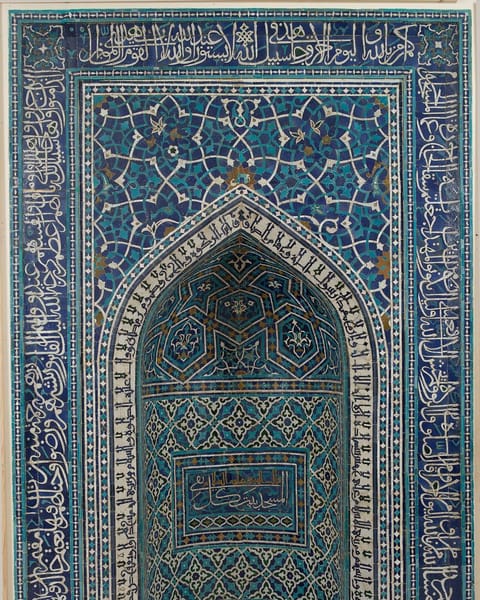
Image: Unknown tile makers, Mihrab from the Madrasa Imami, Isfahan, 1354–1355. Metropolitan Museum of Art, New York. CC0, via Wikimedia Commons.. Image credits
_MET_DP235035.jpg)