Are all hadith authentic?
Question 1115
Question
Are all hadith reliable, how did Muslim scholars tell authentic hadith from weak or fabricated ones, and how should Muslims use them today?
Summary of answer
Many hadith are authentic and many are not, and Muslim scholars were the first to say so. They examined every chain and text and graded reports as sound (ṣaḥīḥ), good (ḥasan), weak (ḍaʿīf), or fabricated (mawḍūʿ). Very few reports are mass-transmitted (mutawātir). Aisha corrected Companions by the Quran, al-Dāraquṭnī questioned reports even in Bukhari and Muslim, and the Quran remains the measure of every report.
Answer
الحمد لله Praise be to Allah.
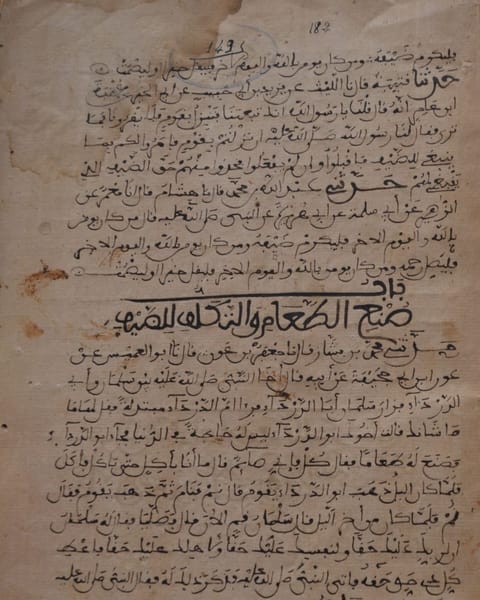
No, not all hadith are authentic, and the first people to say so were Muslim scholars. From the generation of the Companions onward, they tested every report attributed to the Prophet ﷺ, sorted the sound from the weak and the fabricated, and wrote whole books listing forgeries. The Quran itself taught them this care:
يَـٰٓأَيُّهَا ٱلَّذِينَ ءَامَنُوٓاْ إِن جَآءَكُمۡ فَاسِقُۢ بِنَبَإٖ فَتَبَيَّنُوٓاْ
“You who believe, if a wrongdoer brings you news, verify it.”
A Muslim today can love the Sunnah with all their heart and still ask, of any report, whether the Prophet ﷺ truly said it and what he meant.
How were hadith tested?
A hadith has two parts: the chain of narrators (isnād) and the text (matn). The early scholars treated the chain as a safeguard of the faith. ʿAbd Allāh ibn al-Mubārak (d. 797) said, in words recorded in the introduction to Sahih Muslim, that the isnad is part of the religion, and that without it anyone could say whatever he wished.
Scholars gathered the biographies of thousands of narrators to judge their honesty (ʿadāla) and the precision of their memory (ḍabṭ). They compared every chain with others to find gaps, irregularities (shudhūdh), and hidden defects (ʿilal). Al-Bukhari (d. 870) is reported to have chosen the reports of his Sahih from some 600,000 narrations he had heard, and his collection, with repetitions, holds about seven thousand.
The Companions set the example. When Abu Musa al-Ashʿari told Umar ibn al-Khattab that the Prophet ﷺ had taught that a visitor who asks three times to enter and receives no answer should leave, Umar asked him to bring a witness, and Abu Musa returned with one (Sahih al-Bukhari 6245).
What are sahih, hasan, daʿif, and mawdu hadith?
The scholars, whose terms Ibn al-Ṣalāḥ (d. 1245) set down in his classic manual, graded reports in four main ranks:
- Ṣaḥīḥ (sound): an unbroken chain of trustworthy, precise narrators, free of irregularity and hidden defect.
- Ḥasan (good): close to sound, with a narrator whose memory is slightly less exact.
- Ḍaʿīf (weak): a break in the chain or a weak narrator.
- Mawḍūʿ (fabricated): a forgery.
Most reports, even sound ones, are single-chain reports (āḥād). Only a small number are mass-transmitted (mutawātir), reported by so many in every generation that error is impossible. Ibn al-Ṣalāḥ found few clear examples, and one he named is the Prophet’s warning against forging his words:
«وَمَنْ كَذَبَ عَلَىَّ مُتَعَمِّدًا فَلْيَتَبَوَّأْ مَقْعَدَهُ مِنَ النَّارِ»
“Whoever deliberately lies about me, let him take his seat in the Fire.”
People forged hadith all the same, for politics, for sects, and even to encourage piety. Ibn al-Jawzī (d. 1201) collected them in al-Mawḍūʿāt, and Ibn Qayyim al-Jawziyya (d. 1350) listed in al-Manār al-Munīf the signs by which a report’s text exposes it as false, such as contradicting the clear Quran or sound reason. Popular sayings like “Seek knowledge even as far as China” circulate widely, and the hadith critics graded that one very weak, and some called it fabricated.
Did the Companions question hadith?
Yes, and Aisha (may Allah be pleased with her) did so most of all. The scholar Badr al-Dīn al-Zarkashī (d. 1392) gathered her corrections of other Companions in a book titled al-Ijāba li-Īrād mā Istadrakathu ʿĀʾisha ʿalā al-Ṣaḥāba.
When people mentioned in her presence that a woman, a donkey, and a dog passing in front of someone praying cut off the prayer, she said, “You have made us equal to donkeys and dogs!” She recalled lying on the bed in front of the Prophet ﷺ as he prayed, slipping away from near his feet when she needed to get up (Sahih al-Bukhari 514).
When Ibn Abbas told her that Umar had reported that the dead are punished for their family’s weeping, she said that the Prophet ﷺ had never said Allah punishes a believer for that, and she answered with the Quran:
«حَسْبُكُمُ الْقُرْآنُ وَلاَ تَزِرُ وَازِرَةٌ وِزْرَ أُخْرَى»
“The Quran is enough for you: ‘No soul bears the burden of another.’”
Her method, measuring reports by the Quran and by what she had seen of the Prophet ﷺ, became a lasting principle.
Is everything in Sahih al-Bukhari authentic?
Sunni scholars hold Sahih al-Bukhari and Sahih Muslim in the highest esteem, and most hold that the community’s acceptance of them confirms their chains. The tradition also kept its critics. Al-Dāraquṭnī (d. 995) questioned about two hundred reports in the two collections in his Kitāb al-Tatabbuʿ, and later scholars such as Ibn Hajar and al-Nawawi answered his objections, defending most of them.
The schools of law weighed even sound reports. Abu Hanifa and his school did not act on a single-chain report that contradicted the Quran or an established principle. Imam Malik preferred the living practice of Medina (ʿamal ahl al-Madīna) to a single report that went against it. A sound chain tells us a report is reliable; its meaning still needs the Quran, the context, and the whole Sunnah. See How should the Quran be interpreted?
How should Muslims use hadith today?
- Check the grade. Collections such as sunnah.com list scholars’ gradings beside each report.
- Read the whole report. Many hadith answer a particular question in a particular setting.
- Measure by the Quran. The Quran describes itself as free of contradiction (Quran 4:82). A report that seems to set Allah’s word against itself, or to command cruelty, calls for a second look, as Aisha taught.
- Do not build rulings on weak reports. Scholars allowed weak hadith at most for encouraging good deeds.
On this site we cite hadith with their collection and number, give gradings outside Bukhari and Muslim, and say when a famous saying is weak. For the wider questions, see What is the Sunnah? and Can a Muslim reject hadith?
A closing word
The scholars of hadith spent their lives on the road, crossing deserts to hear one report from one narrator, out of love for the Prophet ﷺ and fear of attributing to him what he never said. Their care is a gift. Receive his words with the same love, and let the Book Allah sent with him be your guide:
أَفَلَا يَتَدَبَّرُونَ ٱلۡقُرۡءَانَۚ وَلَوۡ كَانَ مِنۡ عِندِ غَيۡرِ ٱللَّهِ لَوَجَدُواْ فِيهِ ٱخۡتِلَٰفٗا كَثِيرٗا
“Will they not reflect on the Quran? Had it come from anyone other than Allah, they would have found much contradiction in it.”
And Allah knows best. والله أعلم
Frequently asked questions
What does sahih mean?
Sahih means sound. A sahih hadith has an unbroken chain of trustworthy narrators with precise memory, and is free of irregularity and hidden defects. Hasan (good) reports are slightly less strong, daʿif reports are weak, and mawḍūʿ reports are fabricated.
Is everything in Sahih al-Bukhari authentic?
Most Sunni scholars hold that the reports in Bukhari and Muslim have sound chains. Al-Dāraquṭnī criticized about two hundred of them, Ibn Hajar and al-Nawawi defended most, and every report still needs careful interpretation in its context.
Can a Muslim reject a hadith?
Scholars have always questioned reports that conflict with the Quran or established principles, as Aisha did and as Abu Hanifa and Malik did in their methods. Rejecting the Sunnah as a whole is a different matter, discussed in our answer on rejecting hadith.
What is the Shia view of hadith?
Shia Muslims have their own collections, chiefly four books including al-Kāfī, and their scholars also grade reports by their chains. They do not regard every narration in these books as sound.
Related questions
Sources
- Ibn al-Ṣalāḥ, Muqaddimat Ibn al-Ṣalāḥ (ʿUlūm al-Ḥadīth)
- Badr al-Dīn al-Zarkashī, al-Ijāba li-Īrād mā Istadrakathu ʿĀʾisha ʿalā al-Ṣaḥāba
- Sofia Rehman, Gendering the Ḥadīth Tradition: Recentring the Authority of Aisha, Mother of the Believers (Oxford University Press, 2024)
- Jonathan A. C. Brown, Hadith: Muhammad's Legacy in the Medieval and Modern World (Oneworld, 2009)
- SeekersGuidance, Weak Hadiths in Sahih al-Bukhari?
- Sahih al-Bukhari 1288 and 514 (Aisha's corrections)
Image: Unknown copyist, Manuscript of Sahih al-Bukhari in Maghrebi script, 1097 (Ramadan 490 AH). Library of Mohammed V University, Taroudant, Morocco. CC0, via Wikimedia Commons.. Image credits
