How was the Quran written and compiled?
Question 1229
Question
How was the Quran written down and compiled into one book, and how do we know the text Muslims read today is the one the Prophet recited?
Summary of answer
The Quran was revealed to the Prophet ﷺ over about twenty-three years. Companions memorized it, and scribes such as Zayd ibn Thābit wrote it down as it came. After many reciters were killed at Yamāma, Abu Bakr had Zayd gather it into one set of sheets, and ʿUthmān later had standard copies made and sent to the cities. The earliest surviving manuscripts agree with this account.
Answer
الحمد لله Praise be to Allah.
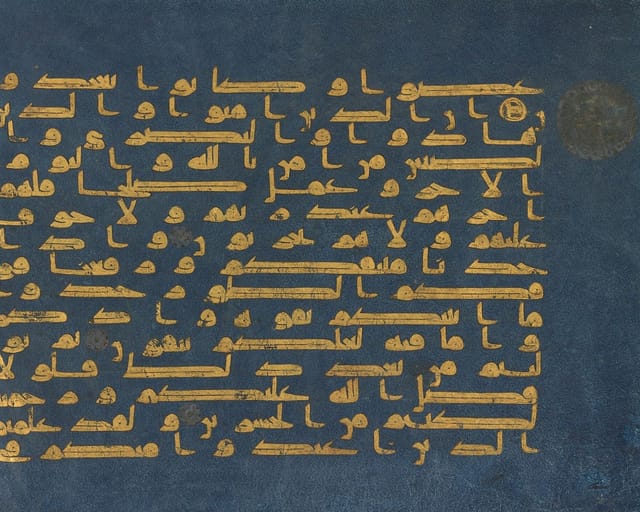
How was the Quran written and compiled? It came to the Prophet ﷺ in stages over about twenty-three years. His Companions memorized each passage and his scribes wrote it down as it arrived. After his death, Abu Bakr had the written pieces gathered into one set of sheets, and ʿUthmān had standard copies made from them and sent across the Muslim world. The oldest manuscripts that survive agree with the text Muslims recite today.
How was the Quran revealed?
Ibn ʿAbbās (may Allah be pleased with him) summed up the timeline: revelation began when the Prophet ﷺ was forty, he stayed in Mecca for thirteen years receiving it, and then he lived ten years in Medina (Sahih al-Bukhari 3851). The first words were “Recite in the name of your Lord who created” (96:1), and the Quran itself explains why it did not come all at once:
وَقُرۡءَانٗا فَرَقۡنَٰهُ لِتَقۡرَأَهُۥ عَلَى ٱلنَّاسِ عَلَىٰ مُكۡثٖ وَنَزَّلۡنَٰهُ تَنزِيلٗا
“It is a Quran We have divided into parts, so that you may recite it to people at intervals, and We sent it down in stages.”
Revelation answered events as they happened and steadied hearts over time (Quran 25:32). Allah also promised the Prophet ﷺ that “it is for Us to gather it and to recite it” (75:17). Each Ramadan the angel Gabriel reviewed the whole Quran with him, and in the year he died, he reviewed it twice (Sahih al-Bukhari 4998).
Was the Quran written down in the Prophet’s lifetime?
Yes. The Quran was recited and also written from the beginning. When the verse on those who stay behind from the struggle came down (4:95), the Prophet ﷺ said, “Call Zayd for me, and let him bring the board, the inkpot, and the shoulder blade,” and he dictated the verse to him (Sahih al-Bukhari 4990). Other Companions kept written passages of their own.
Memory carried it just as surely. Anas ibn Mālik named four men of Medina who had gathered the whole Quran by heart in the Prophet’s lifetime: Ubayy ibn Kaʿb, Muʿādh ibn Jabal, Zayd ibn Thābit, and Abu Zayd (Sahih al-Bukhari 5003). The Prophet ﷺ told his community, “Learn the Quran from four,” naming ʿAbdullāh ibn Masʿūd, Sālim, Muʿādh, and Ubayy (Sahih al-Bukhari 4999).
How did Abu Bakr compile the Quran?
Soon after the Prophet’s death, many of the reciters were killed in the battle of Yamāma. ʿUmar (may Allah be pleased with him) feared that much of the Quran could be lost with them and urged Abu Bakr to have it gathered into one book. Abu Bakr hesitated, then agreed. He gave the task to Zayd ibn Thābit, a young man trusted by all, who had written down the revelation himself. Zayd said that moving a mountain would have been lighter. He described his method:
«فَتَتَبَّعْتُ الْقُرْآنَ أَجْمَعُهُ مِنَ الْعُسُبِ وَاللِّخَافِ وَصُدُورِ الرِّجَالِ»
“So I searched out the Quran and gathered it from palm stalks, flat white stones, and the hearts of men.”
Zayd drew on both the written pieces and the memory of the reciters. He found the closing verses of Sūrat al-Tawba written down only with Abu Khuzayma al-Anṣārī, though they were known by heart. The finished sheets (ṣuḥuf) stayed with Abu Bakr, then with ʿUmar, and then with ʿUmar’s daughter Hafsa, a wife of the Prophet ﷺ. Zayd’s own account is preserved in Sahih al-Bukhari, the collection whose chains the hadith scholars examined most carefully (Are all hadith authentic?).
What did Uthman do with the Quran?
Under the third caliph ʿUthmān, Muslim armies from Syria and Iraq met on campaign in Armenia and Azerbaijan, and the Companion Ḥudhayfa ibn al-Yamān was alarmed to hear them quarrel over how to recite. He urged ʿUthmān to act. ʿUthmān borrowed Hafsa’s sheets and appointed Zayd with ʿAbdullāh ibn al-Zubayr, Saʿīd ibn al-ʿĀṣ, and ʿAbd al-Raḥmān ibn al-Ḥārith to copy them. Where they differed on spelling, they wrote in the dialect of Quraysh, in which the Quran had come down. He returned the sheets to Hafsa, sent a copy to each region, and ordered other private copies burned (Sahih al-Bukhari 4987).
The text of these copies, the ʿUthmānic codex (al-muṣḥaf al-ʿUthmānī), is the text every Muslim recites today. Later generations added dots and vowel marks to help new readers.
What do the earliest manuscripts show?
In July 2015 the University of Birmingham announced that two parchment leaves in its Mingana Collection, holding parts of suras 18 to 20, had been radiocarbon dated to between 568 and 645, with 95.4 percent probability. Their text matches the Quran read today (Was Muhammad a real person?).
Early fragments found in the Great Mosque of Sanaa in Yemen include a palimpsest, a page scraped and written over. Its lower text shows small differences of wording and order, of the kind the early reports describe in the personal copies some Companions kept before ʿUthmān’s standard copies.
What are the different readings (qirāʾāt)?
The Prophet ﷺ taught the Quran in more than one way. When ʿUmar heard Hishām ibn Ḥakīm recite Sūrat al-Furqān differently from the way he had learned it, he brought him to the Prophet ﷺ, who approved both recitations and said:
«إِنَّ هَذَا الْقُرْآنَ أُنْزِلَ عَلَى سَبْعَةِ أَحْرُفٍ فَاقْرَءُوا مَا تَيَسَّرَ مِنْهُ»
“This Quran was sent down in seven modes, so recite whichever is easy for you.”
The ʿUthmānic text, written without dots or vowels, could carry several of these authentic recitations. In the tenth century the Baghdad scholar Ibn Mujāhid set out seven canonical readings, and later scholars recognized ten. Most printed copies today follow the reading of Ḥafṣ from ʿĀṣim, while much of North and West Africa recites Warsh from Nāfiʿ. The differences touch pronunciation and small points of wording and never change a teaching. How the text is then understood is the subject of How should the Quran be interpreted?, and reading it in translation is discussed in Can you read the Quran in English?
A living Book
The Quran reached us through the scribes, reciters, and teachers of every generation, and through Allah’s own promise:
إِنَّا نَحۡنُ نَزَّلۡنَا ٱلذِّكۡرَ وَإِنَّا لَهُۥ لَحَٰفِظُونَ
“It is We who sent down the Reminder, and it is We who will preserve it.”
The Prophet ﷺ said, “The best of you are those who learn the Quran and teach it” (Sahih al-Bukhari 5027). May Allah make us among its people, who carry it in their hearts and live by its light.
And Allah knows best. والله أعلم
Frequently asked questions
Who wrote down the Quran?
Several Companions served as scribes of revelation in the Prophet's lifetime, the best known being Zayd ibn Thābit, whom the Prophet ﷺ called with a board, an inkpot, and a shoulder blade to write down a newly revealed verse (Sahih al-Bukhari 4990). Zayd later led both the compilation under Abu Bakr and the copying under ʿUthmān.
Why did Uthman burn the other copies of the Quran?
When soldiers from different provinces began quarreling over how to recite, ʿUthmān had standard copies made from the sheets kept by Hafsa, sent one to each region, and ordered other private copies burned so that the community would recite from one agreed text (Sahih al-Bukhari 4987).
What is the oldest Quran manuscript?
Among the oldest is the Birmingham Quran, two leaves with parts of suras 18 to 20 whose parchment was radiocarbon dated to between 568 and 645. Its text matches the Quran read today.
Has the Quran been changed?
The consonantal text Muslims recite today is the ʿUthmānic text of the seventh century, preserved in memory and in writing across every Muslim land. The accepted readings (qirāʾāt) differ only in small points of pronunciation and wording that go back to the Prophet's own teaching.
Related questions
Sources
- Sahih al-Bukhari 3851, 4986, 4987, 4990, 4992, 4998, 5003, 5027
- University of Birmingham, Birmingham Qur'an manuscript dated among the oldest in the world (22 July 2015)
- Ibn Mujāhid, Kitāb al-Sabʿa fī al-Qirāʾāt
- King Fahd Complex for the Printing of the Holy Quran, Medina
Image: Unknown calligrapher, Folio from the Blue Qurʾan (Sūrat al-Baqara 2:62), c. 950. Chester Beatty Library, Dublin (Is 1405A). Public domain, via Wikimedia Commons.. Image credits
.jpg)