How should the Quran be interpreted?
Question 1114
Question
How should Muslims interpret the Quran, what methods did the classical scholars use, and how do modern scholars read it today?
Summary of answer
The Quran is interpreted through the Quran itself, the Sunnah, the Arabic language, and the occasions of revelation, always toward its purposes of justice and mercy. The classical exegetes, from al-Ṭabarī to al-Zamakhsharī, recorded many sound readings side by side, debated abrogation until al-Suyūṭī and Shah Wali Allah reduced it to a handful of verses, and modern scholars such as Fazlur Rahman and Abdullah Saeed read each verse in its context.
﴿أَفَلَا يَتَدَبَّرُونَ ٱلۡقُرۡءَانَ أَمۡ عَلَىٰ قُلُوبٍ أَقۡفَالُهَآ﴾
Will they not reflect on the Quran, or are there locks upon their hearts?
Answer
الحمد لله Praise be to Allah.
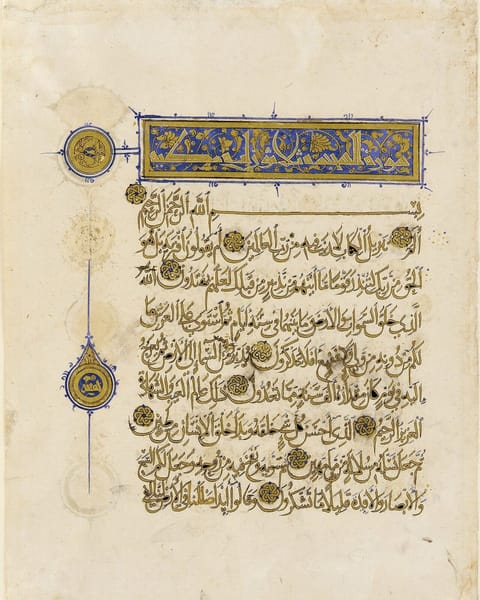
The Quran asks to be understood. “Will they not reflect on the Quran,” it asks, “or are there locks upon their hearts?” (Quran 47:24). Muslims have answered that call for fourteen centuries with a science of interpretation (tafsīr, تفسير) of great depth and generosity. The Quran should be interpreted through the Quran itself, the Sunnah of the Prophet ﷺ, the Arabic language, and the setting in which each verse was revealed, and always toward the purposes the whole Book proclaims: justice, mercy, and the knowledge of Allah. Within those bounds, the scholars welcomed many sound readings, and the tradition still grows.
Who has the right to interpret the Quran?
Ibn Abbas (may Allah be pleased with him), for whom the Prophet ﷺ prayed, “O Allah, teach him the Book” (Sahih al-Bukhari 75), divided tafsir into four kinds, as al-Ṭabarī (d. 923) reports at the opening of his great commentary: what the Arabs know from their language, what no one is excused for not knowing, what the scholars know, and what only Allah knows. Every believer can grasp the second kind, and reflection belongs to everyone. Detailed rulings belong to those trained in the language, the Sunnah, and the law.
The Quran itself describes two kinds of verses:
هُوَ ٱلَّذِيٓ أَنزَلَ عَلَيۡكَ ٱلۡكِتَٰبَ مِنۡهُ ءَايَٰتٞ مُّحۡكَمَٰتٌ هُنَّ أُمُّ ٱلۡكِتَٰبِ وَأُخَرُ مُتَشَٰبِهَٰتٞ
“He is the One who sent down the Book to you. Some of its verses are firm and clear; they are the foundation of the Book. Others are open to more than one meaning.”
The clear verses (muḥkamāt) are the foundation, and the scholars read the ambiguous ones (mutashābihāt) in their light. Ali ibn Abi Talib reminded the people of his own day of the human side of this work. During the conflicts of his caliphate, when each side claimed the Quran for itself, he said that the Quran is writing between two covers; it does not speak, and it is people who speak for it. The interpreter carries a trust.
What are the classical tools of tafsir?
The classical exegetes worked with a set of tools that every school accepted:
- The Quran by the Quran. A verse is read with the verses on the same subject, so that the whole Book explains each part.
- The Sunnah and the Companions. The Prophet ﷺ explained and lived the revelation, and his Companions heard it come down.
- The Arabic language. Al-Zamakhsharī (d. 1144) built his commentary al-Kashshāf on the finest points of grammar and rhetoric, and every later commentator learned from it.
- The occasions of revelation (asbāb al-nuzūl). Al-Wāḥidī (d. 1075) gathered the reports of what prompted each passage.
Aisha (may Allah be pleased with her) gave a lesson in context to her nephew ʿUrwa. He read the verse saying there is “no blame” on pilgrims who walk between Ṣafā and Marwa (2:158) as making the walk optional. She explained that the verse was revealed to reassure the Anṣār, who before Islam had avoided that walk because of an idol they used to honor, and that the Prophet ﷺ himself made it part of the pilgrimage (Sahih al-Bukhari 1643). Words read without their setting can mislead even a learned reader.
The great commentators also left room for disagreement. Al-Ṭabarī often lists several opinions from the early generations on a single verse before giving his preference. The rationalist Muʿtazila insisted that Allah’s justice and human reason must guide interpretation. Al-Rāzī (d. 1210) wove philosophy and theology into Mafātīḥ al-Ghayb, and the Sufis, such as al-Qushayrī in Laṭāʾif al-Ishārāt, drew out the inner meanings of the verses for the heart.
What about abrogation (naskh)?
Abrogation is the idea that a later verse replaces the ruling of an earlier one. Some early writers listed a great many abrogated verses, and some claimed that a single “verse of the sword” had cancelled more than a hundred verses of patience and peace. The scholars steadily narrowed these claims. Al-Suyūṭī (d. 1505) reduced the list to about twenty verses in al-Itqān. Shah Wali Allah of Delhi (d. 1762) argued in al-Fawz al-Kabīr that only five remain once each verse is read correctly. Abu Muslim al-Iṣfahānī (d. 934), whose view al-Rāzī reports, held that no verse of the Quran abrogates another. The verses of mercy, patience, and peace stand, and our answer on what jihad means explains why.
How do modern scholars interpret the Quran?
Modern scholars continued this work. Muhammad Abduh (d. 1905) and Rashid Rida asked in Tafsīr al-Manār how each verse guides human life and society. Fazlur Rahman (d. 1988) proposed a “double movement” in Islam and Modernity (1982): first move back to the setting of a verse to find the moral principle behind its ruling, then move forward to apply that principle in the present. Abdullah Saeed, in Interpreting the Qur’an (2006), developed a contextualist approach that weighs the Quran’s values in a hierarchy, with the most universal ones, such as justice, mercy, and human dignity, governing the rest. Amina Wadud and Asma Barlas reread the verses on women with these methods.
Their work matters most for verses whose plain wording, read alone, seems to conflict with the Quran’s justice, such as the verse often cited on striking a wife (Does the Quran allow wife beating?). The Quran itself praises those who seek the best meaning:
ٱلَّذِينَ يَسۡتَمِعُونَ ٱلۡقَوۡلَ فَيَتَّبِعُونَ أَحۡسَنَهُۥٓۚ أُوْلَـٰٓئِكَ ٱلَّذِينَ هَدَىٰهُمُ ٱللَّهُۖ وَأُوْلَـٰٓئِكَ هُمۡ أُوْلُواْ ٱلۡأَلۡبَٰبِ
“Those who listen to what is said and follow the best of it: they are the ones Allah has guided, and they are the people of understanding.”
Can ordinary Muslims interpret the Quran?
Yes, in the sense of reflection (tadabbur), which the Quran asks of everyone. Read it in Arabic if you can and in a good translation if you cannot (Can you read the Quran in English?). Read whole passages, look up what came before and after, and consult a trusted commentary. When a reading leads toward cruelty or injustice, take it as a sign to look again, since the Book Allah calls a mercy cannot command what contradicts mercy. For the history of the text itself, see How was the Quran compiled?, and for the place of hadith in interpretation, Are all hadith authentic?
A closing word
Every reading of the Quran begins in the heart. Open it with humility, ask Allah to open its meanings to you, and let it do what it promises:
وَنُنَزِّلُ مِنَ ٱلۡقُرۡءَانِ مَا هُوَ شِفَآءٞ وَرَحۡمَةٞ لِّلۡمُؤۡمِنِينَ
“We send down in the Quran what is healing and mercy for the believers.”
And Allah knows best. والله أعلم
Frequently asked questions
Can anyone interpret the Quran?
Every believer is invited to reflect on the Quran (47:24), and reflection is open to all. Giving rulings from it requires knowledge of Arabic, the Sunnah, the context of revelation, and the scholars' discussions, and a careful reader consults trusted commentaries.
What is the best tafsir to read in English?
Readers often begin with The Study Quran (2015), edited by Seyyed Hossein Nasr and colleagues, which gathers the views of many classical commentators verse by verse. Muhammad Asad's The Message of the Qur'an offers a reason-centered modern commentary.
Are some verses of the Quran abrogated?
The scholars differed. Early lists counted many, al-Suyūṭī reduced them to about twenty, Shah Wali Allah to five, and Abu Muslim al-Iṣfahānī held that no verse of the Quran is abrogated by another.
What is the Shia approach to tafsir?
Shia exegesis also reads the Quran through the Quran, the language, and the context, and gives special weight to the teachings of the Imams of the Prophet's family. Al-Ṭabāṭabāʾī's al-Mīzān (20th century) is a famous example of reading the Quran by the Quran.
Related questions
Sources
- al-Ṭabarī, Jāmiʿ al-Bayān ʿan Taʾwīl Āy al-Qurʾān, introduction
- al-Wāḥidī, Asbāb al-Nuzūl
- al-Suyūṭī, al-Itqān fī ʿUlūm al-Qurʾān
- Shāh Walī Allāh al-Dihlawī, al-Fawz al-Kabīr fī Uṣūl al-Tafsīr
- Fazlur Rahman, Islam and Modernity: Transformation of an Intellectual Tradition (University of Chicago Press, 1982)
- Abdullah Saeed, Interpreting the Qur'an: Towards a Contemporary Approach (Routledge, 2006)
- Sahih al-Bukhari 1643 (Aisha explains 2:158 to ʿUrwa)
Image: Shadhi ibn Muhammad ibn Ayyub (calligrapher); Aydughdi ibn ʿAbdallah al-Badri (illuminator), Folio from a Mamluk Qurʾan (Sūrat al-Sajda), Cairo, 1313–1314. Freer Gallery of Art, Smithsonian Institution, Washington (F1938.15). Public domain, via Wikimedia Commons.. Image credits
.jpg)