What is progressive Islam?
Question 1111
Question
What is progressive Islam, what do progressive Muslims believe, and is it part of the Islamic tradition?
Summary of answer
Progressive Islam is a way of reading the Quran and Sunnah that places justice (ʿadl), mercy (raḥma), and human dignity (karāma) at the center, and renews Islamic law through ijtihad guided by the objectives of the sharia. It carries forward the tradition's own principle, stated by Ibn al-Qayyim, that the sharia is justice, mercy, and wisdom throughout. Its scholars include Fazlur Rahman, Amina Wadud, and Khaled Abou El Fadl.
﴿إِنَّ ٱللَّهَ يَأۡمُرُ بِٱلۡعَدۡلِ وَٱلۡإِحۡسَٰنِ وَإِيتَآيِٕ ذِي ٱلۡقُرۡبَىٰ وَيَنۡهَىٰ عَنِ ٱلۡفَحۡشَآءِ وَٱلۡمُنكَرِ وَٱلۡبَغۡيِۚ﴾
Allah commands justice, excellence, and generosity to relatives, and He forbids indecency, wrongdoing, and oppression.
Answer
الحمد لله Praise be to Allah.
Progressive Islam is a way of reading the Quran and the Sunnah that places justice (ʿadl), mercy (raḥma), and human dignity (karāma) at the center of the religion. Progressive Muslims hold the same creed and pray the same prayers as every other Muslim. What marks them is their method: they renew Islamic law through fresh reasoning (ijtihād, اجتهاد), guided by the objectives of the sharia (maqāṣid al-sharīʿa), so that each ruling serves the purposes Allah revealed it for. The name became common after the scholar Omid Safi edited the volume Progressive Muslims: On Justice, Gender, and Pluralism in 2003, and the approach it names is as old as the tradition’s own mercy.
What do progressive Muslims believe?
They believe in Allah, His angels, His books, His messengers, the Last Day, and His decree, and they love the Prophet ﷺ and the Quran he brought. Their emphasis falls on the Quran’s moral priorities, above all justice:
يَـٰٓأَيُّهَا ٱلَّذِينَ ءَامَنُواْ كُونُواْ قَوَّـٰمِينَ بِٱلۡقِسۡطِ شُهَدَآءَ لِلَّهِ وَلَوۡ عَلَىٰٓ أَنفُسِكُمۡ أَوِ ٱلۡوَٰلِدَيۡنِ وَٱلۡأَقۡرَبِينَۚ
“You who believe, stand firm for justice as witnesses for Allah, even against yourselves, your parents, or your relatives.”
From that center come the convictions that progressive Muslims share:
- The equal dignity of women and men, who were created “from a single soul” (4:1) and are each other’s protecting friends (9:71). See Is feminism compatible with Islam?
- Freedom of conscience, since “there is no compulsion in religion” (2:256).
- The dignity of every human being, since Allah honored the children of Adam (17:70), including LGBTQ Muslims, whose love the stronger view holds to be lawful (Is being gay haram?).
- Justice for the poor, through zakat, fair wages, and care for the stranger, as the sharia’s own institutions provided.
- Respect for other faiths, whose sincere believers the Quran promises their reward (2:62).
Is progressive Islam part of the Islamic tradition?
Yes. The tradition has always reasoned about how to carry the Quran’s purposes into new circumstances. The Prophet ﷺ himself foretold that renewal would be a permanent feature of his community:
«إِنَّ اللَّهَ يَبْعَثُ لِهَذِهِ الأُمَّةِ عَلَى رَأْسِ كُلِّ مِائَةِ سَنَةٍ مَنْ يُجَدِّدُ لَهَا دِينَهَا»
“Allah will send to this community, at the turn of every century, someone who will renew its religion for it.”
Sunan Abi Dawud 4291, graded sahih by al-Albani
The second caliph, Umar (may Allah be pleased with him), is remembered for suspending the penalty for theft during the famine of the Year of Ashes and for leaving the conquered lands of Iraq to their cultivators, judging that the purpose of the law required it. Abu Hanifa built a school on reasoned opinion (raʾy). Al-Shāṭibī (d. 1388) of Granada organized the law around its objectives in al-Muwāfaqāt. Ibn Qayyim al-Jawziyya (d. 1350), may Allah have mercy on him, gave the principle its most famous form in Iʿlām al-Muwaqqiʿīn: the sharia is built on wisdom and the welfare of people in this life and the next; it is justice throughout, mercy throughout, benefit throughout, and wisdom throughout, and any ruling that turns justice into injustice or mercy into its opposite does not belong to it, even if someone reached it by interpretation. He also titled a chapter of that book on how fatwas change with changes in time, place, and circumstance.
In the modern era, Muhammad Abduh (d. 1905), Grand Mufti of Egypt, called for reopening the door of ijtihad, and his heirs at al-Azhar, such as Mahmud Shaltut, gave rulings that freed believers from many later restrictions.
Who are the scholars of progressive Islam?
- Fazlur Rahman (1919–1988), a Pakistani scholar at the University of Chicago, proposed the “double movement” in Islam and Modernity (1982): first understand a verse in its historical setting and draw out its moral principle, then apply that principle to the present.
- Amina Wadud reread the Quran’s teaching on women in Qur’an and Woman (1992), and in 2005 she led a mixed congregation in Friday prayer in New York.
- Khaled Abou El Fadl, professor of Islamic law at UCLA, wrote Speaking in God’s Name (2001) on the ethics of religious authority.
- Asma Barlas, Kecia Ali, Ziba Mir-Hosseini, Abdullah Saeed, Abdullahi An-Naʿim, and Scott Siraj al-Haqq Kugle have written on the Quran, gender, family law, human rights, and sexuality.
Our answer on how the Quran should be interpreted sets out their methods alongside the classical sciences.
Where do progressive Muslims pray?
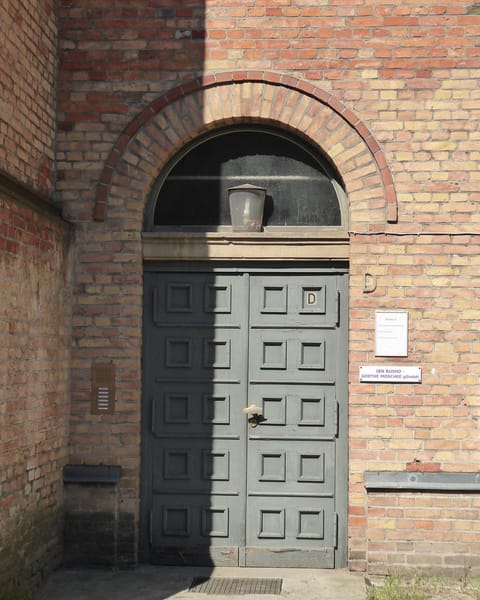
Progressive Muslims pray in every mosque, and many have also built communities of their own. Muslims for Progressive Values, founded in 2007 by Ani Zonneveld and Pamela Taylor, gathers chapters in North America and beyond, where women and men lead prayer. In Berlin, the Ibn Rushd-Goethe Mosque, founded in 2017 by the lawyer and imam Seyran Ateş, welcomes women and men to pray side by side, behind women and men imams. Musawah, a global movement founded in Kuala Lumpur in 2009, works for equality in Muslim family law from within the tradition. For more communities, see Are there inclusive mosques? and Can women lead prayer?
Is progressive Islam following the times instead of the Quran?
Some critics say so. The scholars who hold the progressive view answer that the Quran itself sets the priorities they follow. The Prophet ﷺ changed the society of Arabia step by step, toward more justice for women, the enslaved, orphans, and the poor, and the direction of that change is part of the message. Classical jurists, from al-Qarāfī to Ibn al-Qayyim, taught that rulings built on custom change when custom changes. To carry the Quran’s justice further in the same direction is to follow the Quran. The scholars of the sharia (What is sharia?) call this fidelity to its spirit.
A closing duʿāʾ
Progressive Islam asks every Muslim to read the Book with a heart open to Allah’s justice and mercy, and to keep that heart steady:
رَبَّنَا لَا تُزِغۡ قُلُوبَنَا بَعۡدَ إِذۡ هَدَيۡتَنَا وَهَبۡ لَنَا مِن لَّدُنكَ رَحۡمَةًۚ إِنَّكَ أَنتَ ٱلۡوَهَّابُ
“Our Lord, do not let our hearts swerve after You have guided us, and grant us mercy from Yourself. You are the Giver of all gifts.”
And Allah knows best. والله أعلم
Frequently asked questions
Is progressive Islam a separate sect?
No. Progressive Muslims are Sunni, Shia, and Sufi, and they hold the same creed, pray the same prayers, and fast the same Ramadan as other Muslims. Progressive Islam is an approach to interpretation and law within the one religion.
Is progressive Islam the same as liberal Islam?
The terms overlap and are often used together. Progressive Muslims usually stress social and economic justice and the Quran's care for the poor alongside individual freedom, and they ground their arguments in the Quran, the Sunnah, and the classical sciences.
Do progressive Muslims follow the Quran?
Yes. Progressive scholars treat the Quran as the word of Allah and the highest authority, and the Sunnah as its living explanation. Their method asks how each verse's moral purpose can be fulfilled faithfully in a new age.
Where can I find a progressive mosque?
Inclusive communities include the Ibn Rushd-Goethe Mosque in Berlin, the chapters of Muslims for Progressive Values in North America, and women-led and LGBTQ-welcoming mosques in Toronto, London, Copenhagen, and elsewhere.
Related questions
Sources
- Omid Safi (ed.), Progressive Muslims: On Justice, Gender, and Pluralism (Oneworld, 2003)
- Fazlur Rahman, Islam and Modernity: Transformation of an Intellectual Tradition (University of Chicago Press, 1982)
- Amina Wadud, Qur'an and Woman: Rereading the Sacred Text from a Woman's Perspective (Oxford University Press, 1999)
- Khaled Abou El Fadl, Speaking in God's Name: Islamic Law, Authority and Women (Oneworld, 2001)
- Ibn Qayyim al-Jawziyya, Iʿlām al-Muwaqqiʿīn
- Muslims for Progressive Values
Image: Fridolin freudenfett, Entrance to the Ibn Rushd-Goethe Mosque at the Johanniskirche, Berlin-Moabit, 2017. CC BY-SA 4.0, via Wikimedia Commons.. Image credits
