Can a woman be an imam and lead prayer?
Question 1057
Question
Is it permissible for a woman to serve as an imam, leading other women or a mixed congregation of women and men in prayer?
Summary of answer
A woman may be an imam. The Prophet ﷺ appointed a muezzin for Umm Waraqa and told her to lead the people of her household, a congregation that included at least one man, and he taught that the best reciter of the Quran should lead. Most schools allow women to lead women; Abu Thawr, al-Muzani, al-Tabari, and Ibn ʿArabi accepted women leading men, and women-led congregations now gather from China to Berlin.
Answer
الحمد لله Praise be to Allah.
A woman may be an imam. The Prophet ﷺ himself appointed a woman to lead prayer in her home, and he named knowledge of the Quran as the qualification for leading, with no mention of sex. Nearly every school of Islamic law allows a woman to lead other women. On leading men, the scholars differed (ikhtalafa al-ʿulamāʾ), and the stronger view (al-rājiḥ) is that a woman who is the most learned and the best reciter may lead a mixed congregation that accepts her.
Did a woman lead prayer in the time of the Prophet ﷺ?
Umm Waraqa bint ʿAbd Allāh of the Anṣār (may Allah be pleased with her) had learned the Quran. When the Prophet ﷺ set out for Badr, she asked to come and nurse the wounded, and he told her to stay home, promising that Allah would grant her martyrdom; the people of Medina called her “the martyr” from then on (Sunan Abi Dawud 591). A second narration adds:
«وَكَانَ رَسُولُ اللَّهِ صلى الله عليه وسلم يَزُورُهَا فِي بَيْتِهَا وَجَعَلَ لَهَا مُؤَذِّنًا يُؤَذِّنُ لَهَا وَأَمَرَهَا أَنْ تَؤُمَّ أَهْلَ دَارِهَا»
“The Messenger of Allah used to visit her in her house. He appointed a muezzin to call the adhan for her, and he told her to lead the people of her household in prayer.”
The narrator, ʿAbd al-Raḥmān ibn Khallād, added: “I saw her muezzin, and he was an old man.” Al-Albani graded both reports hasan. A household with its own muezzin was a congregation, and that congregation included at least one man. The Prophet ﷺ did not place a man in charge of it. He placed the woman who knew the Quran.
What makes someone fit to lead the prayer?
The Prophet ﷺ answered this question directly:
«يَؤُمُّ الْقَوْمَ أَقْرَؤُهُمْ لِكِتَابِ اللَّهِ فَإِنْ كَانُوا فِي الْقِرَاءَةِ سَوَاءً فَأَعْلَمُهُمْ بِالسُّنَّةِ»
“The one who best recites the Book of Allah should lead the people. If they are equal in recitation, then the one who knows the Sunnah best.”
The order continues with the earliest to emigrate and the earliest to accept Islam. Every criterion is a matter of knowledge and devotion. None of them depends on being a man. The Quran sets the same measure for all of human worth:
إِنَّ أَكۡرَمَكُمۡ عِندَ ٱللَّهِ أَتۡقَىٰكُمۡۚ إِنَّ ٱللَّهَ عَلِيمٌ خَبِيرٞ
“The noblest of you in the sight of Allah is the most mindful of Him. Allah is all-knowing, all-aware.”
What did the classical schools say?
On women leading women, the schools are broadly open. The Shafi’i and Hanbali schools permit it, and the Hanafi school permits it while calling it disliked (makrūh). Aisha and Umm Salama (may Allah be pleased with them) are reported in the early collections of ʿAbd al-Razzāq and Ibn Abī Shayba to have led women in prayer, standing in the middle of the first row. Many Shia jurists also allow a woman to lead a women’s congregation. The Maliki school is the main exception.
On women leading men, the majority said no. Their strongest text is a report in Sunan Ibn Majah (1081) that says “Let no woman lead a man in prayer,” and its chain is weak: al-Albani and every other grader in the standard editions rated it daʿīf. A minority of the early jurists disagreed with the majority. Later scholars record that Abu Thawr (d. 854), al-Muzani (d. 878), and Ibn Jarir al-Tabari (d. 923) held men’s obligatory prayer behind a woman to be valid. The Andalusian master Ibn ʿArabi (d. 1240) wrote in al-Futūḥāt al-Makkiyya that some scholars allow women to lead men without restriction, “and that is my view as well,” and he warned against forbidding it without proof.
The sound position follows the Prophet’s ﷺ own appointment of Umm Waraqa and his rule of the best reciter: a woman may lead any congregation that chooses her.
Where do women lead prayer today?
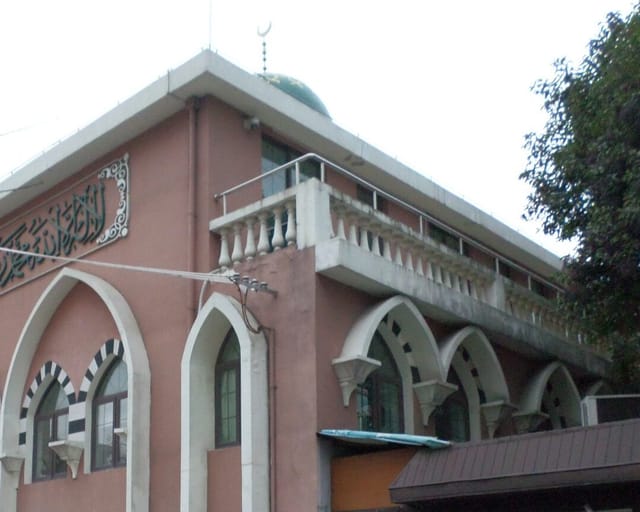
Women’s leadership in prayer has a long history. In central China, Hui Muslim communities built women’s mosques (nüsi) from the late Ming and early Qing periods; the Wangjia Hutong Women’s Mosque in Kaifeng dates to 1820. Women imams (nü ahong) teach the Quran and guide their congregations there to this day, as Maria Jaschok and Shui Jingjun documented in The History of Women’s Mosques in Chinese Islam (2000).
On 18 March 2005, the scholar Amina Wadud led a mixed congregation in Friday prayer in New York, after three mosques had declined to host it. In January 2015 the Women’s Mosque of America held its first Friday prayer in Los Angeles, with a woman giving the sermon. In August 2016 Sherin Khankan and Saliha Marie Fetteh led the first Friday prayer at the Mariam Mosque in Copenhagen. In Berlin, the Ibn Rushd-Goethe Mosque, founded in 2017 by the lawyer and imam Seyran Ateş, welcomes women and men to pray side by side behind women and men imams. More communities are listed in Are there LGBTQ-friendly and inclusive mosques? and described in What is progressive Islam?
Can a woman give the Friday sermon?
The khutbah is teaching and counsel, and women taught the community from its first days. Aisha corrected senior Companions, and the tradition of women scholars who taught men and women in the great mosques runs through the centuries. On the evidence above, a woman qualified to lead the Friday prayer may also deliver its sermon. A woman who prays Jumuʿah in a mosque with a male imam fulfills it too, and one who misses it prays ẓuhr (What if I miss Jummah?).
How should a community decide?
A congregation should choose the person best able to lead it in knowledge, recitation, and character, as the Prophet ﷺ taught. Women-led and mixed congregations, women’s circles at home, and mosques that follow the majority view all pray to the same Lord. Nobody should be pressured to pray behind an imam they do not accept, and nobody should mock women who lead or the women and men who pray behind them. A mosque that keeps the older arrangement can still open its doors fully to women (Can women go to the mosque?).
A closing word
The Quran describes the believing community as one in which women and men carry the work of faith together:
وَٱلۡمُؤۡمِنُونَ وَٱلۡمُؤۡمِنَٰتُ بَعۡضُهُمۡ أَوۡلِيَآءُ بَعۡضٖۚ يَأۡمُرُونَ بِٱلۡمَعۡرُوفِ وَيَنۡهَوۡنَ عَنِ ٱلۡمُنكَرِ وَيُقِيمُونَ ٱلصَّلَوٰةَ
“The believing men and the believing women are protecting friends of one another. They enjoin what is right, forbid what is wrong, and establish the prayer.”
May Allah raise up in every community women and men who establish the prayer with knowledge and humility, and accept it from all of us.
And Allah knows best. والله أعلم
Frequently asked questions
Can a woman lead other women in prayer?
Yes. The Hanafi, Shafi'i, and Hanbali schools allow it, and Aisha and Umm Salama are reported to have led women in prayer, standing in the middle of the first row. Many Shia jurists allow it as well; the Maliki school is the main exception.
Can a woman lead men in prayer?
The stronger view is that she can when she is the most learned and the best reciter and the congregation accepts her. The evidence is the hadith of Umm Waraqa and the rule of the Prophet ﷺ that the best reciter leads; the report forbidding it has a weak chain.
Can a woman give the Friday khutbah?
On the same evidence, yes. Women have given the Friday sermon at the Women's Mosque of America in Los Angeles since 2015 and at women-led mosques in Europe.
Where should a woman imam stand?
When leading women only, the classical practice is to stand in the middle of the front row. In mixed congregations, communities arrange the rows as they agree, whether women and men pray side by side or in separate rows.
Related questions
Sources
- Sunan Abi Dawud 591–592 (Umm Waraqa)
- Sahih Muslim 673a (the best reciter leads)
- Ibn ʿArabi, al-Futūḥāt al-Makkiyya
- Maria Jaschok and Shui Jingjun, The History of Women's Mosques in Chinese Islam: A Mosque of Their Own (Curzon, 2000)
- Amina Wadud, Inside the Gender Jihad: Women's Reform in Islam (Oneworld, 2006)
Image: Chongkian, Xiaotaoyuan Women's Mosque, Shanghai, 2015. CC BY-SA 4.0, via Wikimedia Commons.. Image credits
