Can women go to the mosque?
Question 1058
Question
Are Muslim women allowed to attend the mosque for daily prayers, Friday prayer, Eid, and classes, and may a husband or community stop them?
Summary of answer
Women may go to the mosque for the five prayers, Jumuʿah, Eid, classes, and iʿtikāf. The Prophet ﷺ commanded, 'Do not prevent the female servants of Allah from the mosques of Allah,' and women prayed Fajr and ʿIshāʾ in his mosque, asked him for their own day of teaching, and kept iʿtikāf there after him. Women later taught in the great mosques of Damascus and Medina, and communities owe them full and dignified space.
Answer
الحمد لله Praise be to Allah.
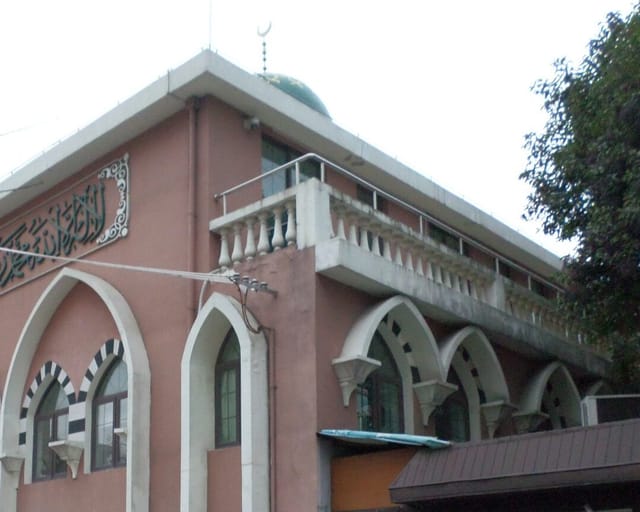
Women may go to the mosque. They may attend the five daily prayers, the Friday prayer, the Eid prayers, classes, and the retreat of iʿtikāf, and no husband, father, or committee has the right to keep them out. The Prophet ﷺ gave an explicit command on this question, women filled his mosque in Medina, and women later taught in the great mosques of the Muslim world. The mosque is the house of Allah, and His female servants belong in it as fully as His male servants.
What did the Prophet ﷺ say about women going to the mosque?
One of the wives of ʿUmar ibn al-Khaṭṭāb used to attend the Fajr and ʿIshāʾ prayers in congregation at the mosque. Someone asked her why she went out when she knew ʿUmar disliked it and felt protective of her. She replied, “Then what stops him from forbidding me?” The answer came: what stopped him was the saying of the Messenger of Allah ﷺ:
«لاَ تَمْنَعُوا إِمَاءَ اللَّهِ مَسَاجِدَ اللَّهِ»
“Do not prevent the female servants of Allah from the mosques of Allah.”
ʿUmar was one of the strongest personalities among the Companions, and still he did not forbid her. In another narration the Prophet ﷺ said, “If your women ask your permission to go to the mosques, give it to them.” When ʿAbd Allāh ibn ʿUmar related this and his son Bilāl answered, “By Allah, we will prevent them,” Ibn ʿUmar turned on him with a sharp rebuke: “I tell you what the Messenger of Allah said, and you say we will prevent them?” (Sahih Muslim 442b).
Did women pray in the mosque of the Prophet ﷺ?
They prayed there every day. Aisha (may Allah be pleased with her) described believing women attending the dawn prayer behind the Prophet ﷺ, wrapped in their cloaks, and returning home in the dark (Sahih al-Bukhari 372). Mothers brought their babies. The Prophet ﷺ said that he would begin a prayer meaning to make it long, hear a child crying, and shorten it “because I do not want to make things hard for his mother” (Sahih al-Bukhari 707). He adjusted the congregation to the women in it.
Women asked for more. They told him the men had taken all his time and asked for a day of their own, and he gave them one (Sahih al-Bukhari 101). For Eid he told every woman to come out, young women and those who usually stayed in seclusion and even women on their periods, “to witness the good and the supplications of the believers” (Sahih al-Bukhari 324). After his death his wives kept the retreat of iʿtikāf in the mosque during the last ten nights of Ramadan, as he had done (Sahih al-Bukhari 2026).
Is it better for a woman to pray at home?
The scholars differed on this. A hadith in Sunan Abi Dawud 570, graded sahih by al-Albani, says a woman’s prayer in the inner rooms of her house is better than her prayer in its courtyard. Aisha once remarked that if the Prophet ﷺ had seen what some women of her time were doing, he would have kept them from the mosque (Sahih al-Bukhari 869). Some later Hanafi jurists, worried about public disorder, went further and discouraged young women from attending.
The stronger view keeps all of this in its place. Praying at home is a mercy for a woman nursing a baby, caring for the sick, or tired after work, and she loses nothing by it. Aisha’s remark describes what she thought the Prophet ﷺ might have done; she did not forbid anyone, and his own command stands: do not prevent them. A preference for prayer at home can never become a reason to shut women out of the house of Allah, and a woman who chooses the mosque gains the reward of praying in congregation.
Did women teach in the great mosques?
They did, and men came to learn from them. Umm al-Dardāʾ the Younger, a scholar of the generation after the Companions, held classes in the mosques of Damascus and Jerusalem, and the Umayyad caliph ʿAbd al-Malik ibn Marwān was among her regular students. As a girl she had sat with the scholars in the mosque and prayed in the men’s rows. Centuries later, in the early fourteenth century, Fāṭima al-Baṭāʾiḥiyya taught Sahih al-Bukhari to men and women, including in the mosque of the Prophet ﷺ in Medina. Mohammad Akram Nadwi, who set out to collect such biographies, found records of some eight thousand women scholars of hadith; see Female scholars in Islam.
What do mosques owe women today?
Many women today find the mosque harder to enter than the women of Medina did: a cramped room at the back, a broken side door, no view of the imam, or no women’s space at all. The Sunnah points the other way. The Quran describes those who truly tend the mosques by their faith and their prayer, with nothing about their sex:
إِنَّمَا يَعۡمُرُ مَسَٰجِدَ ٱللَّهِ مَنۡ ءَامَنَ بِٱللَّهِ وَٱلۡيَوۡمِ ٱلۡأٓخِرِ وَأَقَامَ ٱلصَّلَوٰةَ وَءَاتَى ٱلزَّكَوٰةَ
“The mosques of Allah are tended only by those who believe in Allah and the Last Day, establish the prayer, and give zakat.”
Communities honor that verse by giving women a clean, dignified space with a clear view and sound of the imam, a place on the mosque board, and a welcome free of comments about their dress (Is it haram to harass women about hijab?). Some communities go further and let women lead prayer or pray side by side with men, as at the inclusive mosques now found in many cities. Questions about attending while menstruating are answered in Can women pray or read the Quran on their period?
The mosques belong to Allah
The Quran settles who owns the mosque:
وَأَنَّ ٱلۡمَسَٰجِدَ لِلَّهِ فَلَا تَدۡعُواْ مَعَ ٱللَّهِ أَحَدٗا
“The mosques belong to Allah, so call on no one alongside Allah.”
The mosque belongs to no committee, family, or sex. It belongs to Allah, who calls every servant to His house. May He make our mosques places where every woman who walks in feels the welcome the women of Medina felt.
And Allah knows best. والله أعلم
Frequently asked questions
Can women go to Jummah?
Yes. Women attended the Friday prayer in the mosque of the Prophet ﷺ, and a woman who prays Jumuʿah in congregation fulfills it in place of ẓuhr. Classical jurists did not make it obligatory for women, so a woman who cannot attend carries no blame.
Can a husband stop his wife from going to the mosque?
The Prophet ﷺ said, 'If your women ask your permission to go to the mosques, give it to them,' and Ibn ʿUmar sharply rebuked his own son for saying he would refuse. A husband has no right to keep his wife from the house of Allah.
Is it better for a woman to pray at home?
A hadith in Sunan Abi Dawud praises a woman's prayer at home, and it is a mercy for women with small children or heavy duties. It does not cancel the explicit command not to prevent women, and a woman who chooses the mosque receives the reward of congregation.
Can women go to the mosque on their period?
The Prophet ﷺ told menstruating women to come out for Eid and join the gathering, while staying apart from the prayer rows. Scholars differ on staying inside a mosque during menstruation; the evidence and the more lenient views are set out in a separate answer.
Related questions
Sources
- Sahih al-Bukhari 900, 372, 707, 324, 2026
- Sahih Muslim 442 (do not prevent your women from the mosques)
- Sunan Abi Dawud 570
- Mohammad Akram Nadwi, al-Muḥaddithāt: The Women Scholars in Islam (Interface Publications, 2007)
Image: Chongkian, Xiaotaoyuan Women's Mosque, Shanghai, 2015. CC BY-SA 4.0, via Wikimedia Commons.. Image credits
