Who were the great women scholars of Islam?
Question 1068
Question
Were there women scholars in Islamic history, and who were the most important of them?
Summary of answer
Islamic learning has always had women scholars. Aisha taught the Companions, Umm al-Dardāʾ taught a caliph in Damascus, Karima al-Marwaziyya taught Sahih al-Bukhari in Mecca, and Nana Asmaʾu trained women teachers across West Africa. Mohammad Akram Nadwi has documented some eight thousand women hadith scholars, and al-Dhahabi found none of them accused of lying in hadith.
Answer
الحمد لله Praise be to Allah.
The history of Islamic learning is full of women. They memorized and taught the Quran, transmitted hadith, issued legal opinions, taught caliphs and judges, and endowed mosques and schools. When the Oxford scholar Mohammad Akram Nadwi set out to collect the women hadith scholars of Islam, he expected to find a few dozen. He found some eight thousand, and his introduction to the project, al-Muḥaddithāt (2007), has changed how many Muslims picture their own tradition. Women scholars in Islam are as old as Islam itself.
Did the Prophet ﷺ teach women?
He did, and women asked for more. Abu Saʿīd al-Khudrī reported:
«قَالَتِ النِّسَاءُ لِلنَّبِيِّ صلى الله عليه وسلم غَلَبَنَا عَلَيْكَ الرِّجَالُ، فَاجْعَلْ لَنَا يَوْمًا مِنْ نَفْسِكَ. فَوَعَدَهُنَّ يَوْمًا لَقِيَهُنَّ فِيهِ، فَوَعَظَهُنَّ وَأَمَرَهُنَّ»
“The women said to the Prophet ﷺ: The men have taken all your time from us, so set aside a day for us. He promised them a day, met them on it, and taught them and instructed them.”
Aisha praised the women of the Ansar for the same eagerness: “How excellent are the women of the Ansar! Shyness never kept them from learning their religion deeply” (Sahih Muslim 332c). The Quran gives knowledge its rank without asking who holds it:
قُلۡ هَلۡ يَسۡتَوِي ٱلَّذِينَ يَعۡلَمُونَ وَٱلَّذِينَ لَا يَعۡلَمُونَ
“Say: Are those who know equal to those who do not know?”
Who were the women scholars among the first Muslims?
Aisha bint Abī Bakr (may Allah be pleased with her) stands first. More than two thousand hadith come to us through her, and senior Companions brought her their questions on law, ritual, and the meaning of the Quran. She corrected their errors with confidence, and the Shafiʿi scholar al-Zarkashi (d. 1392) collected those corrections into a book. Her life is discussed further in How old was Aisha when she married the Prophet?
Umm Salama, another wife of the Prophet ﷺ, was consulted on law and transmitted hundreds of hadith. Al-Shifāʾ bint ʿAbd Allāh taught writing in Medina; the Prophet ﷺ asked her to teach his wife Ḥafṣa (Sunan Abi Dawud 3887).
In the next generation, Umm al-Dardāʾ the Younger became one of the leading jurists of Damascus. As a girl she sat among the men scholars in the mosque and prayed in their rows, and as an adult she taught hadith and law in Damascus and Jerusalem. Nadwi records that the Umayyad caliph ʿAbd al-Malik ibn Marwān attended her lessons.
Who were the great women hadith scholars?
Women were among the most trusted links in the chains of hadith. The great critic al-Dhahabi (d. 1348), who wrote a whole dictionary of weak and suspect narrators, observed in Mīzān al-Iʿtidāl that he knew of no woman who had been accused of lying in hadith or whose narrations were abandoned.
Karima al-Marwaziyya (969 to 1069) was born near Merv and settled in Mecca, where she became the leading teacher of Sahih al-Bukhari of her age. Scholars traveled to the Sacred Mosque to read the book with her, among them the historian al-Khaṭīb al-Baghdādī.
Fāṭima al-Samarqandiyya (d. 1185) was a Hanafi jurist, the daughter of the jurist who wrote Tuḥfat al-Fuqahāʾ. Her husband, ʿAlāʾ al-Dīn al-Kāsānī, wrote Badāʾiʿ al-Ṣanāʾiʿ, one of the great works of Hanafi law, and biographers record that she corrected his legal opinions when he erred. She advised the sultan Nūr al-Dīn in Aleppo, where she is buried.
The Mamluk scholar al-Sakhawi (d. 1497) gave the final volume of his biographical dictionary of the ninth Islamic century entirely to women, more than a thousand of them. Many of the great hadith masters of that age, including Ibn Hajar al-ʿAsqalānī, studied with women teachers.
Did women found mosques and schools?
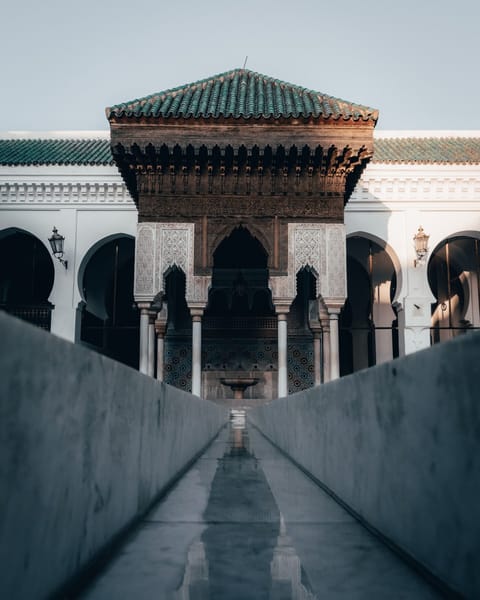
They did, across the Muslim world. Moroccan tradition, recorded by Ibn Abī Zarʿ in the fourteenth century, credits Fāṭima al-Fihriyya with founding the Qarawiyyin mosque in Fez around 859 with the wealth she inherited from her father; historians debate how much of the story is legend. The Qarawiyyin grew into one of the oldest centers of learning in the world and is a university today.
Royal and merchant women endowed mosques, madrasas, hospitals, and soup kitchens through charitable endowments (awqāf, أوقاف). In Istanbul, the Haseki complex founded by Hürrem Sultan in the 1530s combined a mosque, a madrasa, a hospital, and a kitchen for the poor. Such endowments paid teachers and fed students for centuries.
Who was Nana Asmaʾu?
Nana Asmaʾu (1793 to 1864), daughter of Usman dan Fodio, the founder of the Sokoto Caliphate in what is now northern Nigeria, was a scholar, poet, and teacher. She wrote in Arabic, Fulfulde, and Hausa, also knew Tamasheq, and more than sixty of her works survive, on law, theology, Sufism, and history. Around 1830 she trained a network of women teachers, the jajis, who traveled to teach women in their homes; their students became known as the ʿYan Taru. In northern Nigeria today, women’s associations, schools, and meeting halls carry her name.
Are there women scholars today?
Women scholars teach in every part of the Muslim world. Since 2006 Morocco has trained women religious guides (murshidāt) who teach and counsel in mosques. In 2017 Indonesia held its first Congress of Women Ulama (KUPI), whose fatwas against child marriage and sexual violence have shaped national debate. In universities, scholars such as Amina Wadud, Asma Barlas, and Kecia Ali have reshaped the study of the Quran and Islamic law. Women today also lead prayer and serve as imams (Can a woman be an imam and lead prayer?), and the case that equality belongs to Islam is set out in Is feminism compatible with Islam?
A girl who studies the Quran, a woman who earns a doctorate in Islamic law, and a mother who teaches her children their prayers all stand in this line (What does Islam say about education for girls?).
The reward of the seeker
When the believers prayed for Allah’s answer, the Quran records His reply:
فَٱسۡتَجَابَ لَهُمۡ رَبُّهُمۡ أَنِّي لَآ أُضِيعُ عَمَلَ عَٰمِلٖ مِّنكُم مِّن ذَكَرٍ أَوۡ أُنثَىٰۖ بَعۡضُكُم مِّنۢ بَعۡضٖ
“Their Lord answered them: I will never let the work of any worker among you be lost, male or female. You are of one another.”
May Allah raise up women of knowledge in every generation, and open the doors of learning to every daughter who seeks it.
And Allah knows best. والله أعلم
Frequently asked questions
Can a woman be a mufti or Islamic scholar?
Yes. Women have taught hadith, issued legal opinions, and trained scholars since the time of Aisha. Today women serve as scholars, religious guides, and members of fatwa bodies in many countries.
Who was the first female scholar in Islam?
Khadija was the first person to believe, and Aisha became the first great woman scholar. Senior Companions brought her their questions, and more than two thousand hadith come to us through her.
Did male scholars learn from women?
Many did. The caliph ʿAbd al-Malik attended the lessons of Umm al-Dardāʾ, al-Khaṭīb al-Baghdādī read Sahih al-Bukhari with Karima al-Marwaziyya, and the great hadith masters of later centuries list dozens of women among their teachers.
Were women scholars accepted in Shia Islam?
Yes. Fāṭima al-Zahrāʾ is revered as a source of knowledge, and the women's seminary of Jāmiʿat al-Zahrāʾ in Qom trains women who teach and write on law and theology.
Related questions
Sources
- Mohammad Akram Nadwi, al-Muhaddithat: The Women Scholars in Islam (Interface Publications, 2007)
- Sahih al-Bukhari 101 (a day for the women)
- al-Dhahabi, Mīzān al-Iʿtidāl, vol. 4 (on women narrators)
- al-Sakhawi, al-Ḍawʾ al-Lāmiʿ li-Ahl al-Qarn al-Tāsiʿ, final volume on women
- Jean Boyd and Beverly B. Mack, The Collected Works of Nana Asmaʾu, Daughter of Usman ɗan Fodiyo (Michigan State University Press, 1997)
- History News Network, Mohammad Akram Nadwi discovers that many Islamic scholars were women
Image: Reda.bnhd, Courtyard of the Qarawiyyin Mosque, Fez, 2019. CC BY-SA 4.0, via Wikimedia Commons.. Image credits
