Can you read the Quran in English?
Question 1214
Question
Is it permissible and rewarding to read the Quran in an English translation instead of Arabic?
Summary of answer
Reading the Quran in English is permitted and good. Allah sent the Quran "so that you may understand" (12:2) and asks every reader to reflect on it (47:24), and a translation opens its meanings to those who do not know Arabic. A translation conveys the meaning; the Arabic remains the Quran itself, recited in prayer. Abu Hanifa even allowed its meaning to be recited in Persian. Read a sound translation, with commentary, and learn some Arabic as you go.
Answer
الحمد لله Praise be to Allah.
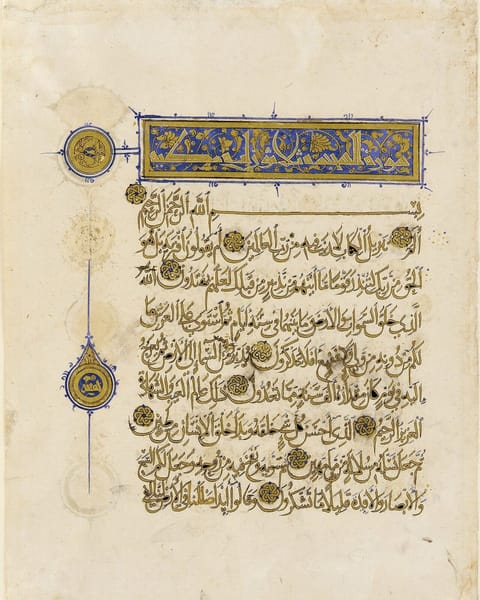
Yes, you can read the Quran in English, and doing so is a good deed. Most Muslims in the world do not speak Arabic, and many first meet the Quran’s meanings in their own language. The Quran was sent to be understood and lived. Allah describes it as a Book He made easy:
وَلَقَدۡ يَسَّرۡنَا ٱلۡقُرۡءَانَ لِلذِّكۡرِ فَهَلۡ مِن مُّدَّكِرٖ
“We have made the Quran easy to remember. Is there anyone who will take it to heart?”
A translation is one of the ways that ease reaches people. The Arabic remains the Quran itself, the words Allah revealed and the words recited in prayer, and a translation carries their meaning to the reader who cannot yet hear it in Arabic.
Why was the Quran revealed in Arabic?
The Quran explains its own language by its purpose: “We sent it down as an Arabic Quran so that you may understand” (Quran 12:2). Every messenger, it says, was sent “in the language of his people, to make things clear to them” (14:4). The Prophet ﷺ was sent to the Arabs first, and through them “to all people” (34:28). The goal of the Arabic was understanding. For a reader whose language is English, a faithful translation serves that same goal.
The Quran asks this understanding of everyone:
أَفَلَا يَتَدَبَّرُونَ ٱلۡقُرۡءَانَ أَمۡ عَلَىٰ قُلُوبٍ أَقۡفَالُهَآ
“Will they not reflect on the Quran, or are there locks upon their hearts?”
Reflection (tadabbur) is impossible without meaning. A Muslim who reads Sūrat al-Raḥmān in English and weeps at “Which of your Lord’s blessings will you deny?” has done what the Quran asked.
Is an English translation still the Quran?
The scholars distinguish the Quran, the revealed Arabic words, from a translation of its meanings (tarjamat al-maʿānī). The Arabic carries layers of sound, rhythm, and meaning that no translation can hold all at once; every translator has to choose one meaning where the Arabic allows several. For that reason most jurists hold that the recitation inside the formal prayer must be in Arabic, and that rulings are drawn from the Arabic text.
Within that frame, translation has been part of Muslim life for centuries. Imam Abu Hanifa (d. 767) held that the Quran’s meaning could even be recited in Persian during prayer. His students Abu Yusuf and Muhammad al-Shaybani limited this to someone unable to recite Arabic, and the Hanafi school still allows a new Muslim to pray in their own language while they learn (Can you pray in English?). Persian, Turkish, Urdu, and Malay readers have long read the Quran with translations and commentaries in their own tongues.
Which English translation should I read?
No single translation is perfect, and reading two side by side often shows where the Arabic is rich. Some widely trusted choices:
- M. A. S. Abdel Haleem, The Qur’an (Oxford World’s Classics). Clear, modern English by an Egyptian-born scholar who memorized the Quran as a child. A good first translation.
- The Study Quran (2015), edited by Seyyed Hossein Nasr and colleagues. A translation with commentary drawn from many classical exegetes, Sunni and Shia, verse by verse.
- Muhammad Asad, The Message of the Qur’an. A thoughtful translation with notes that draw on reason, history, and the Arabic language.
- Mustafa Khattab, The Clear Quran. Simple, readable English, popular with young readers and converts.
Choose a translation that renders the Quran in the language of mercy it uses of itself. When a passage seems harsh, look at a second translation and a commentary before drawing a conclusion, as How should the Quran be interpreted? explains.
How do I read the Quran in English well?
- Read with the Arabic beside it. Even if you cannot read the script yet, the shape of the page and the sound of a recitation will become familiar.
- Read a commentary (tafsīr) for the passages you read: the setting of a verse often changes its meaning. The history of the text itself is told in How was the Quran compiled?
- Listen to recitation. Many readers follow an English translation while a reciter plays.
- Learn a little Arabic. Start with al-Fātiḥa and the short surahs you pray with (How do Muslims pray?). Allah honors the struggle itself:
«وَالَّذِي يَقْرَأُ الْقُرْآنَ وَيَتَتَعْتَعُ فِيهِ وَهُوَ عَلَيْهِ شَاقٌّ لَهُ أَجْرَانِ»
“And the one who reads the Quran and stumbles over it, finding it hard, has two rewards.”
A translation in a phone app or a paperback does not need the care given to an Arabic copy (muṣḥaf), and you may read it without wudu; see Can you touch the Quran without wudu? Treat it with respect all the same: it holds the meanings of Allah’s words.
A closing duʿāʾ
When Moses (peace be upon him) was sent to speak for Allah, he asked for this:
رَبِّ ٱشۡرَحۡ لِي صَدۡرِي وَيَسِّرۡ لِيٓ أَمۡرِي وَٱحۡلُلۡ عُقۡدَةٗ مِّن لِّسَانِي يَفۡقَهُواْ قَوۡلِي
“My Lord, open my heart, make my task easy, and untie the knot in my tongue, so that they may understand what I say.”
May Allah open the Quran to you in whatever language your heart understands, and give you its Arabic as a gift along the way.
And Allah knows best. والله أعلم
Frequently asked questions
Do you get reward for reading the Quran in English?
Yes. Reflecting on Allah's words in any language is worship, and Allah rewards every effort to understand His Book. Many scholars tie the special reward of ten good deeds for each letter (Jamiʿ al-Tirmidhi 2910) to reciting the Arabic, so add even a few Arabic verses to your reading.
Can I read an English translation of the Quran without wudu or on my period?
Yes. The scholars agree that reading from memory or from a translation does not require wudu, and many allow a woman on her period to read and touch a translation freely. See the linked article on touching the Quran without wudu.
What is the best English translation of the Quran?
For clear modern English, many readers start with M. A. S. Abdel Haleem's translation (Oxford World's Classics). For study, The Study Quran (2015) gathers classical commentary verse by verse, and Muhammad Asad's The Message of the Qur'an offers a reason-centered commentary.
Can I pray in English?
Personal duʿāʾ may be made in any language. For the recitation inside the formal prayer, most scholars require Arabic, while the Hanafi school allows one who cannot yet recite to pray in their own language as they learn.
Related questions
Sources
- M. A. S. Abdel Haleem, The Qur'an: A New Translation (Oxford World's Classics)
- Seyyed Hossein Nasr et al., eds., The Study Quran (HarperOne, 2015)
- Muhammad Asad, The Message of the Qur'an
- Sahih Muslim 798a (the one who struggles has two rewards)
- Ibn ʿAbidin, Radd al-Muḥtār (on recitation in Persian)
Image: Shadhi ibn Muhammad ibn Ayyub (calligrapher); Aydughdi ibn ʿAbdallah al-Badri (illuminator), Folio from a Mamluk Qurʾan (Sūrat al-Sajda), Cairo, 1313–1314. Freer Gallery of Art, Smithsonian Institution, Washington (F1938.15). Public domain, via Wikimedia Commons.. Image credits
.jpg)