Can you touch the Quran without wudu?
Question 1108
Question
Is it permissible to touch or hold a copy of the Quran, or a Quran app, without having made wudu?
Summary of answer
Touching the Quran without wudu is permissible on the stronger view. The verse usually cited, 'none touch it except the purified' (56:79), describes the hidden Book in heaven, which Ibn Abbas and Imam Malik explained as touched by the angels. Dawud al-Zahiri and Ibn Hazm permitted touching the mushaf without wudu, and the Prophet ﷺ taught that the believer never becomes impure. Making wudu first remains a beautiful courtesy.
﴿فِي كِتَٰبٖ مَّكۡنُونٖ لَّا يَمَسُّهُۥٓ إِلَّا ٱلۡمُطَهَّرُونَ﴾
In a Book kept hidden, which none touch except the purified.
Answer
الحمد لله Praise be to Allah.
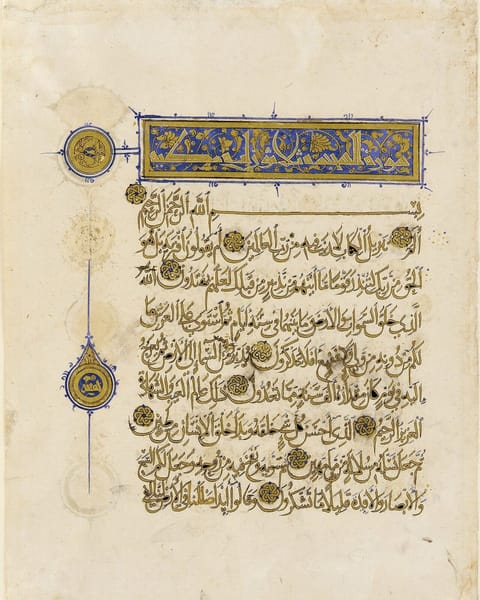
Many Muslims hesitate before taking the Quran from the shelf: they have no wudu, they are on their period, or they want to read on the bus from an app. The stronger view (al-rājiḥ) is that you may touch the Quran without wudu. The verse usually quoted for the opposite view speaks of the Book kept in heaven and the angels who touch it, and the Prophet ﷺ taught that a believer is never impure. Making wudu before you open the mushaf is a lovely courtesy (adab), and Allah has left the door to His Book open to you at every hour.
What does “none touch it except the purified” mean?
The verse appears in Sūrat al-Wāqiʿa, in a passage describing the Quran’s origin with Allah:
إِنَّهُۥ لَقُرۡءَانٞ كَرِيمٞ فِي كِتَٰبٖ مَّكۡنُونٖ لَّا يَمَسُّهُۥٓ إِلَّا ٱلۡمُطَهَّرُونَ
“It is a noble Quran, in a Book kept hidden, which none touch except the purified.”
The “Book kept hidden” (kitāb maknūn) is the heavenly original of the Quran, guarded with Allah. Ibn Abbas (may Allah be pleased with him) said of this verse, “It is the Book in heaven,” and in another report he said that “the purified” are the angels. The early exegetes Anas ibn Mālik, Mujāhid, ʿIkrima, and Saʿīd ibn Jubayr explained it the same way, as al-Ṭabarī and Ibn Kathīr record.
Imam Malik (d. 795), may Allah have mercy on him, said in al-Muwaṭṭaʾ that the best explanation he had heard of this verse is that it matches the passage in Sūrat ʿAbasa describing the revelation “in honored pages, exalted and purified, in the hands of scribes, noble and righteous” (80:13–16). The purified ones are the noble angelic scribes. The grammar agrees: the verse is a statement (khabar) about the hidden Book, and Sūrat al-Wāqiʿa was revealed in Mecca, years before the Quran was gathered between two covers.
What did the classical scholars say?
The scholars differed (ikhtalafa al-ʿulamāʾ). The four Sunni schools (Hanafi, Maliki, Shafiʿi, and Hanbali) held that touching the written mushaf requires wudu. Their main evidence is a letter the Prophet ﷺ is reported to have sent to ʿAmr ibn Ḥazm in Yemen, recorded in al-Muwaṭṭaʾ, which says that no one should touch the Quran except one who is ṭāhir, together with reports from Companions such as Saʿd ibn Abī Waqqāṣ, who sent his son to make wudu while the boy was holding the mushaf for him (also in al-Muwaṭṭaʾ).
Other great scholars held that no wudu is required:
- Dawud al-Zahiri (d. 884), founder of the Zahiri school, permitted touching and carrying the mushaf in any state.
- Ibn Hazm (d. 1064) wrote in al-Muḥallā that reciting the Quran, making the prostration of recitation, touching the mushaf, and remembering Allah are all permitted with or without wudu, and for a person in major impurity (junub) or a menstruating woman.
- Al-Ḥakam ibn ʿUtayba and Ḥammād ibn Abī Sulaymān, the Kufan teacher of Abu Hanifa, permitted carrying and touching the mushaf without purity, as al-Qurṭubī reports.
Even the schools that require wudu made room for need. The Hanafis allow holding the mushaf in a separate cover and touching its margins in some reports from Abu Hanifa. The Malikis allow a teacher or student, including a woman on her period, to hold the mushaf while teaching or learning. Most schools let children handle it while they learn to read.
Is the letter to ʿAmr ibn Ḥazm decisive?
The letter reaches us with a chain that hadith critics call mursal, missing the link to the Companion, and Ibn Hazm judged that no report forbidding touch is sound. Even if it is accepted, the Arabic ṭāhir means “pure”, and a believer is pure in himself. When Abu Hurayra slipped away from the Prophet ﷺ because he was junub and felt unworthy to sit with him, the Prophet ﷺ answered:
«سُبْحَانَ اللَّهِ، إِنَّ الْمُؤْمِنَ لاَ يَنْجُسُ»
“Glory be to Allah! The believer never becomes impure.”
Ibn Hazm also pointed out that the Prophet ﷺ wrote to Heraclius, the Christian emperor of Byzantium, a letter containing a verse of the Quran (3:64), knowing that Heraclius and his court would hold it in their hands (Sahih al-Bukhari 7). If the words of Allah could travel to Constantinople in a stranger’s hands, a Muslim may lift the mushaf from her own shelf.
Can you read the Quran without wudu?
Yes, and here the scholars agree: reciting from memory without wudu is permitted in all the schools. The Prophet ﷺ himself did it. Ibn Abbas spent a night in the home of his aunt Maymūna and watched the Prophet ﷺ wake, wipe the sleep from his face with his hand, and recite the last ten verses of Sūrat Āl ʿImrān before he rose to make wudu (Sahih al-Bukhari 183). Aisha described his whole life in one line:
«كَانَ النَّبِيُّ صلى الله عليه وسلم يَذْكُرُ اللَّهَ عَلَى كُلِّ أَحْيَانِهِ»
“The Prophet ﷺ remembered Allah in all his moments.”
For women during menstruation, see Can women read the Quran on their period?, and for the major bath, How to perform ghusl.
Can you touch the Quran on your phone without wudu?
Yes. A phone or tablet displays the words of the Quran for a moment, and it is no mushaf. Many contemporary muftis permit touching a device with a Quran app open. Some Hanafi muftis advise avoiding the part of the screen that shows the verses and permit touching the rest of the device, and on the stronger view even that caution is unnecessary. The same applies to translations and books of tafsir, which most scholars treat as a different kind of book. You can read an English translation anywhere (Can you read the Quran in English?).
What is the Shia view?
Jaʿfari (Twelver Shia) jurists hold that touching the written words of the Quran without wudu is forbidden, while touching the pages, margins, and cover is permitted. Reciting from memory without wudu is permitted. Shia readers who follow a marjaʿ will want to know his ruling, and the Quranic and prophetic evidence above is shared by Sunni and Shia alike.
Why make wudu before reading the Quran?
Wudu is a gift and no barrier. Washing the hands, face, and feet before opening the mushaf prepares the heart and honors the words you are about to read. If you have wudu, read with it. If you are in the kitchen, on a train, or awake at night with a child, read anyway. The Quran describes itself as “a blessed Book, sent down to you so that people may reflect on its verses” (Quran 38:29), and reflection needs a Book within reach. To learn the steps, see How to make wudu and What breaks wudu?.
A closing duʿāʾ
Keep a copy of the Quran where your hand falls on it easily, and let it be the most worn book in your home. Each time you open it, ask what Allah taught His Prophet ﷺ to ask:
وَقُل رَّبِّ زِدۡنِي عِلۡمٗا
“And say: My Lord, increase me in knowledge.”
And Allah knows best. والله أعلم
Frequently asked questions
Can you touch the Quran on your period?
On the stronger view, yes, since Ibn Hazm permitted touching and reciting for a menstruating woman. The Maliki school also allows a menstruating teacher or student to hold the mushaf while learning or teaching.
Do I need wudu to use a Quran app on my phone?
No. A phone is a device that displays the text for a moment and is no mushaf. Some Hanafi muftis advise avoiding the part of the screen showing the verses, and they still permit touching the rest of the phone.
Can a non-Muslim touch the Quran?
Yes. The Prophet ﷺ sent a letter containing a verse of the Quran to Heraclius, the Christian emperor of Byzantium, knowing he would hold it. Giving a copy of the Quran to someone who wants to read it is a gift of guidance.
What does Hanafi fiqh say about touching the Quran without wudu?
The Hanafi school requires wudu to touch the Arabic text of a mushaf. It permits holding it in a separate cover, lets children handle it for learning, and allows reciting from memory without wudu.
Can you touch a translation of the Quran without wudu?
Yes. Most scholars, including those who require wudu for the mushaf, treat a translation or a book of tafsir as a different kind of book, and you may handle it freely.
Related questions
Sources
- Mālik ibn Anas, al-Muwaṭṭaʾ, Book of the Quran (the letter to ʿAmr ibn Ḥazm and Malik's comment on 56:79)
- Ibn Ḥazm, al-Muḥallā, Book of Purity
- al-Qurṭubī, al-Jāmiʿ li-Aḥkām al-Qurʾān, commentary on 56:79
- Ibn Kathīr, Tafsīr al-Qurʾān al-ʿAẓīm, commentary on 56:79
- Sahih al-Bukhari 283 (the believer never becomes impure)
- SeekersGuidance, Qur'an Application on an iPhone: Can I Touch My iPhone Without Ablution?
Image: Shadhi ibn Muhammad ibn Ayyub (calligrapher); Aydughdi ibn ʿAbdallah al-Badri (illuminator), Folio from a Mamluk Qurʾan (Sūrat al-Sajda), Cairo, 1313–1314. Freer Gallery of Art, Smithsonian Institution, Washington (F1938.15). Public domain, via Wikimedia Commons.. Image credits
.jpg)