What is Ramadan, and why do Muslims fast?
Question 1122
Question
What is the month of Ramadan, why do Muslims fast during it, and how is it observed?
Summary of answer
Ramadan is the ninth month of the Islamic lunar calendar, the month in which the Quran was first revealed (2:185). Fasting it from dawn to sunset is one of the five pillars of Islam, prescribed so that believers may grow in taqwa (2:183). The month is a season of prayer, Quran recitation, generosity, and shared meals, with Laylat al-Qadr in its last ten nights, and it ends with Eid al-Fitr. Allah wants ease for the fasting: the ill, travelers, and others are excused.
Answer
الحمد لله Praise be to Allah.
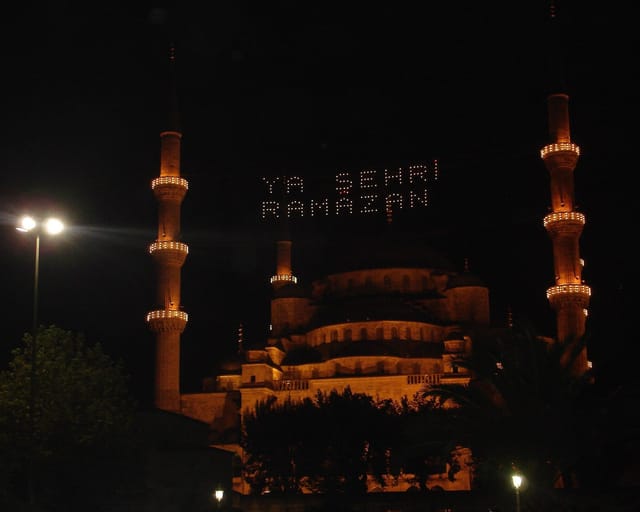
Ramadan is the ninth month of the Islamic calendar and the most beloved month of the Muslim year. It is the month in which the Quran was first revealed, and Muslims spend it fasting from dawn to sunset, praying long into the night, reading the Quran, giving generously, and breaking the fast together at sunset. Fasting Ramadan is one of the five pillars of Islam (What are the five pillars of Islam?), and the Quran gives its purpose in a single word: taqwā, a living awareness of Allah.
What is Ramadan?
The Quran introduces the month by what happened in it:
شَهۡرُ رَمَضَانَ ٱلَّذِيٓ أُنزِلَ فِيهِ ٱلۡقُرۡءَانُ هُدٗى لِّلنَّاسِ وَبَيِّنَٰتٖ مِّنَ ٱلۡهُدَىٰ وَٱلۡفُرۡقَانِ
“The month of Ramadan, in which the Quran was sent down as guidance for humanity, with clear signs of guidance and the criterion between right and wrong.”
Because the Islamic calendar follows the moon, Ramadan begins with the sighting of the new crescent, lasts twenty-nine or thirty days, and moves about eleven days earlier each year. Over a lifetime a Muslim fasts it in every season: long summer days and short winter ones.
Why do Muslims fast in Ramadan?
The Quran gives the reason in the verse that made the fast obligatory:
يَـٰٓأَيُّهَا ٱلَّذِينَ ءَامَنُواْ كُتِبَ عَلَيۡكُمُ ٱلصِّيَامُ كَمَا كُتِبَ عَلَى ٱلَّذِينَ مِن قَبۡلِكُمۡ لَعَلَّكُمۡ تَتَّقُونَ
“Believers, fasting has been prescribed for you as it was prescribed for those before you, so that you may be mindful of Allah.”
Fasting joins Muslims to the prophets and peoples before them. When the Prophet ﷺ came to Medina and found the Jews fasting the day of Ashura in gratitude for Allah’s rescue of Moses, he fasted it too (Sahih al-Bukhari 2004).
A person who gives up food and drink that are lawful, with no one watching, learns that Allah is always near. In a hadith qudsi Allah says that every deed of the children of Adam is for themselves except fasting, “for it is Mine, and I Myself will reward it” (Sahih al-Bukhari 1904). The Prophet ﷺ promised that whoever fasts Ramadan out of faith and in hope of reward will be forgiven their past sins (Sahih al-Bukhari 38). Hunger also softens the heart. A full stomach forgets the hungry; an empty one remembers them, and Ramadan turns that memory into giving.
What does a day in Ramadan look like?
The day begins before dawn with suḥūr, a meal the Prophet ﷺ urged his community never to skip: “Eat suḥūr, for there is blessing in it” (Sahih al-Bukhari 1923). From the first light of dawn until sunset, the fasting person refrains from eating, drinking, and sexual intimacy (2:187). The fast also covers the tongue: if someone picks a quarrel, the Prophet ﷺ said, the fasting person should answer, “I am fasting” (Sahih al-Bukhari 1904). The details of what breaks a fast and what does not are in What breaks your fast in Ramadan?
At sunset comes ifṭār, traditionally opened with dates and water, then the sunset prayer and a meal with family and friends. At night many Muslims pray the special Ramadan prayers called tarāwīḥ. The Companions first prayed them in scattered groups, and the caliph Umar (may Allah be pleased with him) gathered them behind one reciter (Sahih al-Bukhari 2010). Many try to recite the whole Quran during the month, following the Prophet ﷺ, who reviewed the Quran with the angel Gabriel every night of Ramadan.
Who does not have to fast?
The same verse that commands the fast continues with a promise:
يُرِيدُ ٱللَّهُ بِكُمُ ٱلۡيُسۡرَ وَلَا يُرِيدُ بِكُمُ ٱلۡعُسۡرَ
“Allah wants ease for you, and He does not want hardship for you.”
The ill and travelers make up the days later; those who cannot fast at all because of age or chronic illness feed a poor person for each day (2:184). Children, women during menstruation, and pregnant and nursing women who fear for their health or their baby’s are excused. Many people have reasons for not fasting that others cannot see, so no one should be questioned or shamed for eating in Ramadan. If this is your first Ramadan, see How can a new Muslim fast Ramadan?
What is Laylat al-Qadr?
The holiest night of the year falls in Ramadan: Laylat al-Qadr, the Night of Decree, when the revelation of the Quran began. The Quran says it is “better than a thousand months” (97:3). The Prophet ﷺ told his community to seek it in the odd nights of the last ten nights of Ramadan (Sahih al-Bukhari 2017), and many Muslims spend those nights in prayer, some withdrawing into the mosque for worship (iʿtikāf). Read more in What is Laylat al-Qadr?
Why is Ramadan a month of generosity?
Ibn ʿAbbās (may Allah be pleased with him) said that the Prophet ﷺ was the most generous of people, and most generous of all in Ramadan, “more generous with good than the unleashed wind” (Sahih al-Bukhari 6). Muslims give much of their zakat in this month, and before the Eid prayer every household pays zakāt al-fiṭr so that the poor can celebrate too (Sahih al-Bukhari 1503). Sharing the evening meal carries a reward of its own:
«مَنْ فَطَّرَ صَائِمًا كَانَ لَهُ مِثْلُ أَجْرِهِ غَيْرَ أَنَّهُ لاَ يَنْقُصُ مِنْ أَجْرِ الصَّائِمِ شَيْئًا»
“Whoever gives a fasting person food to break their fast earns the same reward as they do, without the fasting person’s reward being lessened at all.”
Jamiʿ al-Tirmidhi 807, graded sahih by al-Albani
Mosques set long tables for anyone who comes, and in many cities Muslims open their iftars to neighbors of every faith. The month ends with Eid al-Fitr, the festival of breaking the fast, a day of prayer, new clothes, visits, and gifts (What is Eid?).
A closing word
In the middle of the Quran’s verses on fasting, Allah places a promise for those who call on Him:
وَإِذَا سَأَلَكَ عِبَادِي عَنِّي فَإِنِّي قَرِيبٌۖ أُجِيبُ دَعۡوَةَ ٱلدَّاعِ إِذَا دَعَانِ
“When My servants ask you about Me, I am near. I answer the call of the one who calls, whenever they call on Me.”
May Allah bring you to Ramadan in health, accept your fasting and your prayers, and let you leave it nearer to Him than you came.
And Allah knows best. والله أعلم
Frequently asked questions
When is Ramadan in 2027?
Ramadan 2027 is expected to begin in early February, depending on the sighting of the new moon, and to end about thirty days later with Eid al-Fitr. Because the Islamic calendar is lunar, Ramadan comes about eleven days earlier each year.
What do you say to someone during Ramadan?
The common greetings are "Ramadan Mubarak" (a blessed Ramadan) and "Ramadan Kareem" (a generous Ramadan). At the end of the month, people say "Eid Mubarak."
Can you drink water while fasting in Ramadan?
Not during the hours of the fast, from dawn to sunset. Between sunset and dawn Muslims eat and drink freely, and anyone whose health requires water during the day is excused from fasting.
Can non-Muslims take part in Ramadan?
Yes, as guests and friends. Non-Muslims are warmly welcome at iftar meals, and many join a day of fasting in solidarity with Muslim friends; no one outside the faith is obliged to fast.
Related questions
Sources
Image: Cem Topçu, Ramadan mahya lights at the Sultan Ahmed Mosque, Istanbul, 2006. CC BY 2.5, via Wikimedia Commons.. Image credits
