What is the Sunnah?
Question 1264
Question
What does the Sunnah mean in Islam, how is it different from hadith, and what does it mean when something is called "sunnah"?
Summary of answer
The Sunnah is the way of the Prophet ﷺ: what he said, what he did, and what he approved. It explains and lives out the Quran, which calls him a beautiful example (33:21) and a mercy to the worlds (21:107). Hadith are the reports that carry the Sunnah, and in fiqh "sunna" also names a recommended act. The heart of the Sunnah is mercy, ease, and good character.
Answer
الحمد لله Praise be to Allah.
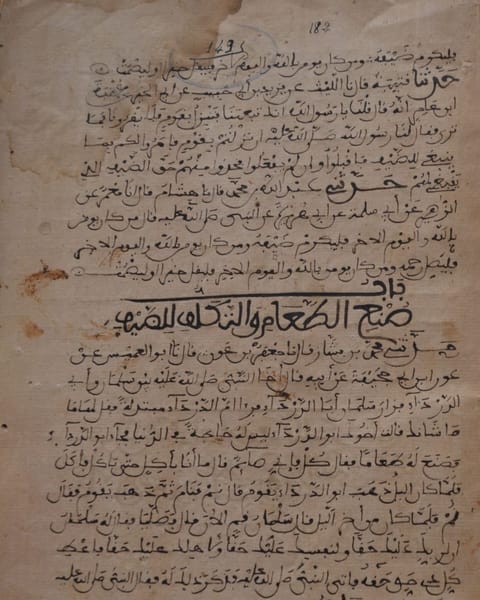
The Sunnah is the way of the Prophet Muhammad ﷺ: the words he spoke, the things he did, and the things he saw and approved. Alongside the Quran, it is the second source of Islam. The Quran gives the message; the Sunnah shows how a human being lived it, in prayer and in marriage, in the market and on the battlefield, with children, neighbors, and strangers. Its spirit, in the words of the Quran, is mercy.
What does the word Sunnah mean?
In Arabic, sunna means a path that is walked often: a habitual practice, a custom, a way. In Islamic usage it means the way of the Prophet ﷺ, and the scholars divide it into three kinds: his sayings (sunna qawliyya), his actions (sunna fiʿliyya), and his tacit approvals (sunna taqrīriyya), when he saw or heard of something and let it stand.
The Quran presents him as the model for the believers:
لَّقَدۡ كَانَ لَكُمۡ فِي رَسُولِ ٱللَّهِ أُسۡوَةٌ حَسَنَةٞ
“In the Messenger of Allah you have a beautiful example.”
It also ties the love of Allah to following him: “Say: if you love Allah, follow me, and Allah will love you” (Quran 3:31). The Sunnah is that following made concrete. His wife Aisha (may Allah be pleased with her), asked about his character, answered, “His character was the Quran” (Sahih Muslim 746a).
What is the difference between the Sunnah and hadith?
A hadith is a report: a chain of narrators (isnād) and a text (matn) that tells what the Prophet ﷺ said or did. The Sunnah is the way itself, which the hadith reports carry. Most of the Sunnah reaches us through hadith, and the scholars of hadith spent centuries sifting strong reports from weak ones (Are all hadith authentic?).
The two words were not always used as one. Imam Mālik (d. 795) set aside some reports that conflicted with the established practice of the people of Medina, the city where the Prophet ﷺ had lived and taught, because he saw that living practice as a witness to the Sunnah. Imam al-Shāfiʿī (d. 820) argued that the Sunnah must be established through authenticated hadith, and his approach shaped the later Sunni schools. Shia Muslims receive the Sunnah above all through the Prophet’s family, the Ahl al-Bayt, as recorded in their four classical collections, al-Kutub al-Arbaʿa. Questions about weak and disputed reports are discussed in Can a Muslim reject hadith?
What does “sunna” mean in fiqh?
In the language of fiqh, an act called sunna is recommended (mustaḥabb): whoever does it is rewarded, and whoever leaves it commits no sin. The jurists distinguish an emphasized sunna (sunna muʾakkada), which the Prophet ﷺ kept regularly, from an unemphasized one (ghayr muʾakkada), which he did only at times. Aisha said that of all the voluntary prayers, he kept none more faithfully than the two units before Fajr (Sahih al-Bukhari 1163).
Scholars also separate the Sunnah of guidance (sunnat al-hudā), which he taught as religion, from his customary habits (al-sunna al-ʿādiyya) in food, dress, and the ways of his time. The Prophet ﷺ drew this line himself. When he passed farmers pollinating date palms, he remarked that it might be better if they did not; they stopped, and the harvest failed. He told them, “You know best the affairs of your world” (Sahih Muslim 2363). His habits of dress and grooming are lovely to imitate out of love, and they are not obligations (Is it haram to shave your beard?).
What is the spirit of the Sunnah?
Allah sums up the whole mission of His Messenger in one verse:
وَمَآ أَرۡسَلۡنَٰكَ إِلَّا رَحۡمَةٗ لِّلۡعَٰلَمِينَ
“We sent you only as a mercy to all the worlds.”
The Sunnah carries that mercy into daily life. Aisha said that whenever he was given a choice between two things, he chose the easier one, as long as it was no sin (Sahih al-Bukhari 3560). He taught that “the religion is ease, and no one makes the religion hard for himself without being overcome by it” (Sahih al-Bukhari 39).
The best-known hadith in which he speaks of “my sunna” is itself a lesson in balance. Three men decided that his worship was too little for them: one vowed to pray all night forever, one to fast every day, one never to marry. The Prophet ﷺ answered:
«لَكِنِّي أَصُومُ وَأُفْطِرُ، وَأُصَلِّي وَأَرْقُدُ وَأَتَزَوَّجُ النِّسَاءَ، فَمَنْ رَغِبَ عَنْ سُنَّتِي فَلَيْسَ مِنِّي»
“But I fast and I break my fast, I pray and I sleep, and I marry. Whoever turns away from my sunna is not of me.”
Harshness toward oneself or others turns away from the Sunnah, however pious it looks.
How can I follow the Sunnah today?
- Keep the prayers he loved, beginning with the two units before Fajr.
- Practice his character: gentleness, honesty in trade, patience with the difficult, mercy to children and animals.
- Keep family ties and visit the sick.
- Choose ease for others when the law allows it, as he did.
- Learn his life from a trustworthy biography (Who was the Prophet Muhammad?).
A closing word
Love for the Prophet ﷺ is the root of following him, and the Quran asks every believer to send blessings on him:
إِنَّ ٱللَّهَ وَمَلَـٰٓئِكَتَهُۥ يُصَلُّونَ عَلَى ٱلنَّبِيِّۚ يَـٰٓأَيُّهَا ٱلَّذِينَ ءَامَنُواْ صَلُّواْ عَلَيۡهِ وَسَلِّمُواْ تَسۡلِيمًا
“Allah and His angels send blessings on the Prophet. You who believe, send blessings on him and greet him with peace.”
That is the reason for the ﷺ after his name (Why do Muslims say “peace be upon him”?). May Allah make us among those who walk his way of mercy and gather us with him.
And Allah knows best. والله أعلم
Frequently asked questions
Is the Sunnah compulsory?
Following the Prophet ﷺ in what he taught as religion is part of faith, and the Quran ties love of Allah to following him (3:31). In fiqh, however, an act called "sunna" is recommended: doing it brings reward, and leaving it is no sin.
What happens if I don't pray the sunnah prayers?
Your obligatory prayers are complete without them. The sunna prayers add reward and, as the Prophet ﷺ taught, make up what was lacking in the obligatory ones (Jami' al-Tirmidhi 413). The two units before Fajr were the voluntary prayer the Prophet ﷺ kept most faithfully, so begin with those if you can.
What is sunna muʾakkada?
An emphasized sunna: an act the Prophet ﷺ did regularly and rarely left, such as the two units of prayer before Fajr. A sunna he did only sometimes is called ghayr muʾakkada, unemphasized.
Do Shia Muslims follow the Sunnah?
Yes. Shia Muslims follow the Sunnah of the Prophet ﷺ and receive it above all through his family, the Ahl al-Bayt, as recorded in their four classical collections, al-Kutub al-Arbaʿa.
Related questions
Sources
- Sahih al-Bukhari 5063 ("whoever turns away from my sunna")
- Sahih al-Bukhari 39, 1163, 3560
- Sahih Muslim 746a, 2363
- Mālik ibn Anas, al-Muwaṭṭaʾ
- al-Shāfiʿī, al-Risāla
Image: Unknown copyist, Manuscript of Sahih al-Bukhari in Maghrebi script, 1097 (Ramadan 490 AH). Library of Mohammed V University, Taroudant, Morocco. CC0, via Wikimedia Commons.. Image credits
