Can a Muslim reject hadith?
Question 1213
Question
Is it permissible for a Muslim to reject a hadith, or to follow the Quran alone without hadith?
Summary of answer
A Muslim who sets aside a particular hadith because its chain is weak or its meaning clashes with the Quran is doing what the scholars did from the start: Aisha rejected reports that contradicted the Quran, and Abu Hanifa and Malik set aside single reports against stronger evidence. The Sunnah as a whole remains a source of guidance, since the Quran ties obeying the Messenger ﷺ to obeying Allah (4:80). Muslims who follow the Quran alone remain Muslims, and calling them unbelievers is forbidden.
Answer
الحمد لله Praise be to Allah.
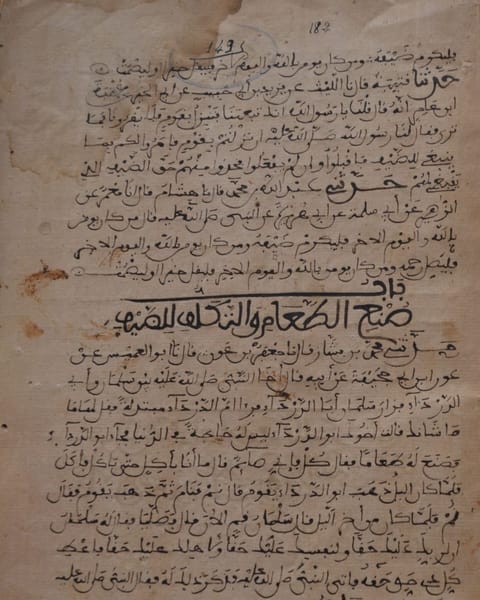
Many Muslims meet a hadith that troubles them, or hear that some Muslims follow the Quran alone, and wonder whether doubting a report puts their faith at risk. The answer of the tradition is calm. A Muslim may set aside a particular hadith on sound scholarly grounds, as the Companions and the great imams did. The Sunnah as a whole, the example of the Prophet ﷺ, remains a source of guidance beside the Quran, because the Quran itself joins obedience to him to obedience to Allah:
مَّن يُطِعِ ٱلرَّسُولَ فَقَدۡ أَطَاعَ ٱللَّهَ
“Whoever obeys the Messenger has obeyed Allah.”
Between those two truths there is wide room for study, disagreement, and respect.
What is the difference between the Sunnah and a hadith?
The Sunnah is the Prophet’s way: how he prayed, fasted, made pilgrimage, treated his family, and judged between people. A hadith is a single report of something he said or did, carried by a chain of narrators. Much of the Sunnah reached us through the practice of the whole community in every generation. Every Muslim in the world prays the dawn prayer in two units because millions learned it from millions, going back to Medina. Individual reports vary in strength, and the scholars graded them from sound (ṣaḥīḥ) to fabricated (mawḍūʿ), as Are all hadith authentic? explains.
So “rejecting hadith” can mean two different things. Setting aside one report after study is a scholarly judgment. Rejecting the Prophet’s example altogether is a different claim.
Did the Companions reject hadith?
They did, when a report clashed with the Quran. Aisha (may Allah be pleased with her) was asked by her student Masrūq whether the Prophet ﷺ had seen his Lord. Her hair stood on end, she said, and she answered:
«مَنْ حَدَّثَكَ أَنَّ مُحَمَّدًا صلى الله عليه وسلم رَأَى رَبَّهُ فَقَدْ كَذَبَ»
“Whoever tells you that Muhammad saw his Lord has lied.”
Then she recited, “Sight cannot reach Him, and He reaches all sight” (6:103). She measured what people reported by the Book of Allah. The scholar al-Zarkashī (d. 1392) later gathered her corrections of other Companions into a whole book.
The imams of the law followed the same path. Abu Hanifa (d. 767) and his school did not act on a single-chain report that contradicted the Quran or an established principle, and Imam Malik (d. 795) preferred the living practice of Medina to a single report that went against it. Ibn Qayyim al-Jawziyya (d. 1350) listed the signs by which a report’s text exposes it as false, such as contradicting the clear Quran. None of these scholars was accused of leaving Islam. Their care was a form of love for the Prophet ﷺ: they would not let anyone put words in his mouth.
Did the Prophet ﷺ distinguish revelation from his own opinion?
Yes. Passing farmers in Medina who were pollinating their date palms, he remarked that perhaps it would be fine if they did not. They stopped, and the harvest failed. When they told him, he said:
«أَنْتُمْ أَعْلَمُ بِأَمْرِ دُنْيَاكُمْ»
“You know better the affairs of your world.”
Scholars drew from this that the Prophet’s words on matters of farming, medicine, and custom do not all carry the weight of revelation. Reading the Sunnah well means asking what kind of word each report is.
What about Muslims who follow the Quran alone?
In modern times some Muslims, often called Quranists (Qurʾāniyyūn), accept only the Quran as binding. They sometimes point to the Prophet’s early instruction, “Do not write anything from me except the Quran” (Sahih Muslim 3004). Most scholars answer that he later told ʿAbd Allāh ibn ʿAmr to write, saying that nothing but truth came from his mouth (Sunan Abi Dawud 3646, graded sahih by al-Albani), and that the Quran commands following the Messenger ﷺ, whose example is the living explanation of its verses (33:21).
The great majority of Muslims, Sunni and Shia, hold that the Sunnah is indispensable. They also hold that a Quranist who bears witness to Allah and His Messenger is a Muslim. The Prophet ﷺ warned:
«أَيُّمَا رَجُلٍ قَالَ لأَخِيهِ يَا كَافِرُ. فَقَدْ بَاءَ بِهَا أَحَدُهُمَا»
“If a man says to his brother, ‘You unbeliever,’ then one of them deserves the name.”
Disagree with each other’s method, and pray beside each other.
How should I approach a hadith that troubles me?
- Check its grade and its source. Many troubling sayings are weak or unsourced.
- Read the whole report and its setting. Many hadith answer one person’s question in one moment.
- Read it with the Quran. The Quran is the criterion, and it describes the Prophet ﷺ as a mercy to the worlds (21:107). A reading that turns his words into cruelty calls for a second look, as Aisha taught.
- Ask how the scholars understood it. Often the commentaries already hold the merciful reading you are looking for. See How old was Aisha? for one example of a report scholars still discuss.
- Hold your conclusion with humility. You may set a report aside without contempt for those who keep it.
More on the place of the Prophet’s example in What is the Sunnah? and on reading the Quran in How should the Quran be interpreted?
A closing word
The Quran gives the reason Muslims care so much about the Prophet’s words, true and false:
قُلۡ إِن كُنتُمۡ تُحِبُّونَ ٱللَّهَ فَٱتَّبِعُونِي يُحۡبِبۡكُمُ ٱللَّهُ وَيَغۡفِرۡ لَكُمۡ ذُنُوبَكُمۡۚ وَٱللَّهُ غَفُورٞ رَّحِيمٞ
“Say: if you love Allah, follow me, and Allah will love you and forgive you your sins. Allah is Forgiving, Merciful.”
May Allah give us love for His Messenger ﷺ, and the knowledge to tell his words from what others have said in his name.
And Allah knows best. والله أعلم
Frequently asked questions
Is rejecting a sahih hadith kufr?
No. Setting aside a particular report after study, because its meaning conflicts with the Quran or with stronger evidence, is part of the scholarly tradition, and the imams of the schools did it. What the scholars warned against is mocking the Prophet ﷺ or rejecting his authority out of contempt.
Are Quranists Muslim?
Yes. Those who testify that there is no god but Allah and that Muhammad ﷺ is His Messenger are Muslims. Most scholars hold that their method is mistaken, and the Prophet ﷺ forbade calling a fellow Muslim an unbeliever (Sahih al-Bukhari 6104).
How do you pray without hadith?
The form of the prayer reached us through the living practice of the whole community, generation after generation, more than through any single written report. This shared practice is one reason the great majority of Muslims hold the Sunnah to be indispensable.
What do Shia Muslims think about hadith?
Shia Muslims also hold the Sunnah to be binding, and they receive it mainly through the Prophet's family and the Imams, in collections such as al-Kulaynī's al-Kāfī. Shia scholars also grade reports, and they do not treat every report in al-Kāfī as sound.
Related questions
Sources
- Sahih al-Bukhari 4855 (Aisha: whoever tells you he saw his Lord)
- Sahih Muslim 2363 (you know better the affairs of your world)
- Sahih Muslim 3004 and Sunan Abi Dawud 3646 (writing the Prophet's words)
- Badr al-Dīn al-Zarkashī, al-Ijāba li-Īrād mā Istadrakathu ʿĀʾisha ʿalā al-Ṣaḥāba
- Ibn Qayyim al-Jawziyya, al-Manār al-Munīf fī al-Ṣaḥīḥ wa-l-Ḍaʿīf
Image: Unknown copyist, Manuscript of Sahih al-Bukhari in Maghrebi script, 1097 (Ramadan 490 AH). Library of Mohammed V University, Taroudant, Morocco. CC0, via Wikimedia Commons.. Image credits
