Is the evil eye real in Islam?
Question 1223
Question
Does Islam teach that the evil eye (nazar or ayn) is real, and how should a Muslim protect themselves from it?
Summary of answer
The Prophet ﷺ said, 'The eye is real' (Sahih al-Bukhari 5740), and he allowed healing recitation (ruqya) for it. He also taught that it touches no one except by Allah's decree, and his remedy was gentle: when you admire something, ask Allah to bless it; recite al-Falaq and al-Nās; and trust Allah, who is enough for whoever relies on Him (65:3). The Sunnah gives no place to fear, suspicion of neighbors, or charms.
﴿وَمَن يَتَوَكَّلۡ عَلَى ٱللَّهِ فَهُوَ حَسۡبُهُۥٓ﴾
Whoever relies on Allah, He is enough for them.
Answer
الحمد لله Praise be to Allah.
Many Muslim families worry about the evil eye (al-ʿayn, called nazar in Turkish, Persian, and Urdu). Some hide good news, some hang blue beads, and some blame every illness on a jealous relative. Is the evil eye real in Islam? Yes: the Prophet ﷺ said, “The eye is real” (Sahih al-Bukhari 5740). The same Prophet ﷺ taught a remedy that is calm and generous: bless what you admire, recite the last chapters of the Quran, and trust Allah. Belief in the eye was never meant to fill a believer’s life with fear.
What did the Prophet ﷺ say about the evil eye?
The fullest version of his words is reported by Ibn ʿAbbās:
«الْعَيْنُ حَقٌّ وَلَوْ كَانَ شَىْءٌ سَابَقَ الْقَدَرَ سَبَقَتْهُ الْعَيْنُ وَإِذَا اسْتُغْسِلْتُمْ فَاغْسِلُوا»
“The eye is real. If anything could outrun destiny, the eye would outrun it. And if you are asked to wash, then wash.”
The hadith affirms the eye and sets its limit in the same breath. “If anything could outrun destiny” means that nothing does: the eye, like every cause in creation, touches no one except by Allah’s decree. The Prophet ﷺ also allowed healing recitation (ruqya) for it (Sahih al-Bukhari 5738), and he used to seek refuge from the jinn and from the human eye until the two chapters of refuge, al-Falaq and al-Nās, were revealed; then he kept to them alone (Jamiʿ al-Tirmidhi 2058, graded sahih by al-Albani).
What is the evil eye in Islam?
The evil eye is harm that comes, by Allah’s permission, through a gaze of admiration or envy (ḥasad). The Quran teaches believers to seek refuge “from the evil of the envier when he envies” (Quran 113:5). The scholars differed over how the eye works; Ibn al-Qayyim discussed it at length in his book on the Prophet’s ﷺ medicine. They agreed that its power is limited and that Allah’s protection is greater.
The best-known story shows that the eye can come from a friend with no ill intent. ʿĀmir ibn Rabīʿa saw Sahl ibn Ḥunayf bathing and exclaimed that he had never seen such skin. Sahl collapsed. The Prophet ﷺ spoke to ʿĀmir as a brother and asked him:
«عَلاَمَ يَقْتُلُ أَحَدُكُمْ أَخَاهُ إِذَا رَأَى أَحَدُكُمْ مِنْ أَخِيهِ مَا يُعْجِبُهُ فَلْيَدْعُ لَهُ بِالْبَرَكَةِ»
“Why would one of you kill his brother? When any of you sees something in his brother that pleases him, let him pray for blessing upon him.”
Sunan Ibn Majah 3509, graded sahih by al-Albani
Then he had ʿĀmir wash, the water was poured over Sahl, and Sahl recovered. The remedy was a duʿāʾ, a washing, and friendship restored.
How do you protect yourself from the evil eye?
The Sunnah offers simple practices:
- Bless what you admire. When something pleases you, in your own life or another’s, say what the believer in Sūrat al-Kahf told his friend to say:
مَا شَآءَ ٱللَّهُ لَا قُوَّةَ إِلَّا بِٱللَّهِ
“This is what Allah has willed; there is no power except with Allah.”
- Recite the chapters of refuge. Each night the Prophet ﷺ recited al-Ikhlāṣ, al-Falaq, and al-Nās, blew into his cupped hands, and wiped them over his body, three times (Sahih al-Bukhari 5017).
- Use ruqya. Recitation of the Quran and the Prophet’s ﷺ duʿāʾs over a sick person is a sunna. Anyone can do it for themselves or their family, without paying a specialist.
- Rely on Allah. “Whoever relies on Allah, He is enough for them” (Quran 65:3).
Many scholars discouraged amulets and beads hung for protection, since a Muslim’s shelter is Allah and not an object. A good word is the Prophet’s ﷺ way: he rejected bad omens and said he liked an optimistic word (Sahih al-Bukhari 5776). See Islamic superstitions.
Should I blame someone for giving me the evil eye?
The Sunnah gives no license for suspicion. The Quran commands, “Avoid much suspicion; some suspicion is a sin” (49:12). Families have been torn apart by accusations that a sister-in-law or a neighbor “gave the eye” to a child. The Prophet ﷺ asked who was involved only to bring about a cure, and the cure joined the two men together.
Illness, sadness, and setbacks have many causes. Seek a doctor for the body and a counselor for the heart, and pray alongside both (Is depression a lack of faith? and Can Muslims see a therapist?). Explaining every trouble as the eye or as jinn (What are jinn?) can keep people from the help Allah has placed within reach.
What about envy in my own heart?
The more searching question is about the envy we carry. The Prophet ﷺ said, “Do not hate one another, do not envy one another, do not turn your backs on one another; be servants of Allah, brothers” (Sahih al-Bukhari 6065). The Quran’s cure is to turn the wish toward Allah: “Do not covet what Allah has favored some of you with over others… ask Allah of His bounty” (4:32). The one envy the Prophet ﷺ praised is the wish to be like a person who spends wealth well or lives and teaches wisdom (Sahih al-Bukhari 73).
A heart that says “mā shāʾ Allāh” at a friend’s success is protected and protects others. The Prophet ﷺ taught us to close each day in Allah’s care:
قُلۡ أَعُوذُ بِرَبِّ ٱلۡفَلَقِ مِن شَرِّ مَا خَلَقَ
“Say: I seek refuge in the Lord of the daybreak, from the evil of what He has created.”
And Allah knows best. والله أعلم
Frequently asked questions
Is wearing a nazar bead or blue eye haram?
Many scholars discouraged hanging beads or charms for protection, because a Muslim's protection comes from Allah alone. A bead kept as decoration is a different matter; relying on it to ward off harm is what the scholars warned against.
What dua protects against the evil eye?
The Prophet ﷺ recited Sūrat al-Ikhlāṣ, al-Falaq, and al-Nās each night, blew into his hands, and wiped them over his body (Sahih al-Bukhari 5017). When you admire something, say 'mā shāʾ Allāh, lā quwwata illā billāh' (18:39) and 'bāraka Allāhu laka'.
What are the signs of the evil eye?
The Quran and the sound hadith give no list of signs. Illness, anxiety, and setbacks have many causes, so seek medical care and ordinary help first, and turn to duʿāʾ and recitation alongside them.
Can a Muslim give someone the evil eye without meaning to?
Yes. In the story of Sahl ibn Ḥunayf, the man who admired him meant no harm. The Prophet ﷺ taught him to ask Allah to bless what he admired (Sunan Ibn Majah 3509).
Related questions
Sources
- Sahih al-Bukhari 5740 and Sahih Muslim 2188 (the eye is real)
- Sunan Ibn Majah 3509 (Sahl ibn Ḥunayf and the prayer for blessing)
- Sahih al-Bukhari 5017 (reciting al-Ikhlāṣ, al-Falaq, and al-Nās at night)
- Sahih al-Bukhari 6065 (do not envy one another)
- Ibn Qayyim al-Jawziyya, al-Ṭibb al-Nabawī (Prophetic Medicine)
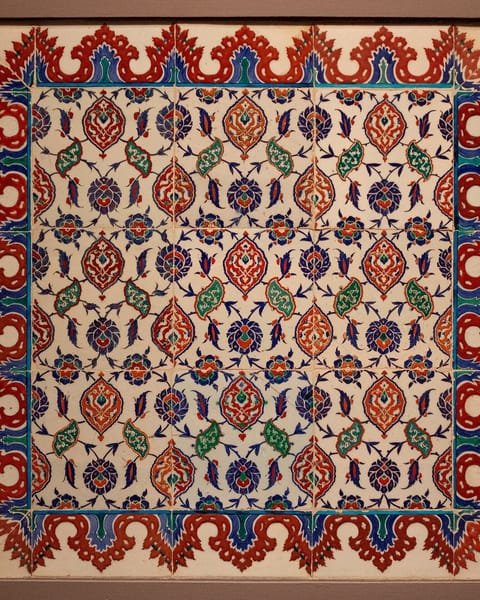
Image: Ottoman tile makers, Iznik tile panel, second half of the 16th century. Metropolitan Museum of Art, New York. CC0, via Wikimedia Commons.. Image credits
