Is depression a sign of weak iman?
Question 1081
Question
If a Muslim suffers from depression, does it mean their faith (iman) is weak, and should they rely on prayer alone?
Summary of answer
Depression is an illness that can touch the most faithful hearts. Jacob grieved until his eyes turned white, the Prophet ﷺ lived through a Year of Sorrow, and in the ninth century Abu Zayd al-Balkhi described depression as an illness of the soul with its own treatment. The Prophet ﷺ commanded believers to seek treatment, so therapy and medicine stand beside prayer as means that Allah provides.
Answer
الحمد لله Praise be to Allah.
If you are thinking about ending your life, please call or text 988 in the US, call 116 123 (Samaritans) in the UK and Ireland, or your local emergency number. Naseeha (1-866-627-3342) offers confidential support for Muslims in North America.
Many Muslims living with depression have heard it said that they only need to pray more, or that their sadness proves their iman is weak. The Quran and the Sunnah answer otherwise. Depression is an illness, and it can come to the most faithful hearts. The prophets themselves knew grief that bent them low, and the Prophet ﷺ commanded his community to seek treatment for every illness. Prayer and medicine, duʿāʾ and therapy, work together.
Is depression a sign of weak iman?
The Quran tells the story of a prophet in deep grief. When Jacob (peace be upon him) lost his son Joseph and then a second son, he turned away from his family and “his eyes turned white from sorrow” (Quran 12:84). His sons warned him that grief would waste him away. He answered:
إِنَّمَآ أَشۡكُواْ بَثِّي وَحُزۡنِيٓ إِلَى ٱللَّهِ
“I pour out my anguish and my grief to Allah alone.”
A prophet of Allah carried sorrow for years, and the Quran honors him as a man of patience and knowledge. Job (peace be upon him) cried out, “Harm has touched me, and You are the Most Merciful of the merciful” (21:83).
The Prophet ﷺ lived through a season the biographers call the Year of Sorrow (ʿĀm al-Ḥuzn, عام الحزن), when his wife Khadija and his uncle Abu Talib died within a short time of each other, around 619. When his infant son Ibrahim was dying, his eyes overflowed, and he said, “The eye weeps and the heart grieves” (Sahih al-Bukhari 1303). Grief and heaviness of heart were part of the life of the best of creation.
He also taught that suffering of the heart counts with Allah:
«مَا يُصِيبُ الْمُسْلِمَ مِنْ نَصَبٍ وَلاَ وَصَبٍ وَلاَ هَمٍّ وَلاَ حُزْنٍ وَلاَ أَذًى وَلاَ غَمٍّ حَتَّى الشَّوْكَةِ يُشَاكُهَا، إِلاَّ كَفَّرَ اللَّهُ بِهَا مِنْ خَطَايَاهُ»
“No exhaustion, illness, worry, sorrow, hurt, or distress befalls a Muslim, not even a thorn that pricks him, without Allah wiping away some of his sins by it.”
Worry (hamm) and distress (ghamm) appear in this list beside illness, as things that befall a believer. The hadith treats them as trials Allah sees and rewards. They say nothing against the faith of the one who suffers them.
What did classical Muslim scholars say about depression?
Muslim physicians wrote about mental illness more than a thousand years ago. Abu Zayd al-Balkhi (d. 934), a student of the philosopher al-Kindi, wrote Maṣāliḥ al-Abdān wa-l-Anfus (The Sustenance of Bodies and Souls). He taught that body and soul are woven together, so that illness of one affects the other. He distinguished ordinary sadness after a loss, depression brought on by outside events, and a depression that arises with no outside cause, and he described treatments of the soul: kind and reasoned conversation, and practice in changing fearful and despairing thoughts. The psychologist Malik Badri, who translated the work, compared it to modern cognitive therapy.
The great hospitals (bīmāristāns) of the Muslim world gave this knowledge a home. The hospital in the complex of Sultan Bayezid II at Edirne, completed in 1488, became known for treating mental illness, and its physicians used music and the sound of flowing water as part of care. In these institutions mental illness was a matter for physicians and compassion, and no one treated it as a verdict on a person’s faith.
Should a Muslim with depression see a doctor or therapist?
Yes. Seeking treatment is part of the Sunnah:
«تَدَاوَوْا فَإِنَّ اللَّهَ عَزَّ وَجَلَّ لَمْ يَضَعْ دَاءً إِلاَّ وَضَعَ لَهُ دَوَاءً»
“Seek treatment, for Allah, Mighty and Majestic, has not created an illness without creating a cure for it.”
Sunan Abi Dawud 3855, graded sahih by al-Albani
When a man asked whether he should tie his camel or leave it loose and trust in Allah, the Prophet ﷺ told him: “Tie it, and trust” (Jamiʿ al-Tirmidhi 2517, graded hasan). Seeing a doctor, taking medicine, and going to therapy are the tying of the camel. Trust in Allah (tawakkul) goes with you into the clinic. More on this is in Can Muslims see a therapist?
Many Muslims look for a counselor who understands their faith. Naseeha offers a confidential helpline in North America, and the Muslim Youth Helpline (0808 808 2008) supports young Muslims in the UK. Sharia’s care for the sick also belongs to the whole community, as Does Islam support universal healthcare? explains.
What if depression makes it hard to pray?
Allah made the religion easy for the sick. A Companion in pain was told: “Pray standing; if you cannot, then sitting; if you cannot, then lying on your side” (Sahih al-Bukhari 1117). The Quran excuses the ill from fasting until they recover (2:185). If depression has made prayer feel impossible, begin with what you can: one prayer, a few words of remembrance, a single duʿāʾ in your own language. Allah receives each one. See What if I miss prayers or struggle to pray?
How can family and friends help?
- Listen before advising. Telling a depressed person to pray more can deepen their shame. Ask how they are, and stay to hear the answer.
- Visit and stay close. In a hadith qudsi Allah says on the Day of Judgment, “I was ill and you did not visit Me,” and explains that He was found with His servant who was ill (Sahih Muslim 2569).
- Help them reach care. Offer to find a doctor, book an appointment, or drive them there.
- Take warning signs seriously. If someone speaks of ending their life, stay with them and call for help. What happens to a Muslim who dies by suicide? speaks to families who have lost someone.
A duʿāʾ for the darkness
When the prophet Jonah (peace be upon him) was in the belly of the whale, in darkness upon darkness, he called out to his Lord:
لَّآ إِلَٰهَ إِلَّآ أَنتَ سُبۡحَٰنَكَ إِنِّي كُنتُ مِنَ ٱلظَّـٰلِمِينَ فَٱسۡتَجَبۡنَا لَهُۥ وَنَجَّيۡنَٰهُ مِنَ ٱلۡغَمِّۚ وَكَذَٰلِكَ نُـۨجِي ٱلۡمُؤۡمِنِينَ
“There is no god but You, glory be to You; I have been among the wrongdoers. So We answered him and rescued him from his distress, and so We rescue the believers.”
The word for his distress is ghamm, the same word the Prophet ﷺ used for the heaviness of heart that Allah sees and rewards. May Allah lift every heart that is sinking, and send it healing by every means He has made.
And Allah knows best. والله أعلم
Frequently asked questions
Is depression haram?
An illness carries no sin. The Prophet ﷺ taught that every worry and sorrow that touches a believer wipes away some of their sins (Sahih al-Bukhari 5641). What Islam asks is that you seek help and keep turning to Allah.
Is taking antidepressants allowed in Islam?
Yes. The Prophet ﷺ said, "Seek treatment, servants of Allah" (Sunan Abi Dawud 3855). Medicine prescribed by a qualified doctor is one of the means Allah created for healing.
Is anxiety a sign of weak iman?
The Prophet ﷺ himself sought refuge from worry and grief in his daily duʿāʾ (Sahih al-Bukhari 6369). Anxiety disorders are treatable conditions, and seeking care is an act of trust in Allah.
What duʿāʾ can I read for depression?
The Prophet ﷺ prayed, "O Allah, I seek refuge in You from worry and grief" (Sahih al-Bukhari 6369). The prayer of Jonah from the belly of the whale ends with Allah's promise: "And so We rescue the believers" (21:88).
Related questions
Sources
- Abu Zayd al-Balkhi, Maṣāliḥ al-Abdān wa-l-Anfus, translated by Malik Badri as Abu Zayd al-Balkhi's Sustenance of the Soul
- Sahih al-Bukhari 1303, 5641, 5678, 6369
- Sunan Abi Dawud 3855 ("Seek treatment")
- Naseeha Mental Health Helpline
- Muslim Youth Helpline (UK)
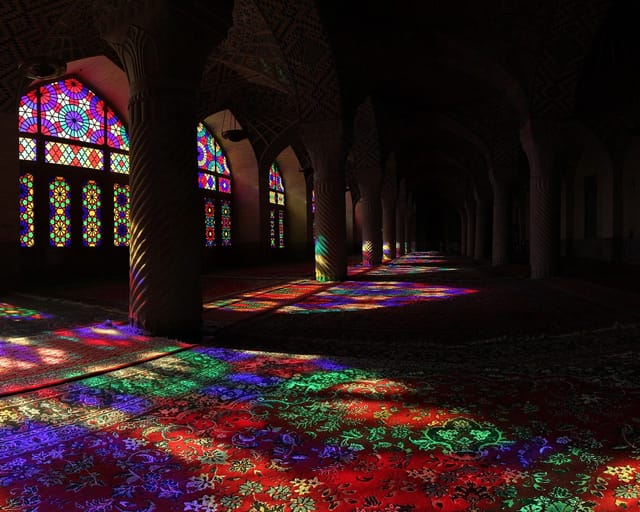
Image: Ayyoubsabawiki, Morning light in the Nasir al-Mulk Mosque, Shiraz, 2015. CC BY-SA 4.0, via Wikimedia Commons.. Image credits
