Is organ donation allowed in Islam?
Question 1080
Question
Is it permissible for a Muslim to donate organs, during life or after death, and to receive an organ transplant?
Summary of answer
Organ donation is halal and one of the great forms of charity. The Quran says that whoever saves one life has saved all humanity (5:32). The International Islamic Fiqh Academy (Jeddah, 1988) permits transplants from the deceased with their consent or their family's, the Saudi Council of Senior Scholars and Egypt's muftis permit living donation, and Shia authorities agree. Selling organs is forbidden, and the donor's body is treated with dignity.
Answer
الحمد لله Praise be to Allah.
Every day people die waiting for a kidney, a liver, or a heart. In Britain, patients from Asian and Black communities, many of them Muslim, often wait longest, because matching donors from their own communities are few. Many Muslims would gladly give, but they have heard that the body must stay whole. The answer of the great fatwa councils is clear: organ donation is halal, and it is one of the noblest forms of charity (ṣadaqa). A donor who saves a life has done what the Quran describes as saving all of humanity.
Is organ donation haram in Islam?
The Quran sets the value of a single life beside the value of the whole human race:
وَمَنۡ أَحۡيَاهَا فَكَأَنَّمَآ أَحۡيَا ٱلنَّاسَ جَمِيعٗا
“Whoever saves a life, it is as though he had saved all of humanity.”
Protecting life (ḥifẓ al-nafs) is among the first objectives of the sharia (maqāṣid al-sharīʿa, مقاصد الشريعة), and the Quran commands believers to “help one another in righteousness and piety” (5:2). When a scorpion stung one of the Companions and another asked whether he might treat him with a healing recitation (ruqya), the Prophet ﷺ answered with a principle broad enough for modern medicine:
«مَنِ اسْتَطَاعَ مِنْكُمْ أَنْ يَنْفَعَ أَخَاهُ فَلْيَفْعَلْ»
“Whoever among you is able to benefit his brother, let him do so.”
Does organ donation violate the dignity of the body?
Some Muslims hesitate because of a sound hadith:
«كَسْرُ عَظْمِ الْمَيِّتِ كَكَسْرِهِ حَيًّا»
“Breaking the bone of a dead person is like breaking it while he is alive.”
Sunan Abi Dawud 3207, graded sahih by al-Albani
The scholars who permit transplants explain that this hadith forbids desecration: mutilating, mocking, or carelessly handling the dead. Transplant surgery is the opposite. It is performed with care by surgeons, with the consent of the donor or the family, to give life to another person, and the body is then returned for washing and burial. The dignity the hadith protects is preserved, and a life is saved through it. The jurists’ maxim applies as well: necessity makes permissible what is otherwise forbidden (al-ḍarūrāt tubīḥ al-maḥẓūrāt).
What have the scholars and fatwa councils ruled?
The rulings span more than half a century and every region of the Muslim world:
- Egypt. Grand Mufti Ḥasan Maʾmūn permitted corneal transplants in 1959, and Grand Mufti Muhammad Sayyid Tantawi later ruled that living donation is permissible.
- Saudi Arabia. The Council of Senior Scholars, in Decision 99 of 1402 AH (1982), permitted transplants from the deceased and from living donors when the recipient is in need.
- The International Islamic Fiqh Academy. Meeting in Jeddah in February 1988, the Academy of the Organisation of Islamic Cooperation issued Resolution 26 (1/4). It permits transplanting organs from the deceased when this is needed to save a life or restore a basic function, with the consent of the deceased before death or of the heirs after it. It forbids taking from a living donor any organ on which the donor’s own life depends, such as the heart, and it forbids the sale of organs under any circumstances.
- Britain and Europe. The Muslim Law (Shariah) Council UK, led by Sheikh Zaki Badawi, permitted organ donation in 1995 and accepted brain-stem death as death for the purposes of transplantation. The European Council for Fatwa and Research permitted donation in 2000.
- Shia authorities. Ayatollah Khamenei permits taking organs when a life depends on them, with prior permission, and Iran’s law allows donation from brain-dead patients with their will or their family’s consent.
Some scholars in South Asia once forbade donation, citing the sanctity of the body, and a few still hold reservations. Most of them accept it in cases of necessity, and the weight of scholarly opinion has moved firmly toward permission.
Can Muslims donate organs after death?
Yes. The Fiqh Academy’s condition is consent, so the best way to give it is to register as a donor and tell your family, who will be consulted at the time. The UK’s NHS assures families that donation does not delay the funeral, and the body is returned for the washing (ghusl), shrouding, and funeral prayer described in What do Muslims do when someone dies? Questions about the end of life and brain death are discussed further in What does Islam say about euthanasia and end-of-life care?
Can a living person donate a kidney?
Yes, when doctors judge that the donor’s own health will be safe. A kidney or part of a liver given to a relative or a stranger is a gift of life that the Saudi council and Egypt’s mufti both permitted. The donor must give consent freely, without pressure from family, and must never be paid: the Fiqh Academy forbids the sale of organs, and organ trafficking preys on the poor. Giving blood follows the same principles, as explained in Can Muslims donate or receive blood?
Is it allowed to receive an organ transplant?
Yes, from any donor, Muslim or not. Seeking treatment is a sunna, and accepting a transplant is accepting a cure Allah has made possible. A sharia that protects life also asks societies to make care available to everyone, a theme explored in Does Islam support universal healthcare?
Closing
The Quran describes charity as a single seed that grows seven ears, each bearing a hundred grains (2:261). An organ given in life or after death may become years of life for a stranger, a parent returned to their children, a child who grows up. May Allah accept it from every donor as ongoing charity (ṣadaqa jāriya), and reward them with a life that has no end.
And Allah knows best. والله أعلم
Frequently asked questions
Is it haram to be an organ donor after death?
Donating organs after death is permitted by the International Islamic Fiqh Academy when the deceased consented in life or the heirs consent after death. Registering as a donor and telling your family is a way of giving that consent.
Can a Muslim receive an organ from a non-Muslim?
Yes. A human organ has no religion, and the councils that permit transplants make no distinction between donors. The same holds for blood.
Does organ donation delay a Muslim funeral?
The UK's NHS states that donation does not delay the funeral. The body is returned to the family for washing, shrouding, the funeral prayer, and burial in the usual way.
What is the Shia view on organ donation?
Shia authorities permit transplants to save a life. Ayatollah Khamenei permits taking organs when a life depends on them, with prior permission, and Iranian law allows donation from brain-dead patients with their will or their family's consent.
Can I donate a kidney while I am alive?
Yes, when doctors judge that your own health will be safe. Saudi Arabia's Council of Senior Scholars and Egypt's Grand Mufti Muhammad Sayyid Tantawi permitted living donation, while the Fiqh Academy forbids taking an organ on which the donor's own life depends.
Related questions
Sources
- International Islamic Fiqh Academy, Resolution 26 (1/4) on Organ Transplantation (Jeddah, 1988)
- Council of Senior Scholars of Saudi Arabia, Decision 99 (1402 AH / 1982)
- Muslim Law (Shariah) Council UK, resolutions on organ transplantation (1995)
- NHS Blood and Transplant, "An Islamic perspective on organ donation"
- Sunan Abi Dawud 3207; Sahih Muslim 2199
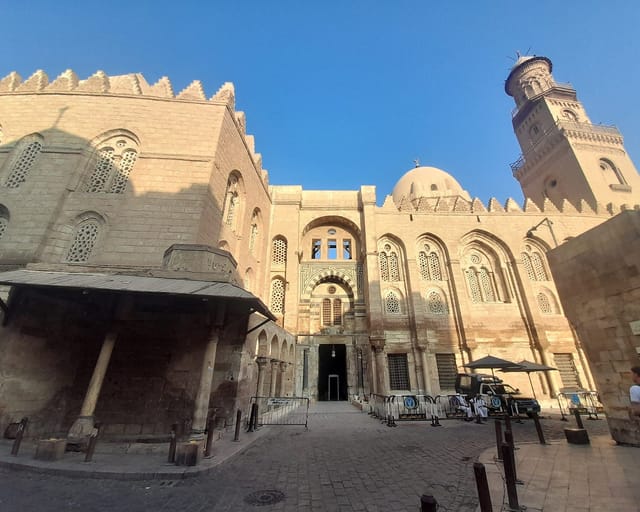
Image: Marsupium, The complex of Sultan Qalawun, Cairo, 2024. CC BY 4.0, via Wikimedia Commons.. Image credits
