Does Islam support universal healthcare?
Question 1044
Question
Does Islam teach that everyone should have access to medical care, regardless of whether they can pay?
Summary of answer
Islam supports universal healthcare. The Quran counts saving one life as saving all humanity (5:32), the Prophet ﷺ commanded people to seek treatment, and protecting life is the first objective of the sharia after faith. For centuries Muslim hospitals funded by endowments, from Baghdad to Damascus to Cairo, treated every patient free of charge, rich or poor, local or foreign.
Answer
الحمد لله Praise be to Allah.
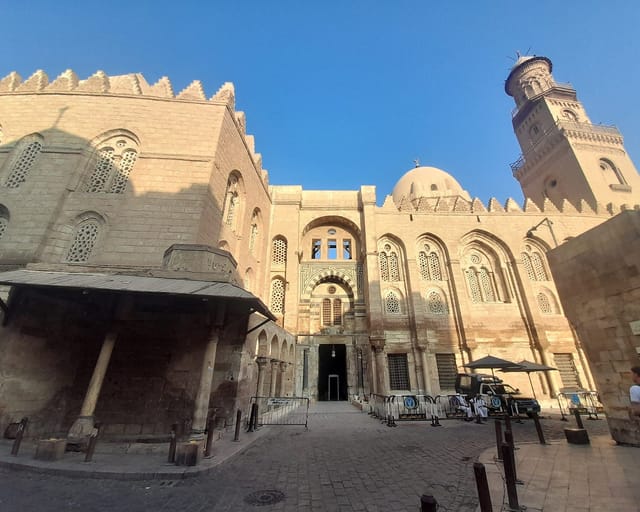
Islam supports universal healthcare. The Quran teaches that saving a single life is like saving all of humanity, the Prophet ﷺ commanded the sick to seek treatment, and the scholars placed the protection of life among the highest objectives of the sharia. Muslim societies acted on this for centuries: their great hospitals, paid for by charitable endowments, opened their doors to every patient and asked for nothing in return.
A community that leaves people to suffer illness because they are poor has fallen short of what Allah asks. A community that heals them has done the work of the prophets.
What does the Quran say about saving life?
After the story of the two sons of Adam, the Quran sets down a principle for all humanity:
مَن قَتَلَ نَفۡسَۢا بِغَيۡرِ نَفۡسٍ أَوۡ فَسَادٖ فِي ٱلۡأَرۡضِ فَكَأَنَّمَا قَتَلَ ٱلنَّاسَ جَمِيعٗا وَمَنۡ أَحۡيَاهَا فَكَأَنَّمَآ أَحۡيَا ٱلنَّاسَ جَمِيعٗا
“Whoever kills a soul, unless for a soul or for spreading corruption in the land, it is as though he killed all of humanity. And whoever saves a life, it is as though he saved all of humanity.”
Every nurse who sits up through a night shift and every clinic that treats a patient who cannot pay takes part in this verse. The Quran also tells believers, “Do not throw yourselves into ruin with your own hands, and do good, for Allah loves those who do good” (2:195). Abraham (peace be upon him) speaks of the One “who heals me when I fall ill” (26:80). Healing comes from Allah, and He has made human hands its means.
Did the Prophet ﷺ command people to seek treatment?
Bedouin Arabs once came to the Prophet ﷺ and asked whether they should use medicine. He answered:
«تَدَاوَوْا فَإِنَّ اللَّهَ عَزَّ وَجَلَّ لَمْ يَضَعْ دَاءً إِلاَّ وَضَعَ لَهُ دَوَاءً غَيْرَ دَاءٍ وَاحِدٍ الْهَرَمُ»
“Seek treatment, for Allah, the Mighty and Majestic, has not created any illness without also creating a remedy for it, except one illness: old age.”
Sunan Abi Dawud 3855, graded sahih by al-Albani
He also said, “Allah has sent down no illness without sending down its cure” (Sahih al-Bukhari 5678). These words gave Muslim physicians a sacred motive to search for cures. They also made care of the sick a shared duty: “Feed the hungry, visit the sick, and free the captive” (Sahih al-Bukhari 5649).
The most moving text on this subject is a hadith qudsi in which Allah speaks to a person on the Day of Resurrection:
«يَا ابْنَ آدَمَ مَرِضْتُ فَلَمْ تَعُدْنِي»
“Son of Adam, I was sick and you did not visit Me.”
The servant asks how he could visit the Lord of the worlds. Allah answers that a servant of His was sick, and “had you visited him, you would have found Me with him.” Allah is present at the bedside of the sick. A society that brings care to every bedside finds Him there.
Is healthcare a duty for the whole community?
The jurists called some duties a communal obligation (farḍ kifāya, فرض كفاية): if enough people do them, everyone is freed of sin, and if no one does, everyone shares the blame. Imam al-Ghazali (d. 1111) named medicine as one of these in the Book of Knowledge of his Iḥyāʾ ʿUlūm al-Dīn, because the health of bodies cannot do without it. A town without a physician, on his reasoning, is a town in which every capable person has fallen short.
The objectives of the sharia (maqāṣid al-sharīʿa) point the same way. The scholars agreed that the law exists to protect faith, life, mind, family, and property, as explained in What is sharia?. A system that lets people die of treatable illness because they are poor defeats the objective of protecting life. Zakat may pay for the medical care of a person who cannot afford it, since the sick poor are among the needy named in the Quran (9:60); see How does zakat work?.
How did Muslim hospitals treat the sick for free?
The Muslim world built some of the first public hospitals in history, called bīmāristāns (بيمارستان, a Persian word meaning “house of the sick”). They were usually funded by endowments (awqāf, أوقاف): a ruler or a wealthy believer gave shops, mills, or whole villages whose income paid for the hospital forever.
- Baghdad. The Buyid ruler ʿAḍud al-Dawla completed the ʿAḍudī hospital in 981. It opened with some two dozen physicians and served people of every background.
- Damascus. Nur al-Din Zangi founded the Nūrī hospital in 1154. Its building still stands and now houses a museum of the history of medicine.
- Cairo. The Mamluk sultan Qalāwūn opened the Manṣūrī hospital in 1284. Its founding terms promised care to residents and foreigners, the strong and the weak, rich and poor. They added that no one was to be asked for payment or even hinted at for not paying, and that the hospital would bear every cost.
Many of these hospitals had separate wards for women and men and wards for mental illness. Some gave poor patients new clothes and a small sum of money when they left, so they would not return to hardship straight from the sickbed. The historian Ahmed Ragab has studied this institution in The Medieval Islamic Hospital (2015).
What does this mean for Muslims today?
The principle has not changed. Protecting life is a duty, and a just society arranges for every person to receive care whatever their wealth. Muslims can support this through their votes, their zakat and charity, their work in medicine and nursing, and their endowments. Many Muslim communities in the West run free clinics in this spirit, and Muslim physicians serve in public hospitals around the world.
Health includes the mind. Depression and anxiety are illnesses to be treated with the same care as any other, as explained in Is depression a sign of weak iman?. The same reasoning makes donating organs and blood a great act of charity (Is organ donation allowed in Islam?), and supports insurance as mutual aid (Is insurance haram?).
A prayer for the sick
Aisha (may Allah be pleased with her) reported that whenever the Prophet ﷺ visited a sick person, he prayed:
«أَذْهِبِ الْبَاسَ رَبَّ النَّاسِ، اشْفِ وَأَنْتَ الشَّافِي لاَ شِفَاءَ إِلاَّ شِفَاؤُكَ، شِفَاءً لاَ يُغَادِرُ سَقَمًا»
“Take away the harm, Lord of all people. Heal, for You are the Healer. There is no healing except Yours, a healing that leaves no illness behind.”
May Allah heal every sick person, bless every hand that tends them, and make us people who build communities where no one is turned away from care.
And Allah knows best. والله أعلم
Frequently asked questions
Is it obligatory to seek medical treatment in Islam?
The Prophet ﷺ told people to seek treatment, because Allah sent no disease without a cure. The schools differ on whether treatment is recommended or required, and many scholars hold it obligatory when a life is at stake.
Were the old Islamic hospitals really free?
Yes. Hospitals such as al-Manṣūrī in Cairo were funded by endowments (awqāf), and their founding terms said all patients were to be treated at the hospital's expense, whether rich or poor, local or foreign.
Is health insurance haram?
Health insurance is permissible according to many contemporary scholars, as mutual aid against hardship. See the full answer on insurance for the details and the cooperative (takaful) alternative.
Can zakat pay for someone's medical bills?
Yes. A sick person who cannot pay for care is among the poor and needy named in Quran 9:60, and zakat may cover their treatment.
Related questions
Sources
- Sunan Abi Dawud 3855; Sahih al-Bukhari 5649, 5678; Sahih Muslim 2569
- al-Ghazālī, Iḥyāʾ ʿUlūm al-Dīn, Kitāb al-ʿIlm (medicine as a communal obligation)
- Ahmed Ragab, The Medieval Islamic Hospital: Medicine, Religion, and Charity (Cambridge University Press, 2015)
- Muslim Heritage, The Islamic Roots of the Modern Hospital
Image: Marsupium, The complex of Sultan Qalawun, Cairo, 2024. CC BY 4.0, via Wikimedia Commons.. Image credits
