Is insurance haram?
Question 1099
Question
Is it permissible for a Muslim to buy insurance, such as health, car, home, or life insurance, or is it a form of gambling and uncertainty?
Summary of answer
Insurance is halal. Pooling money so that the unlucky few are carried by the many is the mutual aid the Quran commands (5:2) and the Prophet ﷺ praised in the Ashʿari tribe. The Syrian jurist Mustafa al-Zarqa, Egypt's Dar al-Ifta, and the rulings of Ayatollah Sistani permit insurance, life insurance included. Others prefer cooperative takaful, and even they allow insurance the law requires or that health and safety demand.
Answer
الحمد لله Praise be to Allah.
Most Muslims living today pay for insurance of some kind: health cover for the family, insurance on the car the law requires, protection for a home or a shop, and life insurance so that children are cared for if a parent dies young. The question of whether insurance is haram comes from the classical worry about uncertainty (gharar), gambling (maysir), and interest (ribā). The stronger view (al-rājiḥ) is that insurance is halal. It is a modern form of the mutual aid the Quran commands, and the scholars who weighed it most carefully permitted it.
Is insurance haram in Islam?
Those who forbid commercial insurance raise three objections. The payout is uncertain, so the contract seems to contain gharar, which the Prophet ﷺ forbade in sales (Sahih Muslim 1513). One side may pay little and receive much, which looks like gambling. Insurers invest premiums in interest-bearing assets.
Each objection has an answer. Gambling creates a risk that did not exist so that one player can win what another loses; insurance takes a risk that already exists, a fire, an illness, a crash, and spreads its cost across many people so that no one is ruined by it. The uncertainty of the event is the very thing being protected against, while the price of cover and the terms of the payout are known and agreed. Egypt’s Dar al-Ifta explained in a 2013 fatwa that insurance is a contract of mutual contribution, so uncertainty that would spoil a sale does not spoil it, and that its wide use without disputes, together with custom (ʿurf) and the public interest (maṣlaḥa), confirms that it is lawful. How an insurer invests its reserves is a separate question, and takaful funds answer it by investing in lawful assets.
What do the Quran and Sunnah say about mutual aid?
The Quran commands the believers to carry one another:
وَتَعَاوَنُواْ عَلَى ٱلۡبِرِّ وَٱلتَّقۡوَىٰۖ وَلَا تَعَاوَنُواْ عَلَى ٱلۡإِثۡمِ وَٱلۡعُدۡوَٰنِۚ
“Help one another in goodness and mindfulness of Allah, and do not help one another in sin and aggression.”
The Prophet ﷺ praised a tribe that had built its own fund against hard times:
«إِنَّ الأَشْعَرِيِّينَ إِذَا أَرْمَلُوا فِي الْغَزْوِ، أَوْ قَلَّ طَعَامُ عِيَالِهِمْ بِالْمَدِينَةِ جَمَعُوا مَا كَانَ عِنْدَهُمْ فِي ثَوْبٍ وَاحِدٍ، ثُمَّ اقْتَسَمُوهُ بَيْنَهُمْ فِي إِنَاءٍ وَاحِدٍ بِالسَّوِيَّةِ، فَهُمْ مِنِّي وَأَنَا مِنْهُمْ»
“When the Ashʿaris run short of supplies on a campaign, or their families in Medina run low on food, they gather everything they have in one cloth and share it out equally among themselves with one measure. They are of me, and I am of them.”
Islamic law already knew shared liability. When someone causes a death by accident, the blood money falls on the family and clan (al-ʿāqila), so that one person’s ruinous debt is carried by many. The Quran also tells how Joseph (peace be upon him) saved Egypt by storing grain in seven good years against seven hard ones (Quran 12:47). Planning for loss is part of trust in Allah. When a man asked whether he should tie his camel or leave it and trust Allah, the Prophet ﷺ said, “Tie it, and trust” (Jamiʿ al-Tirmidhi 2517, graded hasan by al-Albani).
What did the scholars say about insurance?
Ibn ʿAbidin (d. 1836), the Hanafi jurist of Damascus, was among the first to write about insurance when merchants asked him about marine cover (sawkara). In Radd al-Muḥtār he ruled that a merchant could not claim compensation from the insurer, since the insurer had never held the goods in trust.
In the twentieth century the Syrian jurist Mustafa al-Zarqa (d. 1999) studied insurance more thoroughly than anyone before him. In papers presented at a Damascus conference in 1961 and at Mecca in 1976, later gathered in his book Niẓām al-Taʾmīn, he concluded that insurance contracts are valid unless a particular policy contains an unacceptable term, and he argued that the line drawn between commercial and cooperative insurance does not hold. Egypt’s Dar al-Ifta permits commercial insurance and life insurance, and the rulings of Ayatollah Sistani permit every kind of insurance whose contract contains no forbidden condition.
The scholars differed (ikhtalafa al-ʿulamāʾ). The International Islamic Fiqh Academy in Jeddah ruled in 1985 (resolution 9) that commercial insurance with a fixed premium is forbidden and endorsed cooperative insurance in its place. The permissive view is the stronger one: it rests on the Quran’s command to help one another and on the objectives of the sharia (maqāṣid al-sharīʿa), which protect life, family, and property, and it spares Muslims a hardship the religion never asked of them.
What is takaful?
Takaful (from kafāla, mutual guarantee) is cooperative insurance. Members contribute to a common fund as a donation (tabarruʿ), claims are paid from the fund, reserves are invested in lawful assets, and any surplus may return to the members. Where a good takaful provider or a policyholder-owned mutual insurer is available at a fair price, it is an excellent choice. Where it is not, conventional insurance remains lawful.
Is health insurance haram? What about life insurance?
Health insurance protects life and health, two of the five things the sharia exists to guard. Even scholars who are strict about commercial insurance permit it wherever going without would bring serious hardship, as in the United States. The sharia’s ideal goes further: care for every person as a right, discussed in Does Islam support universal healthcare?
Life insurance provides for those left behind. When Saʿd ibn Abi Waqqas wished to give away most of his wealth, the Prophet ﷺ told him:
«إِنَّكَ أَنْ تَذَرَ وَرَثَتَكَ أَغْنِيَاءَ خَيْرٌ مِنْ أَنْ تَذَرَهُمْ عَالَةً يَتَكَفَّفُونَ النَّاسَ»
“To leave your heirs well off is better than to leave them dependent, holding out their hands to people.”
For policies with an investment element, check where the money goes, using the screens in Is investing in stocks haram?, and avoid interest-bearing features where you can (Is bank interest haram?). Insurance is also the opposite of the wager the Quran forbids, as explained in Is gambling or the lottery haram?
A closing word
Insurance is one way a family ties its camel. The heart still rests on Allah, who alone protects, and the Quran teaches the believer to ask Him for good in both worlds:
رَبَّنَآ ءَاتِنَا فِي ٱلدُّنۡيَا حَسَنَةٗ وَفِي ٱلۡأٓخِرَةِ حَسَنَةٗ وَقِنَا عَذَابَ ٱلنَّارِ
“Our Lord, give us good in this world and good in the Hereafter, and protect us from the punishment of the Fire.”
And Allah knows best. والله أعلم
Frequently asked questions
Is life insurance haram?
Life insurance is permissible on the stronger view. Egypt's Dar al-Ifta ruled it lawful in 2013, Ayatollah Sistani's rulings permit it, and it carries out the Prophet's ﷺ advice to leave one's heirs provided for.
Is car insurance haram?
Car insurance is permitted by every school today, including scholars who are strict about commercial insurance, because the law requires it and it protects the victims of accidents.
What does Hanafi fiqh say about insurance?
Ibn ʿAbidin (d. 1836), the great Hanafi jurist of Damascus, was among the first to discuss marine insurance and did not allow claims under it. Many Hanafi muftis today keep his caution yet permit insurance that the law requires or that serious hardship demands.
What is the Shia view on insurance?
The rulings of Ayatollah Sistani permit every kind of insurance, life insurance included, as long as the contract contains no impermissible condition.
Is it haram to work for an insurance company?
On the stronger view insurance is a lawful contract, so working in the industry earns a lawful wage. Helping families recover from illness, fire, and loss is good work.
Related questions
Sources
- Mustafa al-Zarqa, Niẓām al-Taʾmīn: Ḥaqīqatuhu wa-l-Raʾy al-Sharʿī fīh
- Dar al-Ifta al-Misriyyah, Fatwa 5855: Comprehensive Auto Insurance (2013)
- International Islamic Fiqh Academy, Resolution 9 (9/2) on Insurance and Reinsurance, Jeddah, 1985
- Ibn ʿAbidin, Radd al-Muḥtār ʿalā al-Durr al-Mukhtār
- Sahih al-Bukhari 2486, 1295
- I.M.A.M. (Office of Ayatollah Sistani), Is buying life insurance permissible?
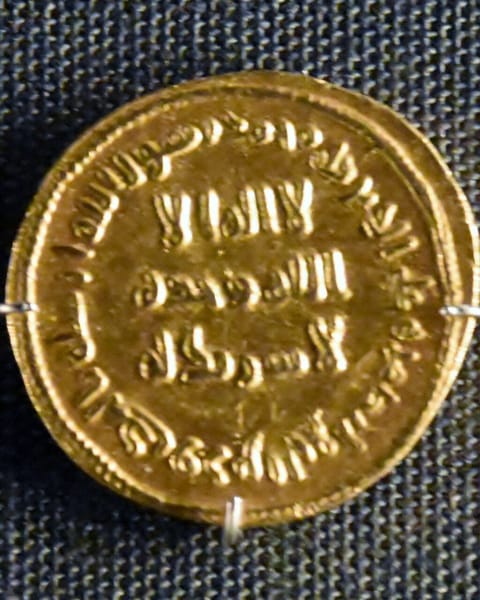
Image: Richard Mortel, Gold dinar of ʿAbd al-Malik ibn Marwan, dated AH 78 (697–698), 2017. David Collection, Copenhagen. CC BY 2.0, via Wikimedia Commons.. Image credits
,_The_David_Collection,_Copenhagen_(36240895662).jpg)