What happens after death in Islam?
Question 1121
Question
According to Islam, what happens to the soul after a person dies, in the grave and until the Day of Resurrection?
Summary of answer
In Islam, death is the soul's return to Allah. The soul leaves the body and enters the barzakh, the barrier between this life and the Resurrection (23:100). The Prophet ﷺ taught that the believer is greeted with good news of Allah's pleasure, that the grave is widened and lit for them, and that they sleep there like a bride or groom until they are raised. Then comes the Day of Judgment, and for the people of faith, the nearness of Allah in Paradise.
Answer
الحمد لله Praise be to Allah.
When a Muslim hears of a death, they say: “To Allah we belong, and to Him we return” (Quran 2:156). Those words hold the whole Islamic teaching about what happens after death. Death is a return. The soul leaves the body and goes back to the One who breathed it in, enters the barzakh, the world between this life and the Resurrection, and waits there for the Day when all creation is raised. For the believer, the Quran and the Sunnah describe that return as a homecoming.
What happens to the soul at the moment of death?
The Quran speaks of the believing soul being called home with words of tenderness:
يَـٰٓأَيَّتُهَا ٱلنَّفۡسُ ٱلۡمُطۡمَئِنَّةُ ٱرۡجِعِيٓ إِلَىٰ رَبِّكِ رَاضِيَةٗ مَّرۡضِيَّةٗ فَٱدۡخُلِي فِي عِبَٰدِي وَٱدۡخُلِي جَنَّتِي
“O soul at peace, return to your Lord, well pleased and well pleasing. Enter among My servants, and enter My Garden.”
The Prophet ﷺ said, “Whoever loves to meet Allah, Allah loves to meet them.” Aisha (may Allah be pleased with her) answered that all of us dislike death. He explained that when death comes to a believer, they are given good news of Allah’s pleasure and His honor, and then nothing is dearer to them than what lies ahead (Sahih al-Bukhari 6507). The fear of death belongs to this side of it. The angels who come for the soul are messengers of mercy (What do Muslims believe about angels?).
What is the barzakh?
The Quran names the state between death and the Resurrection:
وَمِن وَرَآئِهِم بَرۡزَخٌ إِلَىٰ يَوۡمِ يُبۡعَثُونَ
“Behind them is a barrier until the Day they are raised.”
Barzakh (برزخ) means a barrier or isthmus. The Quran uses the same word for the line where fresh water and salt water meet without mixing (55:20). The soul in the barzakh is beyond this world and has not yet reached the next. It is conscious: the Prophet ﷺ said that each person after death is shown their place in Paradise morning and evening, and told, “This is your place until Allah raises you on the Day of Resurrection” (Sahih al-Bukhari 1379).
What happens in the grave?
The hadith describe a meeting in the grave. Two angels come and ask the dead person about their Lord, their religion, and their Prophet ﷺ. Those who answer from faith are shown their place in Paradise (Sahih al-Bukhari 1338). In one narration the grave is then widened for the believer and filled with light, and the believer asks to go back and tell their family the good news. The angels answer:
«نَمْ كَنَوْمَةِ الْعَرُوسِ الَّذِي لاَ يُوقِظُهُ إِلاَّ أَحَبُّ أَهْلِهِ إِلَيْهِ»
“Sleep like a bride or groom on the wedding night, whom no one wakes but the one they love most.”
Jamiʿ al-Tirmidhi 1071, graded hasan by al-Albani
The same hadith warns of distress in the grave for the hypocrite who lived a lie, and the Prophet ﷺ taught his community to seek refuge from the trial of the grave. The scholars taught that the barzakh holds the first taste of what a life has earned, just as the believer’s grave holds the first taste of Paradise. Ibn Qayyim al-Jawziyya (d. 1350) gathered the reports about the soul’s life after death in his Kitāb al-Rūḥ, including those describing the souls of believers meeting one another. The Prophet ﷺ said that the believer’s soul is like a bird feeding from the trees of Paradise until Allah returns it to its body on the Day of Resurrection (Sunan Ibn Majah 4271, graded sahih by al-Albani).
Can the living help the dead?
The bond between the living and the dead continues. The Prophet ﷺ said:
«إِذَا مَاتَ الإِنْسَانُ انْقَطَعَ عَنْهُ عَمَلُهُ إِلاَّ مِنْ ثَلاَثَةٍ إِلاَّ مِنْ صَدَقَةٍ جَارِيَةٍ أَوْ عِلْمٍ يُنْتَفَعُ بِهِ أَوْ وَلَدٍ صَالِحٍ يَدْعُو لَهُ»
“When a person dies, their deeds come to an end except for three: ongoing charity, knowledge that benefits others, or a righteous child who prays for them.”
Muslims pray for their dead in the funeral prayer and for the rest of their lives, give charity in their names, and visit their graves with greetings of peace. The Quran teaches the believers to pray, “Our Lord, forgive us and our brothers and sisters who went before us in faith” (59:10). Grief is part of love, and the Prophet ﷺ himself wept at the death of his son Ibrahim (Is it haram to cry when someone dies?). The rites that honor the body are described in What do Muslims do when someone dies?
What comes after the barzakh?
At the end of time the trumpet is blown, every soul is returned to its body, and all creation stands before Allah. The deeds of each person are weighed, the Prophet ﷺ intercedes for his community, and Allah judges with a justice that leaves no one wronged and a mercy that outstrips His wrath (What happens on the Day of Judgment?). The fire purifies those who need purifying, and its punishment is never the final word on any soul (Is hell eternal in Islam?).
The goal of the whole road is Paradise, and the joy of Paradise is Allah Himself:
وُجُوهٞ يَوۡمَئِذٖ نَّاضِرَةٌ إِلَىٰ رَبِّهَا نَاظِرَةٞ
“Faces on that Day will be radiant, gazing upon their Lord.”
Looking at the full moon one night, the Prophet ﷺ told his Companions that they would see their Lord as clearly as they saw that moon (Sahih al-Bukhari 554). Everything else in the Garden, its rivers and its company, is described in What is Jannah like?
How should a Muslim think about death?
Imam al-Ghazali (d. 1111) closed his great work, the Iḥyāʾ ʿUlūm al-Dīn, with a book on the remembrance of death and the afterlife, and he ended that book, and with it the whole Iḥyāʾ, with a chapter on the vastness of Allah’s mercy. Remembering death is meant to make life sweeter and more sincere: to mend relationships, give generously, and live each day as someone who will soon meet a loving Lord.
The poet Rumi asked those who would carry his coffin not to mourn: “On the day I die, when my coffin is carried, do not think my heart is still in this world. When you see my funeral, do not cry ‘parting, parting!’ For me that is the hour of union and meeting.” May Allah make our deaths a meeting with Him, our graves gardens of light, and our families reunited in His Garden.
And Allah knows best. والله أعلم
Frequently asked questions
What happens 40 days after death in Islam?
The Quran and the sound hadith set no special ceremony on the fortieth day. The Sunnah limits formal mourning to three days, except for a widow, who mourns four months and ten days (Sahih al-Bukhari 1280). Gatherings on the fortieth day are a cultural custom; prayer and charity for the dead are good on any day.
Can the dead hear us in Islam?
The Prophet ﷺ said the dead person hears the footsteps of those leaving the grave (Sahih al-Bukhari 1338), and he greeted the people of the graves when he visited them. The scholars differed over how much the dead hear, and Ibn al-Qayyim gathered the reports in his Kitāb al-Rūḥ.
Do Muslims believe in reincarnation?
No. Islam teaches one life on earth, followed by the barzakh and the Resurrection, when every soul is raised and returned to its body.
Where do the souls of believers go?
The Prophet ﷺ said that the believer's soul is like a bird feeding from the trees of Paradise until Allah returns it to its body on the Day of Resurrection (Sunan Ibn Majah 4271, graded sahih by al-Albani).
Related questions
Sources
- Ibn Qayyim al-Jawziyya, Kitāb al-Rūḥ (The Book of the Soul)
- al-Ghazali, Iḥyāʾ ʿUlūm al-Dīn, Book 40, trans. T. J. Winter as The Remembrance of Death and the Afterlife (Islamic Texts Society, 1989)
- Jamiʿ al-Tirmidhi 1071 (sleep like a bride or groom)
- Sahih al-Bukhari 6507 (whoever loves to meet Allah)
- Sahih Muslim 1631 (three things that continue after death)
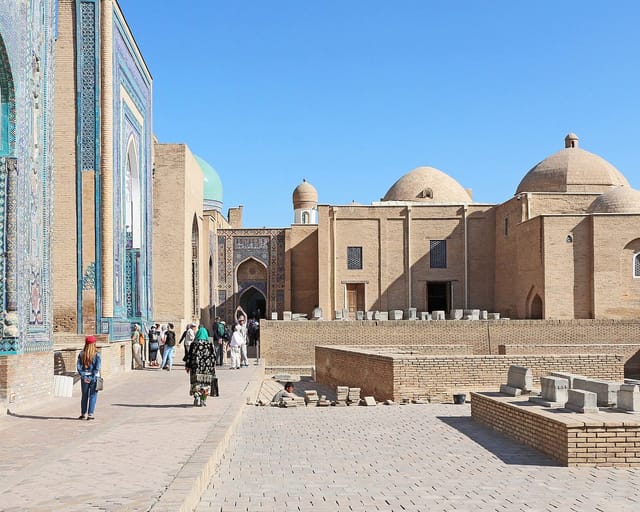
Image: Bgag, The Shah-i-Zinda necropolis, Samarkand, 2023. CC0, via Wikimedia Commons.. Image credits
