Can women visit graves and attend funerals in Islam?
Question 1150
Question
Is it permissible for Muslim women to visit the graves of loved ones, attend the funeral prayer, and be present at the burial?
Summary of answer
Women may visit graves, pray the funeral prayer, and stand at the burial. The Prophet ﷺ lifted his early ban on visiting graves, taught Aisha the words to say at al-Baqīʿ (Sahih Muslim 974b), and Aisha visited her brother's grave in Mecca. Al-Tirmidhi recorded that many scholars read the hadith against women visitors as abrogated by that permission. The relied-upon Hanafi view includes women in the recommendation to visit.
Answer
الحمد لله Praise be to Allah.
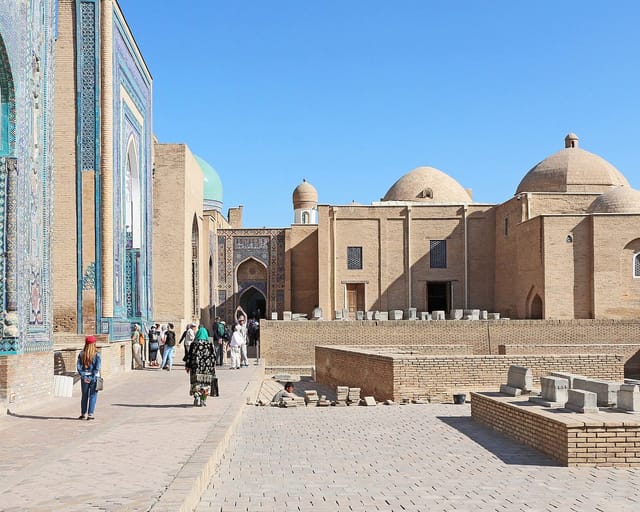
A daughter who has lost her mother, a widow, a sister: many women have been told to stay home while the men carry the body and stand at the grave. The stronger view (al-rājiḥ) is that women may visit graves, pray the funeral prayer, walk with the bier, and stand at the burial. The Prophet ﷺ lifted his early ban on visiting graves for everyone, taught his wife Aisha the very words to say at the cemetery, and comforted a grieving woman he found at a graveside.
Can women visit graves in Islam?
In the early years of Islam the Prophet ﷺ forbade visiting graves; the scholars explain that the customs of pagan mourning were still fresh. He then lifted the ban:
«نَهَيْتُكُمْ عَنْ زِيَارَةِ الْقُبُورِ فَزُورُوهَا»
“I had forbidden you to visit graves. Now visit them.”
The words address the community as a whole, and the Prophet ﷺ himself taught a woman how to use the permission. One night Aisha (may Allah be pleased with her) followed him to al-Baqīʿ, the cemetery of Medina, and watched him stand long among the graves and raise his hands three times. When he told her that Gabriel had commanded him to go and pray for forgiveness for the people buried there, she asked how she should speak to them. He said:
«قُولِي السَّلاَمُ عَلَى أَهْلِ الدِّيَارِ مِنَ الْمُؤْمِنِينَ وَالْمُسْلِمِينَ وَيَرْحَمُ اللَّهُ الْمُسْتَقْدِمِينَ مِنَّا وَالْمُسْتَأْخِرِينَ وَإِنَّا إِنْ شَاءَ اللَّهُ بِكُمْ لَلاَحِقُونَ»
“Say: Peace be upon the believers and Muslims who dwell here. May Allah have mercy on those of us who have gone ahead and those who come after, and we will, if Allah wills, join you.”
He once passed a woman weeping at a grave and told her, “Be mindful of Allah and be patient.” She answered sharply, not knowing who he was, and later came to his door to apologize. He told her that patience is shown at the first blow of grief (Sahih al-Bukhari 1283). He spoke to her sorrow and said nothing against her presence at the grave.
Aisha lived by this teaching. When her brother ʿAbd al-Raḥmān ibn Abī Bakr died and was buried in Mecca, she went to his grave and recited lines of poetry for him (Jami’ al-Tirmidhi 1055, with a weak chain). In a report recorded by al-Ḥākim in al-Mustadrak and graded sahih by al-Albani, Ibn Abī Mulayka saw her returning from the cemetery and asked whether the Prophet ﷺ had not forbidden visiting graves. She said that he had forbidden it, and then commanded it.
What about the hadith cursing women who visit graves?
Abu Hurayra reported that the Messenger of Allah ﷺ cursed the zawwārāt of graves (Jami’ al-Tirmidhi 1056). Al-Tirmidhi graded it hasan sahih, and then wrote beneath it that some scholars held it was said before the Prophet ﷺ permitted visiting graves: once he permitted it, men and women both entered the permission. Others, he added, disliked visits for women because they feared excessive distress. The Arabic form zawwārāt is intensive, describing women who frequent the graves without end, and many of the scholars who kept the hadith in force applied it to that excess.
The schools weighed these texts differently. The relied-upon Hanafi texts, such as al-Ḥaṣkafī’s al-Durr al-Mukhtār (17th century), recommend visiting graves “even for women,” citing “now visit them.” Shafiʿi and Hanbali jurists generally held such visits mildly disliked for women, and the Shafiʿis still recommended that women visit the grave of the Prophet ﷺ in Medina. In Jaʿfari practice, visiting the graves of family and the shrines of the Prophet’s ﷺ household is a beloved devotion for women and men. The common ground of every school is the rule against wailing, tearing clothes, and words of despair, which binds men and women equally.
Can women attend funerals and the janazah prayer?
Umm ʿAṭiyya said: “We were discouraged from following funeral processions, and it was never made binding on us” (Sahih al-Bukhari 1278). The women of Medina knew the difference between a firm prohibition and a mild discouragement, and she recorded that this was the second.
Women prayed over the dead. When Saʿd ibn Abī Waqqāṣ died, Aisha asked that his bier be carried through the mosque so that she and the other wives of the Prophet ﷺ could pray over him. When people objected, she said: “How quickly people forget! The Messenger of Allah ﷺ prayed over Suhayl ibn al-Bayḍāʾ inside the mosque” (Sahih Muslim 973a). In many communities today women pray the funeral prayer in the mosque and stand at the burial with their families. The steps of washing, shrouding, prayer, and burial are in What do Muslims do when someone dies?, and women’s place in the mosque is in Can women go to the mosque?
Can women cry at a grave or a funeral?
Tears are a mercy. When his infant son Ibrāhīm was dying, the Prophet’s ﷺ eyes filled, and he said: “The eye weeps and the heart grieves, and we say only what pleases our Lord” (Sahih al-Bukhari 1303). The Quran gives every mourner, woman or man, words for the moment of loss:
ٱلَّذِينَ إِذَآ أَصَٰبَتۡهُم مُّصِيبَةٞ قَالُوٓاْ إِنَّا لِلَّهِ وَإِنَّآ إِلَيۡهِ رَٰجِعُونَ
“Those who, when a calamity strikes them, say: We belong to Allah, and to Him we are returning.”
More on grief is in Is it haram to cry when someone dies? and on the life of the soul after death in What happens after death in Islam?
A closing duʿāʾ
When you stand at the grave of someone you love, greet them with the words the Prophet ﷺ taught Aisha, and pray as the Quran teaches:
رَبَّنَا ٱغۡفِرۡ لَنَا وَلِإِخۡوَٰنِنَا ٱلَّذِينَ سَبَقُونَا بِٱلۡإِيمَٰنِ
“Our Lord, forgive us and our brothers and sisters who went before us in faith.”
May Allah fill their graves with light, and gather you with them in His mercy.
And Allah knows best. والله أعلم
Frequently asked questions
Can a woman on her period visit a grave?
Yes. Visiting a grave, greeting the dead, and making duʿāʾ need no state of purity. A woman on her period does not join the funeral prayer itself, and she can stand with the mourners and pray for the dead in her own words.
Can women pray the janazah prayer?
Yes. The funeral prayer is valid from women by the agreement of the schools, and Aisha asked for the bier of Saʿd ibn Abī Waqqāṣ to be brought into the mosque so that she and the other wives of the Prophet ﷺ could pray over him.
What is the Hanafi view on women visiting graves?
The relied-upon Hanafi texts, such as al-Ḥaṣkafī's al-Durr al-Mukhtār, recommend visiting graves for women as well as men, on the strength of the Prophet's ﷺ words 'now visit them'.
Can women visit graves in Shia Islam?
Yes. In Jaʿfari practice, visiting the graves of family members and the shrines of the Prophet's ﷺ family is a cherished devotion for women and men alike.
Related questions
Sources
- Sahih Muslim 973a, 974b and 977a
- Jami' al-Tirmidhi 1055 and 1056, with al-Tirmidhi's comment
- Sahih al-Bukhari 1278, 1283 and 1303
- al-Ḥākim al-Naysābūrī, al-Mustadrak, report of Ibn Abī Mulayka on Aisha's visit to her brother's grave
- al-Ḥaṣkafī, al-Durr al-Mukhtār, chapter on the funeral prayer
Image: Bgag, The Shah-i-Zinda necropolis, Samarkand, 2023. CC0, via Wikimedia Commons.. Image credits
