What does Islam say about disability?
Question 1256
Question
How does Islam view people with physical, sensory, intellectual, or mental disabilities, and what does it ask of them and of the community?
Summary of answer
People with disabilities have full dignity in Islam, and disability is no sign of Allah's displeasure. The Quran rebuked the Prophet ﷺ for turning from a blind man (80:1–10), and that man, Ibn Umm Maktūm, became a muezzin and was twice left in charge of Medina. Allah looks at hearts and deeds, asks no soul beyond its capacity (2:286), and the sharia adapts every act of worship to each person's ability.
﴿لَا يُكَلِّفُ ٱللَّهُ نَفۡسًا إِلَّا وُسۡعَهَا﴾
Allah does not burden any soul beyond what it can bear.
Answer
الحمد لله Praise be to Allah.
Many people with disabilities, and many parents of disabled children, have heard well-meaning Muslims say that a disability is a test, a punishment, or a sign of weak faith. The Quran and the Sunnah speak very differently. People with disabilities have full dignity in Islam, they are equal members of the community, and Allah asks of every soul only what it can bear. The Quran itself rebuked the Prophet ﷺ for turning away from a blind man, and that man went on to call the adhan and govern Medina.
What does the Quran say about disability?
One of the most striking passages in the Quran concerns a blind Companion, ʿAbd Allāh ibn Umm Maktūm. He came to the Prophet ﷺ to learn while he was speaking with leaders of Quraysh, and he frowned. Allah revealed:
عَبَسَ وَتَوَلَّىٰٓ ﴿١﴾ أَن جَآءَهُ ٱلۡأَعۡمَىٰ ﴿٢﴾ وَمَا يُدۡرِيكَ لَعَلَّهُۥ يَزَّكَّىٰٓ ﴿٣﴾ أَوۡ يَذَّكَّرُ فَتَنفَعَهُ ٱلذِّكۡرَىٰٓ ﴿٤﴾
“He frowned and turned away, because the blind man came to him. How could you know? Perhaps he would grow in purity, or take heed, and the reminder would benefit him.”
The Sunni commentators read these verses as a rebuke to the Prophet ﷺ himself, and Shia scholars hold that the verses describe someone else. On both readings, the Quran places a blind seeker of knowledge above the powerful and makes turning from him a fault.
The Quran also removes any stigma from the table and the home:
لَّيۡسَ عَلَى ٱلۡأَعۡمَىٰ حَرَجٞ وَلَا عَلَى ٱلۡأَعۡرَجِ حَرَجٞ وَلَا عَلَى ٱلۡمَرِيضِ حَرَجٞ
“There is no blame on the blind, no blame on the lame, and no blame on the sick.”
The verse goes on to speak of eating together in one another’s houses. The general rule is set in another verse: “Allah does not burden any soul beyond what it can bear” (Quran 2:286).
Is disability a punishment from Allah?
No. Worth before Allah is measured in the heart:
«إِنَّ اللَّهَ لاَ يَنْظُرُ إِلَى صُوَرِكُمْ وَأَمْوَالِكُمْ وَلَكِنْ يَنْظُرُ إِلَى قُلُوبِكُمْ وَأَعْمَالِكُمْ»
“Allah does not look at your appearance or your wealth. He looks at your hearts and your deeds.”
The prophets knew bodily hardship. Jacob (peace be upon him) grieved for Joseph until “his eyes turned white with sorrow” (12:84), and Job endured long affliction. The Prophet ﷺ conveyed a promise from Allah to anyone who loses their sight: “If I test My servant in his two beloved ones, his eyes, and he is patient, I will give him Paradise in their place” (Sahih al-Bukhari 5653). The hadith speaks of reward and closeness to Allah. It gives no one the right to explain another person’s body as a judgment.
How did the Prophet ﷺ include people with disabilities?
Ibn Umm Maktūm became one of the two muezzins of Medina beside Bilāl. Because he could not see the dawn, the people would tell him “It is morning, it is morning,” and then he called the adhan (Sahih al-Bukhari 617). The community adjusted, and he served. The Prophet ﷺ left him in charge of Medina twice while he was away (Sunan Abi Dawud 2931, graded sahih by al-Albani), and appointed him to lead the people in prayer though he was blind (Sunan Abi Dawud 595). When a verse praised those who go out to defend the community, he asked about those who cannot, and Allah revealed an exception for “those with a disability” (4:95; Sahih al-Bukhari 4592). He later carried the banner at the battle of al-Qādisiyya in 636.
How does Islamic law adapt to disability?
- Prayer by ability. “Pray standing; if you cannot, then sitting; and if you cannot, then on your side” (Sahih al-Bukhari 1117). Chairs in the mosque are Sunnah in spirit. See also Can you combine prayers?
- Purification by ability. A person who cannot use water performs tayammum, for “Allah does not wish to place any hardship on you” (5:6).
- Accountability by understanding. The Prophet ﷺ said the pen is lifted from “the one whose mind is overcome, until he recovers” (Sunan Abi Dawud 4401, graded sahih by al-Albani). When ʿUmar was about to punish a woman with a mental disability, ʿAlī reminded him of this hadith, and ʿUmar let her go.
- Communication in every form. When Zechariah was unable to speak for three days, the Quran says he spoke to the people “by signs” (إِلَّا رَمۡزٗا, Quran 3:41). Sign language, writing, and assistive devices are honored ways of speaking.
Who were Muslim scholars with disabilities?
ʿAṭāʾ ibn Abī Rabāḥ (d. c. 733), the mufti of Mecca, walked with a limp, was born with one good eye, later lost his sight entirely, and lost a hand in battle, yet he taught in the Great Mosque of Mecca into old age. Qatāda ibn Diʿāma (d. 735) of Basra, a master of Quran commentary, was blind and taught from memory. In the twentieth century Taha Hussein, blind from early childhood, studied at al-Azhar and the Sorbonne and became Egypt’s Minister of Education in 1950.
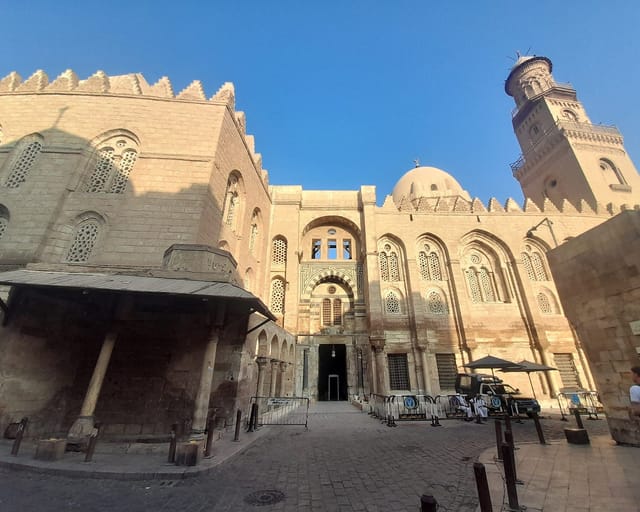
Muslim societies built care into their institutions. The Umayyad caliph al-Walid I funded servants to assist disabled people in Syria, and the Mansuri hospital founded in Cairo by Sultan Qalawun, completed in 1284, treated mental illness free of charge, with music among its therapies (Does Islam support universal healthcare?). Mental illness deserves the same compassion and care as any other condition (Is depression a lack of faith?; Can Muslims see a therapist?).
Mosques today continue this work with ramps, sign interpreters, sensory-friendly rooms for autistic worshippers, and leadership roles for disabled Muslims, part of the wider work of building inclusive mosques (Are there inclusive mosques?).
The prayer of Job
When Job (peace be upon him) called out in his long affliction, he made no complaint against his Lord, only an appeal to His mercy:
أَنِّي مَسَّنِيَ ٱلضُّرُّ وَأَنتَ أَرۡحَمُ ٱلرَّـٰحِمِينَ
“Hardship has touched me, and You are the Most Merciful of all who show mercy.”
May Allah answer every person who carries a hardship in body or mind with His mercy, and make our communities places where everyone belongs.
And Allah knows best. والله أعلم
Frequently asked questions
Is disability a punishment from Allah?
No. Prophets themselves knew illness and loss: Jacob lost his sight in grief and Job suffered long affliction. Allah judges people by their hearts and deeds, and He promises great reward to those who live with hardship patiently.
How does a person with a disability pray?
According to ability. The Prophet ﷺ said, "Pray standing; if you cannot, then sitting; and if you cannot, then lying on your side." A person who cannot use water performs tayammum, and every movement may be adapted.
Are people with intellectual disabilities accountable for religious duties?
Each person is accountable only to the degree of their understanding. The Prophet ﷺ said the pen is lifted from the one whose mind is overcome, and ʿUmar released a woman with a mental disability from punishment when ʿAlī reminded him of it.
What is the Shia view of Surah Abasa?
Shia scholars reject the report that the Prophet ﷺ frowned and hold that the verses describe someone else. Both readings agree that the verses honor the blind man and rebuke turning away from him.
Related questions
Sources
Image: Marsupium, The complex of Sultan Qalawun, Cairo, 2024. CC BY 4.0, via Wikimedia Commons.. Image credits
