Is it haram to draw faces or people?
Question 1022
Question
Is it permissible in Islam to draw people, faces, or animals, including anime characters and portraits?
Summary of answer
Drawing faces, people and animals is halal. The Quran condemns statues that are worshipped and counts statues among Allah's gifts to Solomon. The hadiths against image-makers concern idols and those who set out to rival Allah's creation. Aisha kept dolls, including a winged horse that made the Prophet ﷺ laugh, and the Maliki school, Muhammad Abduh, Egypt's Dar al-Ifta and Ayatollah Sistani all permit drawing living beings.
﴿هُوَ ٱللَّهُ ٱلۡخَٰلِقُ ٱلۡبَارِئُ ٱلۡمُصَوِّرُۖ لَهُ ٱلۡأَسۡمَآءُ ٱلۡحُسۡنَىٰ﴾
He is Allah, the Creator, the Maker, the Fashioner of forms. His are the most beautiful names.
Answer
الحمد لله Praise be to Allah.
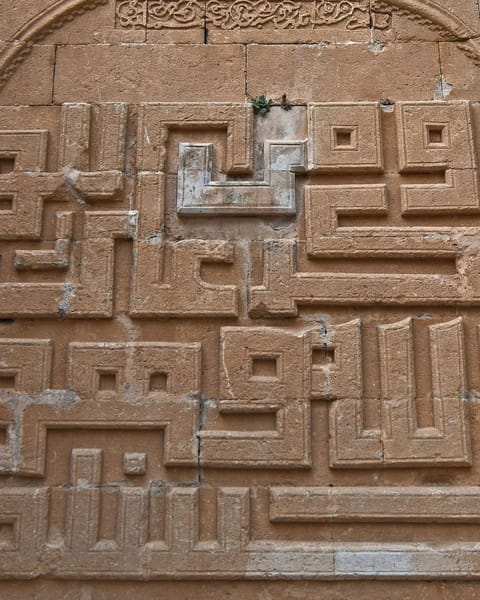
Many young Muslims who love to draw have been told that sketching a face is a grave sin, and some leave the eyes off their characters or stop drawing altogether. The stronger view (al-rājiḥ) is that drawing faces, people and animals is halal. The Quran forbids worshipping images, and the hadiths against image-makers were spoken in a world of idols. The Sunnah itself shows the Prophet ﷺ smiling at Aisha’s dolls.
What does the Quran say about images?
The Quran never forbids drawing. It condemns images when they are worshipped. Abraham (peace be upon him) asked his people about the idols they served: “What are these statues (tamāthīl) to which you are so devoted?” (Quran 21:52). The same word appears again, in praise, among the gifts Allah gave to the family of David:
يَعۡمَلُونَ لَهُۥ مَا يَشَآءُ مِن مَّحَٰرِيبَ وَتَمَٰثِيلَ
“They made for him whatever he wished: high chambers and statues.”
The Quran also tells how Jesus (peace be upon him) shaped a bird from clay and breathed into it, and it became a living bird by Allah’s leave (3:49). Shaping a form was never evil in itself. What the Quran opposes is the image that takes Allah’s place in the heart.
What do the hadiths about image-makers mean?
Several sound hadiths warn image-makers (al-muṣawwirūn) of severe punishment (Sahih al-Bukhari 5950). In one, the Prophet ﷺ tore down a curtain of Aisha’s that bore figures and said that the most severely punished will be “those who try to rival the creation of Allah” (Sahih al-Bukhari 5954).
The words of that hadith explain its target. The person warned is the one who sets out to match the Creator, and in seventh-century Arabia that meant above all the makers of idols, whose figures were carved to be bowed to. Aisha (may Allah be pleased with her) adds at the end of the same report that she cut the curtain into cushions, and another narration says the Prophet ﷺ leaned on them at home (Sahih Muslim 2107o). The hadith “angels do not enter a house with an image” carries an exception for “a design in cloth,” and its Companion narrator, Zayd ibn Khalid, hung such a curtain on his own door (Sahih al-Bukhari 5958). Our answer on having photos in your house looks at that hadith closely.
Did the Prophet ﷺ allow dolls and pictures?
He did. Aisha played with dolls in his house, and her friends played with her (Sahih al-Bukhari 6130). Once, when he came home from an expedition, the wind lifted a curtain and he saw her dolls, among them a horse with two wings made of cloth. He asked what it was. She tells the rest:
«قَالَتْ أَمَا سَمِعْتَ أَنَّ لِسُلَيْمَانَ خَيْلاً لَهَا أَجْنِحَةٌ قَالَتْ فَضَحِكَ حَتَّى رَأَيْتُ نَوَاجِذَهُ»
“She said: Have you not heard that Solomon had horses with wings? He laughed until I could see his back teeth.”
Sunan Abi Dawud 4932, graded sahih by al-Albani
A winged horse is a figure from the imagination with a head, a body and a face. The Prophet ﷺ answered it with laughter.
What did the scholars say about drawing people?
The scholars differed (ikhtalafa al-ʿulamāʾ). Many Hanafi and Hanbali jurists forbade drawing anything with a soul, and some cite Ibn Abbas, who advised a painter to paint trees instead (Sahih al-Bukhari 2225). That is a recognized opinion in the tradition, and many people follow it with sincerity.
A wide line of scholars held the opposite:
- The Maliki school permits drawing humans and animals and limits the prohibition to full statues with height, width and depth. Among the Hanbalis, Ibn Ḥamdān held the same view.
- Al-Qāsim ibn Muḥammad, grandson of Abu Bakr and one of the seven jurists of Medina, kept a bed canopy decorated with images, a report Ibn Hajar judged to have a sound chain in Fatḥ al-Bārī.
- Muhammad Abduh (d. 1905), Grand Mufti of Egypt, wrote an essay on images and statues, published in 1904. He compared painting to poetry and argued that pictures preserve knowledge, and that Islam has no quarrel with them once the danger of idol worship is gone.
- Egypt’s Dar al-Ifta ruled in 2013 that drawing and photographing humans is permissible, as long as the image contains nothing indecent.
- Ayatollah Sistani, for the Shia, rules that drawing a figure that is not sculpted, including a human or an animal, is allowed.
The reasoning of the permissive scholars is sound. A ruling follows its cause (al-ḥukm yadūru maʿa ʿillatihi), and the cause here was worship and rivalry with the Creator. No child drawing her mother, and no artist sketching faces on a train, means either.
How have Muslims drawn people through history?
Muslim civilization produced some of the finest figure painting in the world. Persian manuscripts of the Shahnameh and of Nizami’s poems are filled with kings, lovers and hunters. At the Mughal court in India, the painter Abu’l-Hasan, whom the emperor Jahangir titled Nādir al-Zamān, “Wonder of the Age,” was among the finest painters of his day. Muslims also painted the Prophet ﷺ himself, a tradition we discuss in Is it haram to depict the Prophet Muhammad?
How should a Muslim artist think about drawing?
Drawing is a way of paying attention to what Allah has made: the line of a cheek, the light in an eye, the way a hand rests. Draw freely, and let the ethics that guide your speech guide your pen. Avoid images that humiliate people, that sexualize anyone without their consent, or that mock what others hold sacred. The same principles apply to the art in the games you play. Our answer on how the Quran should be interpreted explains why reading a text with its cause and context is part of the tradition.
A closing word
Allah calls Himself al-Muṣawwir, the Fashioner of forms (59:24), and He made the human being “in the finest of forms” (Quran 95:4). When you draw a face with love and care, you honor the work of the One who shaped it. May He bless your hands and make your art a source of beauty and good for everyone who sees it.
And Allah knows best. والله أعلم
Frequently asked questions
Do I have to leave out the eyes or the face to make a drawing halal?
No. That practice comes from the stricter view that only images of beings without life may be drawn. On the stronger view, a full face with eyes is as lawful as a tree or a mountain.
Is it haram to draw anime characters?
Drawing anime is lawful like any other drawing. What you depict follows the same ethics as anything else you make: avoid images that degrade people or mock the sacred.
What does the Shia view say about drawing?
Ayatollah Sistani rules that drawing a figure that is not sculpted, including a human or an animal on paper, is permissible. As an obligatory precaution, he holds that one should refrain from sculpting living beings.
Is it haram to draw people as a job, for example as an illustrator or animator?
No. Illustration, animation, portraiture and comics are lawful work. Earn your living with skill and honesty, and use your art for what is good.
Related questions
Sources
- Sunan Abi Dawud 4932 (Aisha's dolls and the winged horse)
- Sahih al-Bukhari 5954, 5958, 6130
- Egypt's Dar al-Ifta, Fatwa 5987: What is the Islamic ruling on photography and drawing humans? (2013)
- Muhammad Abduh, al-Ṣuwar wa-l-Tamāthīl wa-Fawāʾiduhā wa-Ḥukmuhā (Images and Statues, Their Benefits and Ruling)
- Office of Ayatollah Sistani, Question and Answer: Drawing
Image: Dosseman, Square Kufic carving at the Great Mosque of Mardin, 2025. CC BY-SA 4.0, via Wikimedia Commons.. Image credits
