Is it haram not to get married or have children?
Question 1072
Question
Is it a sin in Islam to stay single, never marry, or choose not to have children?
Summary of answer
Staying unmarried or childfree is halal. Marriage is a beloved sunna, and the majority of jurists held that it is obligatory for no one except a person who fears falling into sin without it. Revered scholars such as al-Nawawi and Ibn Taymiyya never married, Aisha had no children, and the Quran says that Allah makes childless whom He wills (42:50).
Answer
الحمد لله Praise be to Allah.
Many Muslims feel the weight of this question at every family wedding. Staying single, marrying late, or choosing not to have children is halal in Islam. Marriage is a beloved sunna and a source of great blessing, and the Prophet ﷺ encouraged those able to marry to do so. The majority of jurists held that it is obligatory for no one except a person who has the means and fears falling into sin without it. Some of the greatest scholars of Islam never married, Aisha, the Mother of the Believers, had no children, and the Quran counts childlessness among the ways Allah shapes a life.
Is marriage mandatory in Islam?
The Prophet ﷺ spoke to young people about marriage in these words:
«يَا مَعْشَرَ الشَّبَابِ مَنِ اسْتَطَاعَ الْبَاءَةَ فَلْيَتَزَوَّجْ، فَإِنَّهُ أَغَضُّ لِلْبَصَرِ، وَأَحْصَنُ لِلْفَرْجِ، وَمَنْ لَمْ يَسْتَطِعْ فَعَلَيْهِ بِالصَّوْمِ»
“Young people, whoever among you is able to marry should marry, for it helps lower the gaze and guard chastity. Whoever is not able should fast.”
The advice is tied to ability and to need. The jurists built on it by sorting marriage into the five legal categories. For most people it is recommended (mustaḥabb). It becomes obligatory for someone who can afford it and fears falling into unlawful relations without it. It is disliked, or even forbidden, for someone who knows they would wrong a spouse. Ibn Qudama (d. 1223) sets out the obligatory and recommended cases in al-Mughnī, and the Shafiʿi school went further, holding that a person who feels no need for marriage may do better to devote themselves to worship and learning. Only the Zahiri school held marriage obligatory for every able person, and the majority did not follow it.
The Quran itself speaks of believers who remain unmarried, and asks them to live in dignity and chastity:
وَلۡيَسۡتَعۡفِفِ ٱلَّذِينَ لَا يَجِدُونَ نِكَاحًا حَتَّىٰ يُغۡنِيَهُمُ ٱللَّهُ مِن فَضۡلِهِۦ
“And let those who do not find the means to marry keep themselves chaste until Allah enriches them from His bounty.”
What does “whoever turns away from my sunna is not of me” mean?
This hadith is often quoted to single people. Its setting matters. Three men came to the homes of the Prophet’s ﷺ wives and asked about his worship. Finding it less than they had imagined, one vowed to pray all night forever, one to fast every day, and one to stay away from women and never marry. The Prophet ﷺ came to them and said:
«أَمَا وَاللَّهِ إِنِّي لأَخْشَاكُمْ لِلَّهِ وَأَتْقَاكُمْ لَهُ، لَكِنِّي أَصُومُ وَأُفْطِرُ، وَأُصَلِّي وَأَرْقُدُ وَأَتَزَوَّجُ النِّسَاءَ، فَمَنْ رَغِبَ عَنْ سُنَّتِي فَلَيْسَ مِنِّي»
“By Allah, I am the most reverent of you toward Allah and the most mindful of Him. Yet I fast and I break my fast, I pray and I sleep, and I marry. Whoever turns away from my way is not of me.”
He was correcting a spirit of excess, the belief that giving up sleep, food, and marriage makes a person holier than the Prophet ﷺ himself. Islam has no monastic ideal that ranks celibacy above married life. The hadith rebukes contempt for marriage. It places no blame on a person who has not married because of circumstance, temperament, illness, a lack of means, or a life given to other good work, and the jurists never read it that way.
Did any great Muslims never marry?
Many did. The Syrian hadith scholar ʿAbd al-Fattāḥ Abū Ghudda (d. 1997) wrote a whole book about them, al-ʿUlamāʾ al-ʿUzzāb, “The Unmarried Scholars Who Preferred Knowledge to Marriage.” Among the most famous:
- Imam al-Nawawi (d. 1277), whose Forty Hadith and Riyāḍ al-Ṣāliḥīn are read in nearly every Muslim home, died at about forty-five without marrying.
- Ibn Taymiyya (d. 1328), the Damascus jurist and theologian, never married.
- Rābiʿa al-ʿAdawiyya (d. 801) of Basra, the great woman saint of early Sufism, is remembered in the Sufi biographies for refusing every proposal so that her heart would belong to Allah alone (What is Sufism?).
These scholars and saints are honored in every school of Islam, and nobody counts their single lives as a sin.
Is it haram to choose not to have children?
Children are one of Allah’s greatest gifts, and many Muslims long for them. The Quran also teaches that children are given according to Allah’s will and wisdom, and that a life without them is part of His design:
أَوۡ يُزَوِّجُهُمۡ ذُكۡرَانٗا وَإِنَٰثٗاۖ وَيَجۡعَلُ مَن يَشَآءُ عَقِيمًاۚ إِنَّهُۥ عَلِيمٞ قَدِيرٞ
“Or He gives both sons and daughters, and He leaves childless whom He wills. He is all-Knowing, all-Powerful.”
Aisha (may Allah be pleased with her), the Prophet’s ﷺ most beloved wife and the foremost woman scholar of Islam, never bore a child (Who were the great women scholars of Islam?). Her life is proof that a woman’s worth before Allah does not depend on motherhood.
Couples may also choose not to have children, or to wait. The Companion Jābir ibn ʿAbd Allāh said: “We used to practice withdrawal (ʿazl) while the Quran was being revealed” (Sahih al-Bukhari 5209). The scholars took this as permission for contraception, and al-Ghazali (d. 1111) accepted a couple’s reasons such as health and financial strain. The full ruling is in Is birth control haram? The decision belongs to the couple together, and the Prophet’s ﷺ encouragement to have children remains an encouragement.
What about pressure from family?
Parents who urge their children to marry usually do so out of love and worry. Answer them with gentleness and gratitude, as the Quran asks (17:23). The choice to marry, however, rests with the person marrying, since a marriage without free consent is invalid (Is forced marriage allowed in Islam?). The limits of obedience to parents are explained in Do I have to obey my parents in everything?
Some people do not experience sexual desire at all, and Islam’s answer for them is the same: no one is obliged to marry against their nature (Is it haram to be asexual?).
A full life with Allah
Married or single, with children or without, every believer is invited to the same nearness to Allah. A single person who serves their family, builds friendships, works with excellence, and worships with a full heart is living a complete Muslim life. The Prophet ﷺ taught that Allah does not look at our forms or our wealth; He looks at our hearts and our deeds (Sahih Muslim 2564c). May Allah fill every heart with His love, and grant each of us the companionship that is good for us in this world and the next.
And Allah knows best. والله أعلم
Frequently asked questions
Is marriage mandatory in Islam?
For most people it is a recommended sunna. The majority of jurists held marriage obligatory only for someone who fears falling into unlawful relations without it and has the means to marry.
Does 'whoever turns away from my sunna is not of me' mean I must marry?
The Prophet ﷺ said it to a man who vowed never to marry as a form of extra piety. He rejected the idea that renouncing marriage makes a person holier. The scholars did not read it as a command for every individual to marry.
Is it haram to choose not to have children?
No. The Companions practiced contraception with the Prophet's ﷺ knowledge, and children are a gift Allah gives as He wills. A couple may decide together whether and when to have children.
What should I say to parents who pressure me to marry?
Speak to them with gentleness and gratitude, explain your reasons, and keep the bond of kindness. Their love deserves respect, and the decision to marry remains yours, since a marriage without free consent is invalid.
Related questions
Sources
- Sahih al-Bukhari 5063 (the three men) and 5066 (whoever can afford marriage)
- Sahih al-Bukhari 5208–5209 (ʿazl in the time of revelation)
- ʿAbd al-Fattāḥ Abū Ghudda, al-ʿUlamāʾ al-ʿUzzāb alladhīna Ātharū al-ʿIlm ʿalā al-Zawāj
- Ibn Qudama, al-Mughnī, Book of Marriage
- IslamOnline Fiqh, Is leaving marriage sinful?
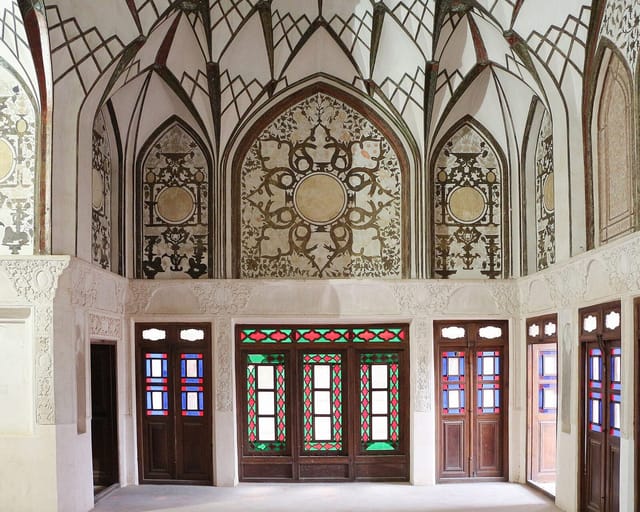
Image: Bernard Gagnon, Interior of the Tabatabaei House, Kashan, 2016. CC BY-SA 4.0, via Wikimedia Commons.. Image credits
