Does Islam encourage science?
Question 1257
Question
Does Islam support scientific research and the study of nature, or does religion conflict with science?
Summary of answer
Islam encourages science and counts the study of creation as worship. The first word revealed to the Prophet ﷺ was "Read," the Quran calls the heavens, the earth, and the alternation of night and day signs for people of understanding (3:190), and the Prophet ﷺ told farmers, "You know best the affairs of your world." Muslim scholars such as al-Khwarizmi, Ibn al-Haytham, Ibn Sina, and al-Biruni shaped mathematics, optics, medicine, and astronomy, and Muslim scientists continue that work today.
Answer
الحمد لله Praise be to Allah.
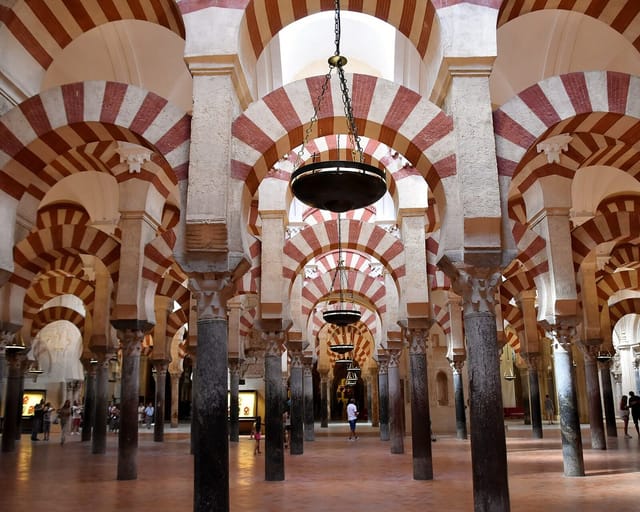
Young Muslims who love biology, physics, or medicine sometimes hear that science competes with faith, or that the only knowledge worth seeking is religious knowledge. The Quran and the Sunnah say otherwise. Islam encourages science. The first word Allah revealed to the Prophet ﷺ was “Read,” the Quran sends its readers to study the sky, the earth, the body, and the living world as signs of their Creator, and Muslim civilization produced some of the greatest scientists in human history.
What does the Quran say about science and knowledge?
The revelation began with reading, the pen, and learning:
ٱقۡرَأۡ بِٱسۡمِ رَبِّكَ ٱلَّذِي خَلَقَ ﴿١﴾ خَلَقَ ٱلۡإِنسَٰنَ مِنۡ عَلَقٍ ﴿٢﴾ ٱقۡرَأۡ وَرَبُّكَ ٱلۡأَكۡرَمُ ﴿٣﴾ ٱلَّذِي عَلَّمَ بِٱلۡقَلَمِ ﴿٤﴾ عَلَّمَ ٱلۡإِنسَٰنَ مَا لَمۡ يَعۡلَمۡ ﴿٥﴾
“Read in the name of your Lord who created, created the human being from a clinging form. Read, for your Lord is the Most Generous, who taught by the pen, taught the human being what he did not know.”
Again and again the Quran asks its readers to look. “Do they not look at the camels, how they were created? And at the sky, how it was raised?” (88:17–18). It calls the natural world a field of signs:
إِنَّ فِي خَلۡقِ ٱلسَّمَٰوَٰتِ وَٱلۡأَرۡضِ وَٱخۡتِلَٰفِ ٱلَّيۡلِ وَٱلنَّهَارِ لَأٓيَٰتٖ لِّأُوْلِي ٱلۡأَلۡبَٰبِ
“In the creation of the heavens and the earth, and in the alternation of night and day, are signs for people of understanding.”
After describing the colors of fruits, the white and red streaks of mountains, and the varied colors of people and animals, the Quran says: “Of His servants, it is those who know who truly stand in awe of Allah” (إِنَّمَا يَخۡشَى ٱللَّهَ مِنۡ عِبَادِهِ ٱلۡعُلَمَـٰٓؤُاْ, Quran 35:28). Knowledge of nature, in the Quran’s own setting, leads to reverence. “Are those who know equal to those who do not know?” it asks (39:9).
What did the Prophet ﷺ teach about knowledge?
He made the search for knowledge a road to Paradise:
«مَنْ سَلَكَ طَرِيقًا يَلْتَمِسُ فِيهِ عِلْمًا سَهَّلَ اللَّهُ لَهُ بِهِ طَرِيقًا إِلَى الْجَنَّةِ»
“Whoever travels a path seeking knowledge, Allah makes easy for them through it a path to Paradise.”
He also drew a clear line between revelation and expertise in worldly matters. Passing farmers in Medina who were pollinating their date palms, he remarked that it might be fine to leave it. They stopped, and the harvest failed. When they told him, he said: “You know best the affairs of your world” (أَنْتُمْ أَعْلَمُ بِأَمْرِ دُنْيَاكُمْ, Sahih Muslim 2363). Agriculture, engineering, and medicine are learned by observation and experiment, and the Prophet ﷺ honored that.
For medicine he gave a principle that has driven research ever since: “Allah has not sent down any disease without sending down a cure for it” (Sahih al-Bukhari 5678). Every vaccine and every new treatment is a cure found (Are vaccines halal?).
Two famous sayings need care. “Seeking knowledge is an obligation on every Muslim” is reported by Ibn Majah (Sunan Ibn Majah 224) through a chain the hadith critics grade very weak, though al-Albani graded the saying sahih through its other chains, and its meaning is confirmed by the texts above. “Seek knowledge even unto China” is not found in the major collections and has no reliable chain.
What did Muslim scientists achieve?
- Mathematics. Around 820, al-Khwarizmi, working in Baghdad under the caliph al-Maʾmūn, wrote al-Kitāb al-Mukhtaṣar fī Ḥisāb al-Jabr wa al-Muqābala. The word “algebra” comes from al-jabr, and “algorithm” from his name. Its worked problems include trade, land measurement, and the division of estates under Islamic inheritance law.
- Translation and learning. Scholars in Baghdad, around the library known as the House of Wisdom (Bayt al-Ḥikma), translated Greek, Persian, and Indian works on mathematics, medicine, and astronomy into Arabic and built on them for two centuries.
- Optics and method. Ibn al-Haytham (c. 965 to c. 1040) wrote the Book of Optics (Kitāb al-Manāẓir), explained that we see because light enters the eye, and tested his ideas by controlled experiment. He wrote that the seeker of truth must “make himself an enemy of all that he reads.”
- Medicine. Ibn Sina (d. 1037) completed The Canon of Medicine (al-Qānūn fī al-Ṭibb) in 1025; it became a standard textbook in European universities into the early modern period.
- Astronomy and geography. Al-Biruni (c. 973 to c. 1050) estimated the radius of the Earth with trigonometry from a mountain at Nandana, and described Indian science and religion with careful respect.
This tradition continues. The Egyptian-born chemist Ahmed Zewail won the 1999 Nobel Prize in Chemistry for femtochemistry. The Iranian mathematician Maryam Mirzakhani became the first woman to win the Fields Medal in 2014 (Female scholars in Islam). Omar Yaghi, born in Amman to a Palestinian refugee family, shared the 2025 Nobel Prize in Chemistry.
Does Islam conflict with science?
Faith and science answer different questions. Science describes how creation works; revelation tells us who created it and how to live. When the two seem to clash, the tradition asks believers to look again at both their science and their reading of the text, as the Prophet ﷺ did with the date palms. Muslims differ on how to read certain findings, such as evolution, and many Muslim scientists hold both their faith and their research with confidence (Is evolution compatible with Islam?). New fields raise new ethical questions, from organ donation to artificial intelligence, and Muslim scholars meet them with the objectives of the sharia (Is organ donation haram?).
A prayer for knowledge
Allah taught the Prophet ﷺ a short prayer that every student, in the laboratory or the mosque, can make their own:
وَقُل رَّبِّ زِدۡنِي عِلۡمٗا
“And say: My Lord, increase me in knowledge.”
Study the world as a believer, with wonder, rigor, and gratitude, and every discovery becomes a sign that leads back to its Maker.
And Allah knows best. والله أعلم
Frequently asked questions
Is science haram in Islam?
No. Studying creation is praised throughout the Quran, and the Prophet ﷺ promised that whoever travels a path seeking knowledge, Allah makes easy for them a path to Paradise. Every field that benefits people is open to Muslims, women and men alike.
Is "Seek knowledge even unto China" a real hadith?
It is not found in the major hadith collections and has no reliable chain. The saying "Seeking knowledge is an obligation on every Muslim" is reported by Ibn Majah through a very weak chain, though al-Albani graded the saying sahih through its other chains, and its meaning is confirmed by the Quran and by sound hadith.
Does Islam accept evolution?
Many Muslim scientists and scholars accept evolutionary biology while affirming that Allah is the Creator of every process. The question is discussed in its own answer on this site.
Does the Quran contain scientific miracles?
The Quran invites reflection on nature, and believers find wonder in it. Many scholars caution against reading each new theory into its verses, since the Quran is a book of guidance and scientific theories change.
Related questions
Sources
- Sahih Muslim 2363, 2699a; Sahih al-Bukhari 5678; Sunan Ibn Majah 224
- al-Khwarizmi, al-Kitāb al-Mukhtaṣar fī Ḥisāb al-Jabr wa al-Muqābala (c. 820)
- Ibn al-Haytham, Kitāb al-Manāẓir (Book of Optics, 1011–1021)
- Ibn Sina, al-Qānūn fī al-Ṭibb (The Canon of Medicine, 1025)
- House of Wisdom (Bayt al-Ḥikma), Baghdad
Image: Richard Mortel, The prayer hall of the Great Mosque of Córdoba, 2016. CC BY 2.0, via Wikimedia Commons.. Image credits
_(29721130342).jpg)