Are vaccines halal?
Question 1190
Question
Is it permissible for Muslims to take vaccines, including vaccines that contain pork-derived gelatin, and to vaccinate their children?
Summary of answer
Vaccines are halal, and taking them is an act of protecting life, one of the highest objectives of the sharia. Where a vaccine contains porcine gelatin, the Hanafi and Maliki principle of transformation (istiḥāla) makes it a new, pure substance, as the Islamic Organization for Medical Sciences concluded in 1995. Even on the stricter view, necessity permits medicine, and fiqh councils across the Muslim world declared Covid-19 vaccines permissible.
Answer
الحمد لله Praise be to Allah.
Vaccines are halal. Getting vaccinated protects your own life and the lives of the people around you, and the protection of life (ḥifẓ al-nafs, حفظ النفس) stands among the highest objectives of the sharia (maqāṣid al-sharīʿa). Where a vaccine contains a small amount of pork-derived gelatin, two well-established principles of Islamic law make it permissible: transformation (istiḥāla) and necessity (ḍarūra). Muslim parents can vaccinate their children with a clear conscience and a grateful heart.
Are vaccines halal in Islam?
The Prophet ﷺ commanded his community to seek treatment, saying that Allah has not sent down a disease without sending down its cure (Sunan Abi Dawud 3855, graded sahih by al-Albani). A vaccine is treatment that arrives before the illness. It teaches the body to recognize a disease so that it can defend itself, and the Quran counts every life saved as a whole world saved:
وَمَنۡ أَحۡيَاهَا فَكَأَنَّمَآ أَحۡيَا ٱلنَّاسَ جَمِيعٗا
“And whoever saves a life, it is as though he saved all of humanity.”
The Sunnah also teaches prevention and care for others. In time of epidemic the Prophet ﷺ gave a rule that public health still follows:
«إِذَا سَمِعْتُمْ بِالطَّاعُونِ بِأَرْضٍ فَلاَ تَدْخُلُوهَا، وَإِذَا وَقَعَ بِأَرْضٍ وَأَنْتُمْ بِهَا فَلاَ تَخْرُجُوا مِنْهَا»
“If you hear of plague in a land, do not enter it. And if it breaks out in a land where you are, do not leave it.”
He also said, “Let the sick not be brought among the healthy” (Sahih al-Bukhari 5771), and he ruled that there is to be “no harm and no returning of harm” (Sunan Ibn Majah 2340, graded sahih by al-Albani). A vaccine serves every one of these teachings. It guards the person who takes it, and it guards the newborn, the elderly, and the sick person who cannot be vaccinated.
Is pork gelatin in vaccines haram?
Some vaccines use a small amount of gelatin, sometimes from pigs, as a stabilizer. The scholars have answered this question with a principle that is centuries old. When a substance is changed in its nature into a new substance, it takes a new ruling. This is transformation (istiḥāla, استحالة). Wine that turns to vinegar on its own becomes pure and lawful by agreement, and the Hanafi and Maliki schools, the Zahiris, and Ibn Taymiyya applied the same reasoning to other substances.
In 1995 the Islamic Organization for Medical Sciences held its eighth fiqh-medical seminar in Kuwait. Jurists, chemists, pharmacists, and doctors took part, with representatives of al-Azhar, the Islamic Fiqh Academy in Jeddah, and the World Health Organization’s regional office. They concluded that gelatin is permissible whatever its source, because it has been transformed into a new material. The Islamic Fiqh Academy of India reached the same ruling in 2004. The longer discussion is in Is gelatin halal?
In 2020 Sheikh Abdullah al-Judai of the European Council for Fatwa and Research applied this to the nasal spray flu vaccine. He ruled it pure and permissible on three grounds: the gelatin has been transformed, the quantity is negligible and lost within the whole, and medicine is permitted by necessity in any case.
What if a scholar holds that the gelatin is still impure?
Some jurists, especially in the Shafi’i school, apply transformation more narrowly. Even on their view, the Quran itself opens the door. After listing the forbidden foods, including pork, it says:
فَمَنِ ٱضۡطُرَّ غَيۡرَ بَاغٖ وَلَا عَادٖ فَلَآ إِثۡمَ عَلَيۡهِ
“But whoever is compelled by need, without desiring it and without going beyond what is needed, there is no sin on him.”
Protecting life outweighs avoiding an impurity. When Covid-19 vaccines arrived, the UAE Fatwa Council, the International Islamic Fiqh Academy of the Organization of Islamic Cooperation, and the Islamic Religious Council of Singapore all declared them permissible, reasoning that vaccination was the means of protecting people from the disease. Even the Indonesian Ulema Council, which took a strict view of an ingredient used in one vaccine’s production in 2021, permitted its use because of the emergency. Across the schools, the conclusion is the same: take the vaccine. See also Why is pork haram?
Should Muslims vaccinate their children?
Yes. The Prophet ﷺ said, “Each of you is a shepherd, and each of you is responsible for his flock” (Sahih al-Bukhari 893). A child’s health is a trust (amāna) placed in a parent’s hands. Vaccines protect children from diseases that once filled graveyards with the very young, and when most children are vaccinated, the few who cannot be are protected too.
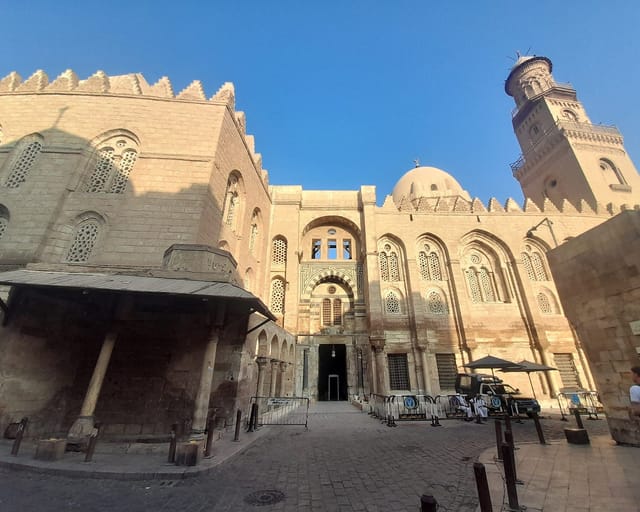
The Muslim world has a long history here. In 1717 Lady Mary Wortley Montagu, wife of the British ambassador in Istanbul, described how women in the Ottoman lands performed “engrafting” against smallpox every autumn. She had her own son inoculated at the embassy and helped carry the practice to England, decades before Edward Jenner’s vaccine. Care for public health runs deep in Islamic civilization, from this practice to the great endowed hospitals of Cairo and Damascus (see Does Islam support universal healthcare?).
A closing word
Gratitude for health is part of worship. The Prophet ﷺ named health among the two blessings that many people squander (Sahih al-Bukhari 6412), and a vaccine is one of the ways Allah lets us guard that blessing for ourselves and our neighbors. Like giving blood, it is a small act with the reward of saving lives. May Allah protect our children, heal our sick, and make us a means of His mercy to others.
And Allah knows best. والله أعلم
Frequently asked questions
Are vaccines haram because they contain pork?
No. On the stronger view, the gelatin in a vaccine has been transformed into a new substance and takes a new ruling (istiḥāla), and the amount is tiny and dissolved within the whole. Even scholars who reject that view permit such medicine out of necessity when no alternative exists.
Is the nasal flu vaccine halal?
Yes. Sheikh Abdullah al-Judai of the European Council for Fatwa and Research ruled in 2020 that the nasal spray flu vaccine containing porcine gelatin is pure and permissible, on the grounds of transformation, the negligible quantity, and necessity.
Does getting a vaccine break the fast in Ramadan?
Most contemporary scholars hold that an injection which is not nourishment does not break the fast. See [What breaks your fast in Ramadan?](/what-breaks-your-fast/) for the details.
Is it a duty to vaccinate my children?
Parents are guardians responsible for those in their care (Sahih al-Bukhari 893), and protecting a child's life and health is among the clearest parts of that trust. Vaccinating children also protects babies and sick people who cannot be vaccinated themselves.
Related questions
Sources
- Islamic Organization for Medical Sciences, Eighth Fiqh-Medical Seminar (Kuwait, 1995), recommendations on transformation (istiḥāla)
- Abdullah al-Judai, letter on vaccines and porcine-derived ingredients, Journal of the British Islamic Medical Association (2020)
- Sahih al-Bukhari 5728, 5771, 893
- Sunan Ibn Majah 2340 (no harm and no reciprocal harm)
- Lady Mary Wortley Montagu, Letter to a Friend (1 April 1717), on inoculation in the Ottoman Empire
Image: Marsupium, The complex of Sultan Qalawun, Cairo, 2024. CC BY 4.0, via Wikimedia Commons.. Image credits
