Can Muslims adopt a child?
Question 1077
Question
Is it allowed in Islam to adopt a child or foster a child, and what rules apply to the child's name, inheritance, and place in the family?
Summary of answer
Muslims can and should take children in need into their homes. The Prophet ﷺ, himself an orphan, said that whoever cares for an orphan will be beside him in Paradise. The Quran asks only that a child's birth origins be honored (33:5). A family may raise the child as their own, give gifts and a bequest of up to a third of their estate, and adopt or foster through modern courts and agencies.
﴿أَلَمۡ يَجِدۡكَ يَتِيمٗا فَـَٔاوَىٰ﴾
Did He not find you an orphan, and give you shelter?
Answer
الحمد لله Praise be to Allah.
Muslims can adopt. Few deeds are praised more highly in Islam than giving a home to a child who has lost one. The Prophet ﷺ was himself an orphan: his father died before he was born and his mother when he was six, and he was raised by his grandfather and then his uncle. The Quran reminds him of it with tenderness: “Did He not find you an orphan, and give you shelter?” (93:6). A family that shelters a child does for that child what Allah did for His Prophet.
The tradition asks one thing of adoptive families: that the child’s own origins are honored and never erased. Within that, Muslims may raise a child as fully their own in love, care, and belonging.
What does Islam say about raising an orphan?
The Prophet ﷺ promised those who care for orphans a place beside him:
«أَنَا وَكَافِلُ الْيَتِيمِ فِي الْجَنَّةِ هَكَذَا»
“I and the one who takes care of an orphan will be in Paradise like this.”
As he said it, he held up his index and middle fingers with only a little space between them. The word he used, kāfil (كافل), gives the Islamic institution its name: kafāla, the sponsorship and full care of a child. The Quran mentions orphans more than twenty times, from the command not to “oppress the orphan” (93:9) to the praise of those who feed “the poor, the orphan, and the captive” for the love of Allah (76:8).
Is adoption haram in Islam?
No. What the Quran changed was one feature of pre-Islamic adoption (tabannī): the legal fiction that an adopted child became the biological child of a new father, with the birth family wiped away. The Quran says:
ٱدۡعُوهُمۡ لِأٓبَآئِهِمۡ هُوَ أَقۡسَطُ عِندَ ٱللَّهِ
“Call them by their fathers’ names; that is more just in the sight of Allah.”
The verse continues: “If you do not know their fathers, then they are your brothers in faith and those close to you (mawālīkum).” A child of unknown parents is no less a member of the family of believers.
The verse came down about Zayd ibn Ḥāritha (may Allah be pleased with him), whom the Prophet ﷺ had raised as his son. ʿAbdullāh ibn ʿUmar recalled that the people called him “Zayd son of Muhammad” until this verse was revealed (Sahih al-Bukhari 4782). Zayd’s place in the Prophet’s love never changed. He remained one of the dearest people to him, and he is the only Companion named in the Quran (33:37).
The verse protects the child. Every person has a right to know where they come from, a principle modern adoption practice has come to share: adoption counselors today advise parents to tell children their story early and lovingly.
Can an adopted child take the family’s name?
The Quran’s concern is that a child is never presented as someone else’s biological offspring. Within that, families have room. Egypt’s Dar al-Ifta has ruled that a guardian may add his or her family name to the end of a ward’s name, so the child carries a visible link to the family, as long as the name does not claim a birth relationship that does not exist. Muslim families in Britain, North America, and elsewhere adopt and foster through the ordinary courts and agencies; the Quran’s purpose is met when the child keeps their birth record and knows their own story.
Some Muslim countries forbid legal adoption and offer only kafāla. Tunisia, by contrast, has permitted full adoption since 1958. The UN Convention on the Rights of the Child recognizes kafāla in Article 20 as a form of care alongside adoption.
Can an adopted child inherit?
The fixed shares of inheritance in Sūrat al-Nisāʾ go to blood relatives and spouses, so an adopted child does not take one of them automatically. The sharia gives parents two other tools:
- A bequest (waṣiyya) of up to one third of the estate to anyone who is not already an heir. The Prophet ﷺ set this limit for Saʿd ibn Abī Waqqāṣ (Sahih al-Bukhari 2742).
- Gifts during life (hiba), which have no limit. Parents can secure a home, savings, or a share of the family business for their adopted child while they are alive.
Parents who want their adopted child to share equally with their other children can arrange it through these means with a clear will.
What about mahram rules in an adoptive family?
When a baby is nursed by the adoptive mother before the age of two, the child becomes her milk child (raḍāʿa) and her husband’s, with the same mahram relationships as a birth child. Nursing by a sister of either parent creates a milk tie with the family as well. Some adoptive mothers today induce lactation with medical help for this reason. Where this is not possible, the family lives together with the ease and ordinary modesty that a shared home requires, as families with stepchildren and in-laws always have.
Who can adopt?
Caring for a child in need is a deed open to every believer. Single men and women, couples who cannot have children (Is IVF haram?), couples who already have children, and people who have chosen not to marry (Is it haram not to get married or have children?) can all give a child a home. Same-sex couples who have married (Can two Muslims of the same sex marry?) may do the same. Children in care need loving homes far more than they need a particular kind of family.
Agencies in several Western countries have appealed for more Muslim foster and adoptive families, so that Muslim children in care can grow up in homes that share their faith. Fostering, adopting, and supporting orphanages and sponsorship programs are all forms of kafāla, and they belong with the sharia’s wider care for the vulnerable (What does Islam say about poverty and the poor?).
A home for Allah’s sake
The Prophet ﷺ grew up in other people’s homes and remembered every kindness. A child you take in may one day remember yours the same way. May Allah reward every family that opens its door to a child, and make each of those children a coolness of the eyes for the people who love them.
And Allah knows best. والله أعلم
Frequently asked questions
Is adoption haram in Islam?
No. Taking a child into your home and raising them with love is one of the most rewarded deeds in Islam. The Quran forbids only erasing the child's real parentage (33:5).
Can an adopted child inherit in Islam?
An adopted child does not receive one of the fixed shares of inheritance. Parents may instead leave them up to a third of their estate by bequest (waṣiyya) and may give them gifts without limit during life.
Can an adopted child take the family's last name?
Egypt's Dar al-Ifta permits adding the guardian's family name to the child's name as long as it does not present the child as a biological son or daughter. What matters is that the child's origins stay known.
Is an adopted child a mahram?
A child nursed by the adoptive mother in infancy becomes her milk child (raḍāʿa) and a mahram to the family. Otherwise, families follow ordinary modesty with an adopted child after puberty, with the ease that a shared home requires.
Can single people or same-sex couples adopt in Islam?
Caring for an orphan is a deed open to every believer, married or single. Same-sex couples who marry lawfully may also give a child a loving home.
Related questions
Sources
- Sahih al-Bukhari 5304, 4782, 2742
- Egyptian Dar al-Ifta, Adding the last component of a guardian's surname to an orphan's name
- UN Convention on the Rights of the Child (1989), Article 20 (kafalah)
- Better Care Network, Kafalah fact sheet
- Jamila Bargach, Orphans of Islam: Family, Abandonment, and Secret Adoption in Morocco (2002)
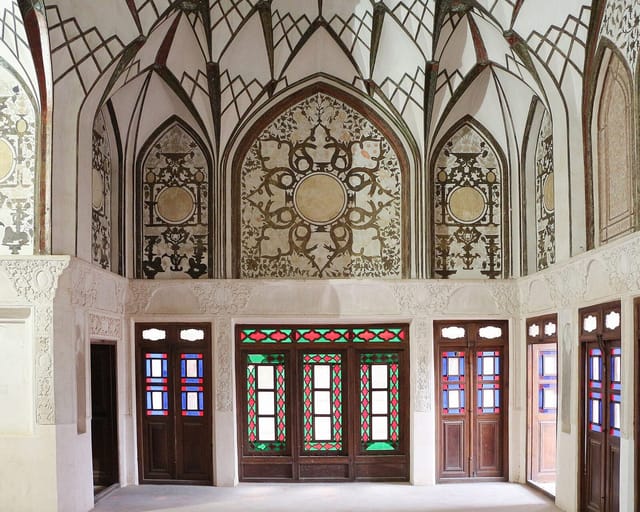
Image: Bernard Gagnon, Interior of the Tabatabaei House, Kashan, 2016. CC BY-SA 4.0, via Wikimedia Commons.. Image credits
