Are credit cards haram?
Question 1177
Question
Is it permissible for a Muslim to have and use a credit card, especially if the balance is paid in full every month?
Summary of answer
Using a credit card is halal. A card paid in full each month costs no interest at all, and the Prophet ﷺ himself bought food on credit (Sahih al-Bukhari 2068). Some scholars object to signing a contract with an interest clause even when it is never triggered, and Islamic cards exist for those who prefer them. The real danger is debt: the Prophet ﷺ sought refuge in Allah from it, so pay on time and spend within your means.
Answer
الحمد لله Praise be to Allah.
Are credit cards haram? For many Muslims a credit card is hard to avoid: it is needed to rent a car, book a hotel, shop online safely, and build the credit history that landlords and lenders check. The stronger view (al-rājiḥ) is that having and using a credit card is halal. When the balance is paid in full each month, no interest is ever paid, and buying now and paying later is something the Prophet ﷺ himself did. The real concern the tradition raises is with debt, and that is where a Muslim’s care should go.
Did the Prophet ﷺ buy on credit?
The Quran takes deferred payment for granted and gives rules to keep it fair:
إِذَا تَدَايَنتُم بِدَيۡنٍ إِلَىٰٓ أَجَلٖ مُّسَمّٗى فَٱكۡتُبُوهُ
“When you take on a debt for a fixed term, write it down.”
Aisha reported that the Prophet ﷺ bought food from a Jewish merchant on credit and left his armor as security:
«اشْتَرَى طَعَامًا مِنْ يَهُودِيٍّ إِلَى أَجَلٍ، وَرَهَنَهُ دِرْعًا مِنْ حَدِيدٍ»
“He bought food from a Jewish man, to be paid later, and gave him a coat of iron armor as a pledge.”
Buying on credit, from a lender of another faith, with a written record and a security, is part of the Sunna. A credit card is a modern form of the same arrangement.
Is a credit card riba?
A credit card bank pays the shop at once, and you repay the bank later. If you pay the full statement balance by the due date, the bank charges no interest; it earns its income from the fee the merchant pays and from any annual fee, which are payments for a service. Only a balance carried past the due date, or a cash advance, draws interest.
The scholars differed (ikhtalafa al-ʿulamāʾ). Many contemporary fiqh councils hold that signing a contract that contains an interest clause is itself forbidden, even for a cardholder who intends never to trigger it, and they recommend debit cards or Islamic cards instead. Islamic cards, offered in Malaysia, the Gulf, and elsewhere, replace interest with fees or sale-based contracts. This is a recognized view, and Muslims who follow it act on serious scholarship.
The stronger view permits a conventional card for three reasons. First, a person who always pays in full never pays any increase, and a clause that is never applied takes nothing from anyone. Second, many scholars, including al-Azhar’s Islamic Research Academy in 2002, hold that regulated bank interest is a different transaction from the exploitative riba the Quran forbids, as explained in Is bank interest haram? Third, a general need (ḥāja) is treated like a necessity, the principle the European Council for Fatwa and Research applied to home mortgages in 1999 (Is a mortgage haram?). Where a credit history is needed to rent a home or work, a carefully used card meets a real need.
Why is credit card debt dangerous?
The Prophet ﷺ often sought refuge in Allah from debt in his prayers:
«اللَّهُمَّ إِنِّي أَعُوذُ بِكَ مِنَ الْمَأْثَمِ وَالْمَغْرَمِ»
“O Allah, I seek refuge in You from sin and from debt.”
When asked why he did so often, he explained that a person in debt speaks and lies, promises and breaks his promise. Revolving balances at high rates can trap families for years, and this is where a credit card comes closest to the injustice the Quran condemned. The Prophet ﷺ also said, “Delay in paying by one who is able to pay is injustice” (Sahih al-Bukhari 2287): paying your card on time is part of good character.
If you are already in debt, there is no shame in it, and the Quran makes room for you. It commands lenders:
وَإِن كَانَ ذُو عُسۡرَةٖ فَنَظِرَةٌ إِلَىٰ مَيۡسَرَةٖ
“If the debtor is in hardship, give him time until things are easier.”
It also names people burdened by debt (al-ghārimīn) among those entitled to zakat (9:60). Muslim charities and mosques in many cities help with debt, and free debt advice services exist in most countries (How does zakat work?, What does Islam say about poverty?).
How should a Muslim use a credit card?
- Pay the full statement balance every month, ideally by automatic payment.
- Spend only what you already have. Treat the card as a payment tool and keep a budget.
- Avoid cash advances and balance transfers, which carry interest or fees from the first day.
- Enjoy the rewards without spending more to earn them.
- Choose an Islamic or debit card if your conscience prefers it.
- Think the same way about other credit, such as car finance and student loans (Is car financing haram?, Are student loans haram?).
A prayer for freedom from debt
The Prophet ﷺ taught a prayer that covers the worries that come with money: “O Allah, I seek refuge in You from worry and grief, from weakness and laziness, from cowardice and miserliness, from the weight of debt and from being overpowered by others” (Sahih al-Bukhari 6369). May Allah make your wealth a means of ease, keep you free of every burden of debt, and make you generous with what He has given.
And Allah knows best. والله أعلم
Frequently asked questions
Are credit cards haram if you pay in full?
No. When the full statement balance is paid by the due date, no interest is charged, and the card works as a short, interest-free loan with a payment service. Some scholars still dislike signing the interest clause, and they recommend Islamic or debit cards.
Is credit card cashback or points haram?
Rewards are paid from the fees merchants pay for the card service and work like a discount or a gift from the card company. They are permissible, provided you do not run up interest to earn them.
Is building a credit score haram?
No. In many countries a credit history is needed to rent a home, get a phone contract, or buy a house. Using a card carefully and paying it off each month builds that history without paying any interest.
What do Hanafi scholars say about credit cards?
Hanafi scholars today differ: some permit a conventional card for a cardholder who is sure to pay in full, and others prefer debit or Islamic cards. Abu Hanifa and Muhammad al-Shaybani also held that some contracts forbidden between Muslims are allowed with non-Muslims in a land not under Muslim law.
Related questions
Sources
- Sahih al-Bukhari 2068 (the Prophet's purchase of food on credit)
- Sahih al-Bukhari 2397, 2287, 6369 (on debt)
- Mahmoud A. El-Gamal, Islamic Finance: Law, Economics, and Practice (Cambridge University Press, 2006)
- European Council for Fatwa and Research, resolution on buying homes with mortgages (fourth session, October 1999)
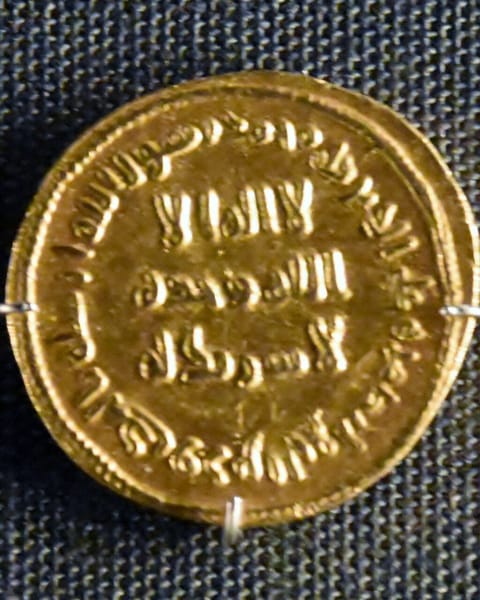
Image: Richard Mortel, Gold dinar of ʿAbd al-Malik ibn Marwan, dated AH 78 (697–698), 2017. David Collection, Copenhagen. CC BY 2.0, via Wikimedia Commons.. Image credits
,_The_David_Collection,_Copenhagen_(36240895662).jpg)