Is car financing or leasing haram?
Question 1178
Question
Is it permissible for a Muslim to buy a car on finance, lease a car, or take a car loan from a bank?
Summary of answer
Buying a car in installments at a higher price than the cash price is halal, as the International Islamic Fiqh Academy ruled in 1990, and leasing a car is a lawful rental. A conventional car loan is permitted where a car is a real need and no fair Islamic option is available, by the same reasoning many scholars apply to a family home. Islamic car finance through murābaḥa or ijāra is a good choice where it is offered.
﴿وَٱلۡخَيۡلَ وَٱلۡبِغَالَ وَٱلۡحَمِيرَ لِتَرۡكَبُوهَا وَزِينَةٗۚ وَيَخۡلُقُ مَا لَا تَعۡلَمُونَ﴾
And horses, mules, and donkeys, for you to ride and as an adornment. And He creates what you do not know.
Answer
الحمد لله Praise be to Allah.
For many families a car is how a parent gets to work, how children get to school, and how an elderly mother reaches the doctor and the mosque. Few people can pay for one in cash, so the question of car finance is a practical one. Car financing is halal in its common forms. Buying a car from a dealer in installments, even at a higher total price, is a lawful sale. Leasing a car is a lawful rental. A conventional car loan is permitted where the car meets a real need and no fair Islamic alternative is at hand, by the same reasoning many scholars apply to a family home.
Is buying a car on finance haram?
The Quran draws its line between trade and usury: “Allah has made trade lawful and forbidden riba” (Quran 2:275). A sale in which the buyer pays later is trade. The Prophet ﷺ himself bought food from a Jewish merchant on credit and left his iron armor with him as security (Sahih al-Bukhari 2068).
May a seller charge more for waiting? The International Islamic Fiqh Academy, the jurists’ council of the Organisation of Islamic Cooperation, answered in Jeddah in March 1990. Its Resolution 51 (2/6) permits a higher price for deferred payment than for cash, and even different prices for different payment periods, provided buyer and seller settle on one price and one plan when they sign. Three of its conditions matter for a car buyer:
- One fixed price. The Academy forbade quoting a cash price and then adding interest that grows with time as a separate charge.
- No penalty interest. Charging extra for a late installment is riba. A seller may instead agree in advance that the remaining installments fall due if the buyer stops paying.
- Security is allowed. The seller may hold the car as a pledge until it is paid off, as the merchant held the Prophet’s ﷺ armor.
Interest-free dealer plans, sometimes advertised as 0% finance, fit these conditions well.
Is leasing a car haram?
A lease (ijāra, إجارة) is a rental, one of the oldest contracts in Islamic law. When the Prophet ﷺ and Abu Bakr left Mecca for Medina, they hired a skilled guide from the tribe of Banu al-Dil, a man who still followed the religion of Quraysh, and entrusted him with their two camels (Sahih al-Bukhari 2263). Paying a monthly rent to drive a car owned by a finance company is the same contract.
Leases that end in ownership, such as hire purchase and many personal contract purchase plans, need one extra care. In Resolution 110 (4/12), issued in Riyadh in September 2000, the Fiqh Academy permitted a lease followed by a separate sale or gift, or a lease with an option to buy at the end, provided the owner bears the risk of the car’s loss and its major maintenance during the lease. It forbade a single contract that turns itself from a lease into a sale without a new agreement.
Is a car loan from a bank haram?
A conventional car loan is a loan with interest, and here the scholars differed (ikhtalafa al-ʿulamāʾ). The Fiqh Academy and many fatwa councils hold that any interest fixed on a loan is riba, and they advise Muslims to buy with savings, through installment sales, or through Islamic finance. Muslims who follow this view act on serious scholarship.
Other scholars hold that regulated bank interest differs from the exploitative riba the Quran condemned (Is bank interest haram?). The European Council for Fatwa and Research permitted a mortgage for a family home on the principle that a general need (ḥāja) is treated like a necessity (ḍarūra), and on the view of Abu Hanifa and Muhammad al-Shaybani on contracts in lands not governed by Muslim law (Is a mortgage haram?). A car needed for work, study, or the care of family meets the same kind of need:
وَمَا جَعَلَ عَلَيۡكُمۡ فِي ٱلدِّينِ مِنۡ حَرَجٖ
“He has placed no hardship on you in religion.”
The stronger view (al-rājiḥ) is that such a loan is permissible where the need is real and no fair alternative exists, kept as small as the need allows. The permission rests on need, so it does not stretch to a luxury car one cannot afford.
How does Islamic car finance work?
Islamic finance houses offer two main structures:
- Murābaḥa (مرابحة). The financier buys the car and sells it to you at a disclosed markup, paid in installments. The Fiqh Academy approved this sale to a customer who orders the goods in 1988 (Resolutions 40–41), on the condition that the financier actually owns the car and carries its risk before selling it.
- Ijāra. The financier owns the car and leases it to you, and ownership passes at the end through a separate sale or gift.
Both are good choices. The economist Mahmoud El-Gamal has observed that Islamic finance is often priced from the same benchmark rates as conventional lending, so compare the full cost and the hardship terms.
How should a Muslim choose a car and pay for it?
The Prophet ﷺ counted a good ride among the comforts of a believer’s life:
«مِنْ سَعَادَةِ الْمَرْءِ الْمُسْلِمِ: الْمَسْكَنُ الْوَاسِعُ، وَالْجَارُ الصَّالِحُ، وَالْمَرْكَبُ الْهَنِيءُ»
“Part of a Muslim’s happiness is a spacious home, a good neighbor, and a comfortable ride.”
- Buy what you need. The servants of the All-Merciful “are neither wasteful nor stingy when they spend, and keep a just balance between the two” (25:67).
- Choose in this order where you can: savings, an interest-free or installment plan, Islamic finance at a fair price, and then a conventional loan. Read the late-payment terms.
- Insure the car. Insurance is permitted and usually required by law (Is insurance haram?).
- Pay early when you can. The same care applies to other credit (Are credit cards haram?, Are student loans haram?).
A prayer for the road
The Quran teaches a prayer for setting out on any mount that Allah has made to serve us. Many Muslims say it each time they start the car:
سُبۡحَٰنَ ٱلَّذِي سَخَّرَ لَنَا هَٰذَا وَمَا كُنَّا لَهُۥ مُقۡرِنِينَ
“Glory be to the One who has placed this at our service, for we could never have mastered it ourselves.”
May Allah make every road you travel safe, every payment light, and every trip a means of reaching the people you love.
And Allah knows best. والله أعلم
Frequently asked questions
Is 0% car finance halal?
Yes. An interest-free installment plan from a dealer is a sale with deferred payment, which the Prophet ﷺ himself used. Read the contract for late-payment charges and add-on loans, and keep to the agreed schedule.
Is PCP or hire purchase haram?
A lease followed by a separate sale or an option to buy is permitted by the International Islamic Fiqh Academy (Resolution 110, 2000). Where the product is a conventional loan with interest, it takes the ruling on car loans: permitted where there is real need and no fair alternative.
What does Hanafi fiqh say about car finance?
Hanafi jurists permit a sale at a higher price for deferred payment and permit leasing. Many Hanafi muftis today advise against interest-bearing car loans, while the European Council for Fatwa and Research drew on Abu Hanifa's view of contracts in non-Muslim lands to permit a mortgage for a family home, reasoning that extends to a car that meets a real need.
Is car insurance haram?
Car insurance is permitted, and in most countries it is required by law. Mutual (takāful) cover is available in some markets, and the wider question is answered in our article on insurance.
Related questions
Sources
- International Islamic Fiqh Academy, Resolution 51 (2/6) on Installment Sales (Jeddah, 1990), Resolutions 40–41 (2/5, 3/5) on Murābaḥa (Kuwait, 1988), and Resolution 110 (4/12) on Renting Ending in Ownership (Riyadh, 2000), in Resolutions and Recommendations (3rd English ed., 2024)
- European Council for Fatwa and Research, resolution on buying homes with mortgages (fourth session, October 1999)
- Sahih al-Bukhari 2068, 2263
- al-Bukhari, al-Adab al-Mufrad 116
- Mahmoud A. El-Gamal, Islamic Finance: Law, Economics, and Practice (Cambridge University Press, 2006)
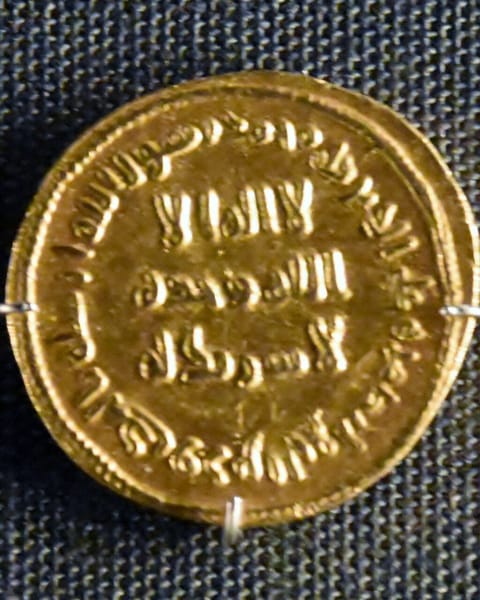
Image: Richard Mortel, Gold dinar of ʿAbd al-Malik ibn Marwan, dated AH 78 (697–698), 2017. David Collection, Copenhagen. CC BY 2.0, via Wikimedia Commons.. Image credits
,_The_David_Collection,_Copenhagen_(36240895662).jpg)