Who are the prophets in Islam?
Question 1219
Question
Who are the prophets in Islam, how many are there, and do Muslims believe in prophets outside the Quran's list?
Summary of answer
Muslims believe in every prophet Allah sent. The Quran names twenty-five, among them Adam, Noah, Abraham, Moses, Jesus, and Muhammad ﷺ, the seal of the prophets (33:40). It also says Allah sent messengers whose stories it did not tell (4:164) and that every nation had a warner (35:24). Believers make no distinction among them (2:285): the prophets are brothers, and their religion is one.
﴿وَإِن مِّنۡ أُمَّةٍ إِلَّا خَلَا فِيهَا نَذِيرٞ﴾
There is no nation to which a warner has not come.
Answer
الحمد لله Praise be to Allah.
The prophets in Islam are the human beings Allah chose to carry His guidance to humanity. The Quran names twenty-five of them, from Adam to Muhammad ﷺ, and tells the stories of many. It also teaches that these are only some of the prophets, and that no people on earth was left without a messenger. A Muslim believes in all of them, honors all of them, and makes no distinction among them:
لَا نُفَرِّقُ بَيۡنَ أَحَدٖ مِّن رُّسُلِهِۦ
“We make no distinction between any of His messengers.”
Who are the 25 prophets named in the Quran?
The twenty-five prophets named in the Quran, in their Arabic and familiar English forms, are:
Adam; Idrīs (Enoch); Nūḥ (Noah); Hūd; Ṣāliḥ; Ibrāhīm (Abraham); Lūṭ (Lot); Ismāʿīl (Ishmael); Isḥāq (Isaac); Yaʿqūb (Jacob); Yūsuf (Joseph); Ayyūb (Job); Shuʿayb; Mūsā (Moses); Hārūn (Aaron); Dhū al-Kifl; Dāwūd (David); Sulaymān (Solomon); Ilyās (Elijah); al-Yasaʿ (Elisha); Yūnus (Jonah); Zakariyyā (Zechariah); Yaḥyā (John the Baptist); ʿĪsā (Jesus); and Muḥammad ﷺ.
Eighteen of them appear in a single passage of Sūrat al-Anʿām, which ends: “each of them We favored above all people” (Quran 6:83–86). Hūd, Ṣāliḥ, and Shuʿayb were sent to the peoples of ʿĀd, Thamūd, and Midian (7:65, 7:73, 7:85). The scholars differed over whether Dhū al-Kifl was a prophet or a righteous man; the Quran lists him among “the patient” beside Ishmael and Idrīs (21:85). Others honored in the Quran, such as Luqmān, Dhū al-Qarnayn, and the servant whom Moses followed in Sūrat al-Kahf, are discussed by the scholars without agreement on their rank.
How many prophets are there in Islam?
The Quran does not give a number. It tells the Prophet ﷺ:
وَرُسُلٗا قَدۡ قَصَصۡنَٰهُمۡ عَلَيۡكَ مِن قَبۡلُ وَرُسُلٗا لَّمۡ نَقۡصُصۡهُمۡ عَلَيۡكَ
“And messengers whose stories We have told you before, and messengers whose stories We have not told you.”
It adds that “We sent a messenger to every community” (16:36) and that “there is no nation to which a warner has not come” (35:24). A widely cited report puts the number of prophets at 124,000, with some three hundred messengers among them; hadith scholars have differed over the strength of its chains. Whatever the number, the teaching is clear: guidance was given to every people, in their own language and their own land.
What is the difference between a prophet and a messenger?
Arabic has two words. A prophet (nabī, نبي) is one who receives revelation from Allah. A messenger (rasūl, رسول) is a prophet sent with a mission to a people, often with a scripture or a law. Every messenger is a prophet; many prophets were not messengers in this narrower sense.
Five messengers are called “those of firm resolve” (ulū al-ʿazm, 46:35): Noah, Abraham, Moses, Jesus, and Muhammad ﷺ. The Quran names these five together twice, in the covenant Allah took from the prophets (33:7) and in the religion He enjoined on all of them (42:13). Muhammad ﷺ is the last: “the Messenger of Allah and the seal of the prophets” (Quran 33:40). He compared himself to the final brick that completes a beautiful house built by the prophets before him (Sahih al-Bukhari 3535). His life is told in Who was the Prophet Muhammad?
Are all prophets equal in Islam?
The Quran says Allah raised some prophets above others in particular gifts: He spoke to Moses, and He supported Jesus with the Holy Spirit (2:253). Yet the believers’ creed is “we make no distinction” among them, and the Prophet ﷺ forbade his followers from ranking prophets against each other in pride. When a Muslim struck a Jewish man in an argument over whether Muhammad ﷺ or Moses was greater, the Prophet ﷺ rebuked the Muslim and said, “Do not prefer me over Moses” (Sahih al-Bukhari 2411). He also said that no one should say he was better than Jonah son of Mattā (Bukhari 3416).
He described the prophets as one family:
«وَالأَنْبِيَاءُ إِخْوَةٌ لِعَلاَّتٍ، أُمَّهَاتُهُمْ شَتَّى، وَدِينُهُمْ وَاحِدٌ»
“The prophets are brothers of one father: their mothers are different, and their religion is one.”
In the same hadith he said he was the closest of all people to Jesus son of Mary. For Muslims, Jesus (peace be upon him) is a beloved prophet and messenger, as explained in What do Muslims believe about Jesus?
Were there women prophets in Islam?
Most scholars held that prophethood was given to men, reading “We sent before you only men” (12:109). A notable minority disagreed. Allah sent the angels to speak to Mary and told her that He had chosen her above the women of the worlds (3:42), and He revealed to the mother of Moses that she should nurse her child and then set him on the river (28:7). On this evidence Ibn Hazm of Córdoba (d. 1064) held that Mary and the mother of Moses were prophets, since Allah sent revelation to them. See What does the Quran say about Mary?
Were the Buddha or Krishna prophets?
The Quran does not name them, and a Muslim does not affirm what the Quran leaves unsaid. Because the Quran teaches that every nation received a warner and that many messengers went unnamed, some Muslim writers have suggested that great teachers of India and China may have been among them. The careful answer is that this is possible and unknown: Muslims may honor the wisdom in other traditions and leave the question of prophethood to Allah. See What does Islam say about Hindus and Buddhists?
What do all the prophets have in common?
They were human beings who “ate food and walked in the markets” (25:20). They called their people to worship the One God and to live justly, and most of them were rejected before they were heard. Their stories fill the Quran because their lives are a lesson for every believer: Abraham’s trust, Joseph’s forgiveness, Job’s patience, Moses’ courage, Jesus’ gentleness, and the mercy of the final Prophet ﷺ, sent “as a mercy to all the worlds” (21:107).
To believe in the prophets is to belong to a family that spans all of human history. The believers of 2:285 end their creed with a prayer that every Muslim can make their own: “We hear and we obey. Your forgiveness, our Lord; and to You is our return.”
And Allah knows best. والله أعلم
Frequently asked questions
How many prophets are there in Islam?
The Quran names twenty-five and says there were others it did not name (4:164, 40:78). A widely cited report gives the total as 124,000, but hadith scholars have differed over its chains, and the Quran gives no number.
Who was the first prophet in Islam?
Adam (peace be upon him) is held to be the first prophet: Allah chose him (3:33), taught him, and spoke to him. Noah is often called the first messenger sent to a people.
Is Jesus a prophet in Islam?
Yes. Jesus, son of Mary, is one of the greatest messengers in Islam, one of the five 'of firm resolve', and the Prophet ﷺ said he was the closest of people to him (Sahih al-Bukhari 3443).
Who are the five greatest prophets in Islam?
Scholars call Noah, Abraham, Moses, Jesus, and Muhammad ﷺ the messengers 'of firm resolve' (ulū al-ʿazm, 46:35). The Quran names these five together in 33:7 and 42:13.
Were Luqman and Khidr prophets?
The scholars differed. Most held Luqman to be a wise man and not a prophet. On al-Khiḍr, the servant whom Moses followed in Sūrat al-Kahf, many scholars held that he was a prophet and others that he was a saint (walī).
Related questions
Sources
- Sahih al-Bukhari 3443 (the prophets are brothers; their religion is one)
- Sahih al-Bukhari 3535 (the last brick in the house)
- Sahih al-Bukhari 2411 and 3416 (do not rank the prophets against each other)
- Ibn Hazm, al-Fiṣal fī al-Milal wa-l-Ahwāʾ wa-l-Niḥal
- Ibn Kathīr, Qiṣaṣ al-Anbiyāʾ (Stories of the Prophets)
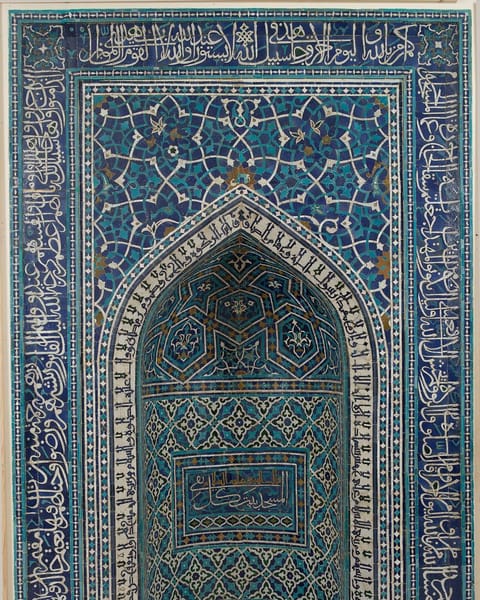
Image: Unknown tile makers, Mihrab from the Madrasa Imami, Isfahan, 1354–1355. Metropolitan Museum of Art, New York. CC0, via Wikimedia Commons.. Image credits
_MET_DP235035.jpg)