Does Islam require a caliphate?
Question 1250
Question
Are Muslims religiously obliged to establish a caliphate, a single Islamic state under one ruler, or can they live faithfully under other forms of government?
Summary of answer
A caliphate is not required in Islam. The Quran commands justice, the keeping of trusts, and consultation (4:58; 42:38), and names no form of state. The Prophet ﷺ named no successor in the Sunni account, the first four caliphs were chosen in four different ways, and a sound hadith limits the caliphate of prophethood to thirty years. Ali Abd al-Raziq argued in 1925 that the institution was a historical choice, and Muslims today serve the same objectives through just, accountable states.
﴿۞إِنَّ ٱللَّهَ يَأۡمُرُكُمۡ أَن تُؤَدُّواْ ٱلۡأَمَٰنَٰتِ إِلَىٰٓ أَهۡلِهَا وَإِذَا حَكَمۡتُم بَيۡنَ ٱلنَّاسِ أَن تَحۡكُمُواْ بِٱلۡعَدۡلِ﴾
Allah commands you to hand over trusts to those to whom they are due, and, when you judge between people, to judge with justice.
Answer
الحمد لله Praise be to Allah.
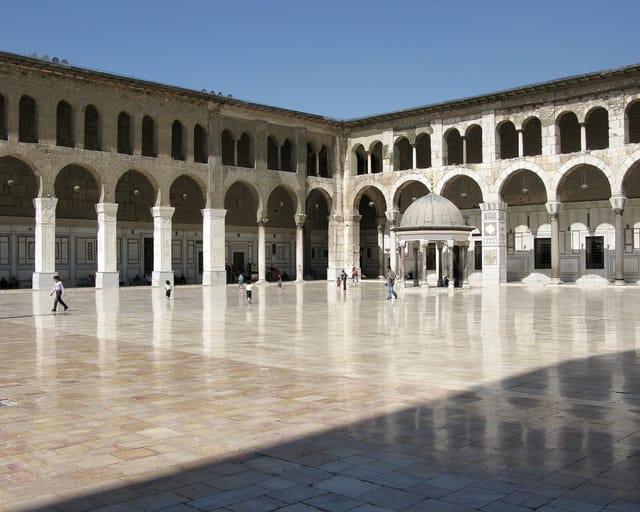
Many Muslims grow up hearing that the community has been incomplete since the last caliph fell, and that restoring a single Islamic state is a religious duty. The question deserves a careful answer, because it touches how believers see their own countries and neighbors. Islam does not require a caliphate. The Quran commands justice, the keeping of trusts, and consultation in public affairs, and it leaves the form of government to the wisdom of each generation. A Muslim who lives faithfully in a just republic or a constitutional state is fulfilling every political command the Quran gives.
Does the Quran command a caliphate?
The word khalīfa (خليفة) appears in the Quran, though never as the name of a state. Allah tells the angels that He is placing a khalīfa, a steward, on the earth, meaning humanity as a whole (2:30). He tells David (peace be upon him):
يَٰدَاوُۥدُ إِنَّا جَعَلۡنَٰكَ خَلِيفَةٗ فِي ٱلۡأَرۡضِ فَٱحۡكُم بَيۡنَ ٱلنَّاسِ بِٱلۡحَقِّ
“O David, We have made you a steward on the earth, so judge between people with truth.”
The stewardship is defined by its duty: judging with truth. The Quran’s political commands are of this kind. It orders that trusts be handed to those worthy of them and that rulers judge with justice (Quran 4:58), and it praises believers whose affairs are settled by consultation (42:38). It names no office, no dynasty, no capital, and no method of succession.
Did the Prophet ﷺ appoint a caliph?
In the Sunni account he named no successor, and the Companions chose their leaders in four different ways. Abu Bakr was chosen at the hall of the Banū Sāʿida after a tense debate between the emigrants and the Anṣār, and ʿAlī gave his pledge only months later. Abu Bakr nominated ʿUmar. ʿUmar left the choice to a council of six, and ʿAbd al-Raḥmān ibn ʿAwf consulted the people of Medina for nights before the pledge to ʿUthmān (Sahih al-Bukhari 7207). ʿAlī received the pledge of the people of Medina in a time of crisis. A community that chose four leaders by four methods was looking for consent and justice; it had no fixed constitution to follow.
ʿUmar (may Allah be pleased with him) set down the principle himself: “Whoever pledges allegiance to a man without the consultation of the Muslims, neither he nor the one he pledged to is to be followed” (Sahih al-Bukhari 6830).
Twelver Shia Muslims hold that leadership belonged by right to ʿAlī and the Imams of the family of the Prophet ﷺ, and Shia jurists differ widely on what government is legitimate while the twelfth Imam is hidden (Sunni vs Shia).
The Prophet ﷺ also foretold that the caliphate in its prophetic sense would be brief:
«خِلاَفَةُ النُّبُوَّةِ ثَلاَثُونَ سَنَةً ثُمَّ يُؤْتِي اللَّهُ الْمُلْكَ - أَوْ مُلْكَهُ - مَنْ يَشَاءُ»
“The caliphate of prophethood will last thirty years, and then Allah will give kingship to whomever He wills.”
Sunan Abi Dawud 4646, graded hasan sahih by al-Albani
The Umayyad, Abbasid, and Ottoman rulers who carried the title afterwards were kings, some just and many not. Muslims prayed, studied, and built under all of them, and under many other rulers too.
What did the classical scholars say?
Most classical Sunni jurists held that appointing a ruler was an obligation. Al-Mawardi (d. 1058), the Shafiʿi jurist of Baghdad, wrote al-Aḥkām al-Sulṭāniyya, one of the first books devoted wholly to the law of government, and al-Nawawi reported the scholars’ agreement on the duty. Their reasons were justice, security, and the protection of people’s lives, faith, and property. These are the objectives of the sharia (maqāṣid al-sharīʿa, مقاصد الشريعة), and the jurists also taught that means take their ruling from the ends they serve. When a constitutional state secures justice and rights, the purpose of the classical duty is met (What is sharia?).
Who argued that the caliphate is a historical choice?
The Ottoman caliphate was abolished by the new Turkish Republic in 1924. A year later the Azhar scholar Ali Abd al-Raziq (1888–1966) published al-Islām wa Uṣūl al-Ḥukm (Islam and the Foundations of Governance). He argued that the Quran and the Sunnah neither demand nor forbid the rule of a caliph, that no true consensus on its necessity existed, and that rulers had used religion as a shield for their thrones. A council of al-Azhar stripped him of his office. He was restored in the 1940s and later served twice as Minister of Endowments, and the modern Muslim world, a world of nation-states, has largely lived by his conclusion.
The first political document of the Prophet ﷺ points the same way. The Constitution of Medina, preserved by Ibn Isḥāq, declared that the Jews of Banū ʿAwf were “one community with the believers,” and that “to the Jews their religion, and to the Muslims theirs.” Muslim political life began with a civil covenant among neighbors of different faiths.
What about groups that claim a caliphate today?
In 2014, after seizing Mosul, the group calling itself the Islamic State declared a caliphate. More than 120 Muslim scholars answered in an open letter that declaring a caliphate without the consensus of Muslims is forbidden, along with the killing of innocents, torture, and the mistreatment of Christians that the group carried out (Is ISIS Islamic?). A caliphate taken by force, without consultation, fails ʿUmar’s test before any other.
Muslims today pursue the Quran’s political values by voting, serving, and holding power to account, in Muslim-majority countries and as citizens elsewhere (Is Islam compatible with democracy?).
Sovereignty belongs to Allah
The Quran teaches a prayer that keeps every government in its place:
قُلِ ٱللَّهُمَّ مَٰلِكَ ٱلۡمُلۡكِ تُؤۡتِي ٱلۡمُلۡكَ مَن تَشَآءُ وَتَنزِعُ ٱلۡمُلۡكَ مِمَّن تَشَآءُ
“Say: O Allah, Owner of all dominion, You give dominion to whom You will and take it from whom You will.”
States rise and fall; the trust of justice remains. May Allah grant every land rulers who keep that trust, and grant us the courage to keep it in whatever share of power is given to us.
And Allah knows best. والله أعلم
Frequently asked questions
Is the caliphate mentioned in the Quran?
The Quran uses the word khalīfa for humanity as Allah's steward on earth (2:30) and for David as a just judge (38:26). It never commands a political office called the caliphate or describes how one should be formed.
What is the Shia view of the caliphate?
Twelver Shia Muslims hold that leadership after the Prophet ﷺ belonged to ʿAlī and the Imams of his family, and that the twelfth Imam is in occultation. Shia jurists differ widely on what form of government is legitimate in his absence.
Is it a sin for Muslims to live without a caliph?
No. The purposes the classical jurists gave for the office, justice, security, and the common good, can be met by many forms of government, and the Prophet ﷺ himself said the caliphate of prophethood would last thirty years.
Was ISIS a real caliphate?
No. Over 120 Muslim scholars wrote in 2014 that declaring a caliphate without the consent of Muslims is forbidden, and ʿUmar taught that a pledge given without the consultation of the Muslims binds no one.
Related questions
Sources
- Ali Abd al-Raziq, al-Islām wa Uṣūl al-Ḥukm (Islam and the Foundations of Governance), Cairo, 1925
- al-Mawardi, al-Aḥkām al-Sulṭāniyya
- Sunan Abi Dawud 4646; Sahih al-Bukhari 6830, 7207
- Constitution of Medina (Ibn Isḥāq, via Ibn Hishām)
- Open Letter to Dr. Ibrahim Awwad al-Badri (Letter to Baghdadi), 2014
- Khaled Abou El Fadl, Islam and the Challenge of Democracy (Princeton University Press, 2004)
Image: Vyacheslav Argenberg, Courtyard of the Umayyad Mosque, Damascus, 2008. CC BY 4.0, via Wikimedia Commons.. Image credits
