Is voting haram?
Question 1182
Question
Is it permissible for Muslims to vote in elections, including in countries that are not governed by Islamic law?
Summary of answer
Voting is halal, and where it can protect justice and the common good it is encouraged. The Quran praises believers whose affairs are settled by consultation (shūrā, 42:38) and commands that trusts be given to those worthy of them (4:58). Choosing the better candidate secures good and averts harm, and the International Islamic Fiqh Academy affirmed in 2005 that the requisites of citizenship in the West do not contradict Islamic commitment. Women and men vote alike.
Answer
الحمد لله Praise be to Allah.
Every election season some Muslims hear that voting is haram: that it means accepting laws not revealed by Allah, or giving loyalty to rulers who are not Muslim. The answer of the Quran and the Sunnah is clear and hopeful. Voting is halal, and where a vote can protect justice and the welfare of people it is encouraged. Consultation (shūrā, شورى) is one of the marks of the believers in the Quran, a vote is a trust to be cast with care, and choosing the better of two options is the oldest wisdom of Islamic law.
Is voting haram in Islam?
Sūrat al-Shūrā, a chapter named after consultation, describes the believers by the things they hold dear: they answer their Lord, establish prayer, give from what they are given, and settle their affairs together:
وَأَمۡرُهُمۡ شُورَىٰ بَيۡنَهُمۡ
“And their affairs are settled by consultation among them.”
Allah told the Prophet ﷺ himself, “Consult them in the matter” (3:159). The Companions applied this when they chose a leader. After ʿUmar’s death, the council he appointed handed the choice to ʿAbd al-Raḥmān ibn ʿAwf, and for several nights the people of Medina came to him to give their views before the pledge was made to ʿUthmān (Sahih al-Bukhari 7207). An election is a modern, orderly way for a whole people to give that counsel.
The Quran also asks believers to place every trust with those who are fit for it and to judge with justice (Quran 4:58). A vote is such a trust. Witnesses, the Quran says, “should not refuse when they are called” (2:282), and a citizen called to choose who will govern is called to bear witness to what is just.
Can Muslims vote in a non-Muslim country?
The scholars differed (ikhtalafa al-ʿulamāʾ). A small number of preachers and groups hold that voting in a system not based on Islamic law is forbidden, because it means taking part in man-made legislation or showing loyalty to non-Muslims. Their concern for faith deserves respect.
The stronger view (al-rājiḥ) is that voting is permitted, for reasons rooted in the tradition:
- Securing good and averting harm. Islamic law weighs benefits and harms, and its jurists formulated the maxim that one chooses the lesser of two harms. A vote that protects mosques, schools, the poor, refugees, or civil rights secures real good, whatever the system around it.
- The precedent of Joseph. Joseph (peace be upon him) asked the king of Egypt to place him over the storehouses of the land (12:55), and he served justice from inside a government that did not share his faith.
- Citizenship. In its 2005 session in Dubai, the International Islamic Fiqh Academy resolved that “the requisites of citizenship in the West do not contradict the preservation of the Islamic identity and commitment to Islamic values” (Resolution 151). Voting is one of those requisites (Can Muslims live in non-Muslim countries?).
- Justice toward neighbors. Allah does not forbid kindness and justice toward those who live in peace with the believers (60:8). Building a just society with them is part of that justice.
Modern Muslim scholars have developed these principles further. Khaled Abou El Fadl, in Islam and the Challenge of Democracy (2004), argued that consultation, accountability, and human dignity make democracy the form of government most able to serve Islam’s moral commitments. Abdullahi An-Na’im, in Islam and the Secular State (2008), argued that Muslims live their faith most sincerely when no state coerces it, and that citizens of every faith should reason together in public life. The wider question is discussed in Is Islam compatible with democracy?
Can Muslim women vote?
Yes. The Quran records that believing women came to the Prophet ﷺ to give their pledge of allegiance (bayʿa) in their own right (60:12), and Aisha (may Allah be pleased with her) reported that he accepted it from them by word (Sahih al-Bukhari 7214). A woman’s voice in public affairs is her own, and she may vote, campaign, and stand for office (Can a woman lead a Muslim country?).
How should a Muslim vote?
- Learn about the candidates and their records, and vote for justice, honesty, and competence, whatever the candidate’s religion.
- Think of the poor and the stranger. The Quran measures a society by how it treats them (What does Islam say about poverty and the poor?).
- Never sell your vote. The Prophet ﷺ cursed the one who gives a bribe and the one who takes it (Sunan Abi Dawud 3580, graded sahih by al-Albani).
- Speak up between elections. Asked which struggle is best, the Prophet ﷺ answered, “A word of truth before an unjust ruler” (Sunan al-Nasa’i 4209, graded sahih by al-Albani).
- Respect those who vote differently. Muslims hold many political views, and no one may harass a fellow believer over a ballot.
Service to one’s country takes many forms beyond the vote (Can Muslims serve in the military or police?).
Consult, then trust in Allah
The verse that commands consultation ends with what comes after it:
فَإِذَا عَزَمۡتَ فَتَوَكَّلۡ عَلَى ٱللَّهِۚ إِنَّ ٱللَّهَ يُحِبُّ ٱلۡمُتَوَكِّلِينَ
“And once you have decided, put your trust in Allah. Allah loves those who trust in Him.”
Inform yourself, cast your vote with a clear conscience, and leave the outcome to the One who holds every heart and every nation in His hand.
And Allah knows best. والله أعلم
Frequently asked questions
Is voting shirk?
No. Shirk is worshipping something besides Allah. Choosing a representative, a mayor, or a policy is a worldly decision taken by consultation, which the Quran praises, and a voter gives no one the right to be worshipped.
Can Muslims vote for a non-Muslim candidate?
Yes. The question is who will govern more justly, protect the vulnerable, and serve the public good. Joseph served a king who did not share his faith, and a Muslim may support any candidate whose program is fairer.
Is it haram not to vote?
Staying home is permitted. Where a vote can protect the weak or prevent a clear harm, many scholars encourage it strongly, since the Quran calls the believers to cooperate in goodness and piety (5:2).
Can Muslims run for office?
Yes. Joseph asked to be placed over the storehouses of Egypt because he was trustworthy and knowledgeable (12:55), and Muslims serve today as councillors, legislators, mayors, and ministers in many countries.
Related questions
Sources
- International Islamic Fiqh Academy, Resolution 151 (9/16) on the Care for Muslim Minorities (Dubai, 2005), in Resolutions and Recommendations (3rd English ed., 2024)
- Sahih al-Bukhari 7207, 7214
- Sunan al-Nasa'i 4209; Sunan Abi Dawud 3580
- Khaled Abou El Fadl, Islam and the Challenge of Democracy (Princeton University Press, 2004)
- Abdullahi Ahmed An-Na'im, Islam and the Secular State: Negotiating the Future of Shari'a (Harvard University Press, 2008)
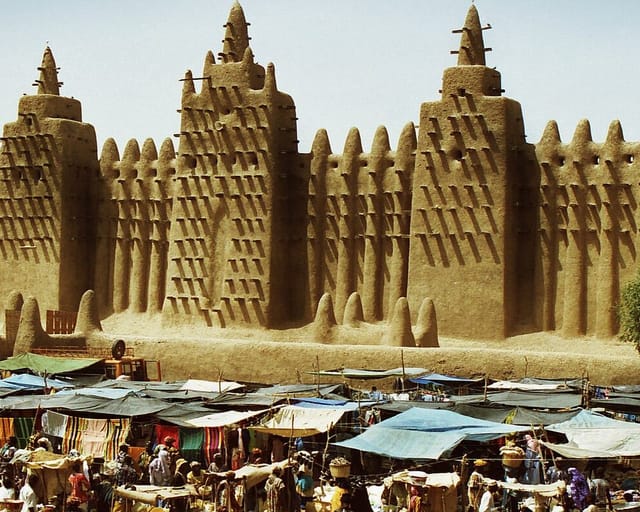
Image: Ondřej Havelka, The Great Mosque of Djenné, Mali, 2021. CC BY-SA 4.0, via Wikimedia Commons.. Image credits
