Is ISIS Islamic?
Question 1255
Question
Is ISIS (Daesh, the so-called Islamic State) a true expression of Islam, and what do Muslim scholars say about it?
Summary of answer
ISIS is not Islamic. Its murder of civilians, enslavement of Yazidi women, burning of captives, and declaration of other Muslims as apostates are forbidden by the Quran and Sunnah. Over 120 scholars refuted it point by point in their 2014 open letter, and the Prophet ﷺ described a people who would recite the Quran without it passing their throats, killing Muslims and leaving idol-worshippers alone. Most of its victims were Muslims.
Answer
الحمد لله Praise be to Allah.
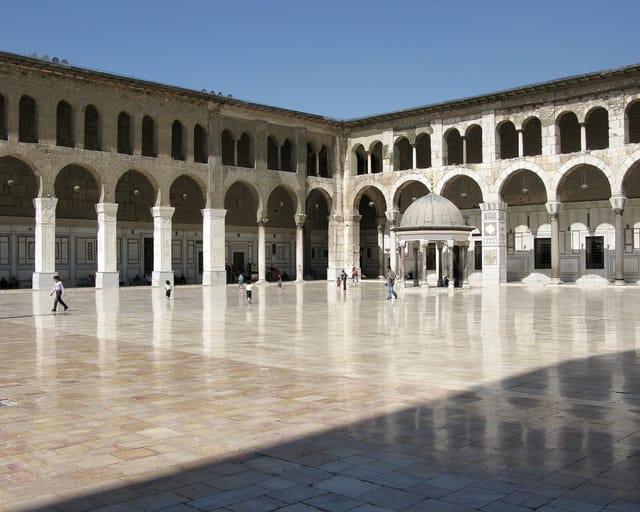
In 2014 a militant group calling itself the Islamic State seized cities in Iraq and Syria, declared a caliphate, and filled the world’s screens with executions. Muslims everywhere were asked whether this was their religion. The answer of the Quran, the Sunnah, and the scholars is clear. ISIS is not Islamic. Its killing of civilians, its enslavement of women, its torture of captives, and its declaration of other Muslims as unbelievers are forbidden in Islam, and the Prophet ﷺ himself described groups like it and warned his community against them.
Is ISIS Islamic?
In September 2014, 122 Muslim scholars from around the world published an open letter to the group’s leader, Abu Bakr al-Baghdadi, refuting his claims from the Quran and the classical sources. Among its points:
- Killing innocents, emissaries, journalists, and aid workers is forbidden. Jihad is defensive and has rules of conduct.
- Declaring a Muslim an apostate is forbidden unless he openly declares disbelief.
- Harming or mistreating Christians or any People of the Scripture is forbidden, as is forcing anyone to convert.
- Mutilating the dead and torturing people are haram.
- Declaring a caliphate without the consensus of Muslims is forbidden.
- Issuing fatwas requires mastery of the Arabic language and of the whole of the Quran and hadith.
A decade earlier, the Amman Message gathered about 200 scholars from over 50 countries in 2005 to declare that followers of the recognized Sunni and Shia schools are Muslims whose blood is inviolable, and that pronouncing them unbelievers (takfīr) is forbidden. ISIS built its whole program on the takfīr those scholars outlawed.
What did the Prophet ﷺ say about groups like ISIS?
When a man accused the Prophet ﷺ of injustice in dividing some gold, a Companion asked permission to kill him. The Prophet ﷺ refused, and then said that from that man’s line would come:
«قَوْمٌ يَقْرَءُونَ الْقُرْآنَ، لاَ يُجَاوِزُ حَنَاجِرَهُمْ، يَمْرُقُونَ مِنَ الدِّينِ مُرُوقَ السَّهْمِ مِنَ الرَّمِيَّةِ، يَقْتُلُونَ أَهْلَ الإِسْلاَمِ، وَيَدَعُونَ أَهْلَ الأَوْثَانِ»
“A people who recite the Quran, but it does not go past their throats. They pass out of the religion as an arrow passes through its target. They kill the people of Islam and leave the idol-worshippers alone.”
The first to fit the description were the Kharijites. After the battle of Ṣiffīn in 657 they broke from ʿAlī (may Allah be pleased with him) under the slogan “judgment belongs to Allah alone,” branded Muslims who committed grave sins as unbelievers, and held their killing lawful. ʿAlī answered their slogan: “A word of truth by which falsehood is intended” (Sahih Muslim 1066g). In 661 a Kharijite, Ibn Muljam, murdered ʿAlī in the mosque of Kufa. Mainstream Muslims have used the name Kharijites ever since for militants who declare other Muslims unbelievers and spill their blood.
Who were the victims of ISIS?
Muslims above all. Studies of terrorism casualties have found that the large majority of victims of such attacks are Muslims, and the people of Mosul, Raqqa, Fallujah, and countless villages lived and died under the group’s rule. In August 2014 ISIS attacked the Yazidis of Sinjar. United Nations investigators later found that it had committed genocide, and UN estimates put the number of Yazidi women and girls held as slaves or forced brides at 5,000 to 7,000. In February 2015 the group released a video of the Jordanian pilot Muath al-Kasasbeh being burned alive in a cage.
In July 2014 al-Baghdadi announced his caliphate from the pulpit of the Great Mosque of al-Nuri in Mosul. In June 2017, as the group was driven from the city, the mosque was blown up, a destruction attributed to ISIS itself.
What do the Quran and Sunnah say about the conduct of war?
The Quran permits fighting only against those who fight, and forbids transgression:
وَقَٰتِلُواْ فِي سَبِيلِ ٱللَّهِ ٱلَّذِينَ يُقَٰتِلُونَكُمۡ وَلَا تَعۡتَدُوٓاْۚ إِنَّ ٱللَّهَ لَا يُحِبُّ ٱلۡمُعۡتَدِينَ
“Fight in the way of Allah those who fight you, but do not transgress. Allah does not love transgressors.”
When a woman was found killed in one of his campaigns, the Prophet ﷺ forbade the killing of women and children (Sahih al-Bukhari 3015). He once ordered two men to be burned and then withdrew the order:
«وَإِنَّ النَّارَ لاَ يُعَذِّبُ بِهَا إِلاَّ اللَّهُ»
“None may punish with fire except Allah.”
He warned that whoever kills a person living under a covenant of protection “will not smell the fragrance of Paradise” (Sahih al-Bukhari 6914). Every one of these rules ISIS broke in public, and filmed. Jihad in its true meaning is the struggle for good under strict ethical limits (What does jihad really mean?).
Why do some people say ISIS is “very Islamic”?
ISIS quoted verses and hadith constantly, and some observers took its quotations at face value. Quoting texts is easy. The scholarly tradition reads every verse with all the others, every hadith with its chain and context, and every ruling with the objectives of the sharia: the protection of life, mind, faith, family, and property. Khaled Abou El Fadl named this kind of distortion in the title of his book The Great Theft: Wrestling Islam from the Extremists (2005). A reading that produces slave markets and burned prisoners has abandoned the method of the scholars before it reaches the text (Is Islam a religion of peace?).
ISIS also revived slavery, which Muslim scholars and states had long since abolished (Does Islam allow slavery?), and claimed a caliphate that no consultation of Muslims ever granted (Does Islam require a caliphate?).
The servants of the All-Merciful
The Quran describes the true servants of Allah in words that stand against everything ISIS made of the faith:
وَعِبَادُ ٱلرَّحۡمَٰنِ ٱلَّذِينَ يَمۡشُونَ عَلَى ٱلۡأَرۡضِ هَوۡنٗا وَإِذَا خَاطَبَهُمُ ٱلۡجَٰهِلُونَ قَالُواْ سَلَٰمٗا
“The servants of the All-Merciful are those who walk the earth gently, and when the ignorant address them, they answer: Peace.”
May Allah have mercy on every victim of this cruelty, Muslim, Yazidi, and Christian, heal the survivors, and protect our young people from those who would turn the Book of mercy into a weapon.
And Allah knows best. والله أعلم
Frequently asked questions
Are ISIS Kharijites?
Many Muslim scholars describe them that way. Like the Kharijites of the first century, ISIS declared other Muslims unbelievers, made their blood lawful, and used the slogan of God's judgment to justify rebellion and murder.
Do Muslims condemn ISIS?
Yes, overwhelmingly. Scholars from around the world signed the 2014 Letter to Baghdadi, Muslim soldiers and volunteers fought the group, and Muslims were the majority of its victims.
Why does ISIS call itself the Islamic State?
The name was a claim to religious authority, which the scholars of Islam rejected. Declaring a caliphate without the consultation and consent of Muslims is itself forbidden, as ʿUmar taught.
Is ISIS Sunni or Shia?
ISIS grew out of a Sunni extremist movement, and it killed Shia Muslims and the Sunni Muslims who opposed it, along with Yazidis and Christians.
Related questions
Sources
- Open Letter to Dr. Ibrahim Awwad al-Badri (Letter to Baghdadi), September 2014
- The Amman Message (2004) and its Three Points (2005)
- Sahih al-Bukhari 3015, 3016, 3344, 6914; Sahih Muslim 1066g
- United Nations findings on the Yazidi genocide (2015–2021)
- Khaled Abou El Fadl, The Great Theft: Wrestling Islam from the Extremists (HarperSanFrancisco, 2005)
Image: Vyacheslav Argenberg, Courtyard of the Umayyad Mosque, Damascus, 2008. CC BY 4.0, via Wikimedia Commons.. Image credits
