Can Muslims work where alcohol or pork is sold?
Question 1176
Question
Is it permissible for a Muslim to work in a supermarket, restaurant, hotel, airline, or delivery service that sells alcohol or pork, for example as a cashier, cook, server, or driver?
Summary of answer
Working in a supermarket, restaurant, hotel, or warehouse where alcohol or pork is sold is halal. The sin of drinking lies with the drinker, as Abu Hanifa reasoned when he held that a Muslim hired to carry wine for a non-Muslim may keep his wage. Most such workplaces sell mainly lawful goods, and earning a living for oneself and one's family is a duty. Pouring drinks is more disputed, and a Muslim with other options may choose another role.
Answer
الحمد لله Praise be to Allah.
Muslims in Europe, North America, and much of Asia stock supermarket shelves, cook in hotel kitchens, serve on airlines, and drive for delivery apps, and many of these workplaces sell alcohol or pork. Can Muslims work where alcohol or pork is sold? The stronger view (al-rājiḥ) is that they can. The drinking and the eating are the acts of the customers who choose them, Abu Hanifa held a wage for carrying wine for a non-Muslim to be lawful, and earning a living for oneself and one’s family is a duty the sharia protects. Roles that pour drinks directly are more disputed, and there a Muslim’s conscience has room to choose.
What do the hadith say about alcohol and the people around it?
The stricter view rests on a hadith in which the Prophet ﷺ said that Allah has cursed wine, the one who drinks it, the one who serves it, the one who sells it, the one who buys it, the one who presses it, the one for whom it is pressed, the one who carries it, and the one to whom it is carried (Sunan Abi Dawud 3674, graded sahih by al-Albani; compare Jamiʿ al-Tirmidhi 1295). In another hadith, the Prophet ﷺ declared trade in wine, carrion, pigs, and idols forbidden (Sahih al-Bukhari 2236). Some contemporary scholars conclude from these texts that any job connected with alcohol or pork is haram. That is a recognized view, and a Muslim who leaves such a job out of caution is acting on it sincerely.
What did Abu Hanifa say?
Imam Abu Hanifa (d. 767), may Allah have mercy on him, read the same texts with an eye to who commits the sin. The Hanafi manual al-Hidāya by al-Marghīnānī (d. 1197) records his ruling that a Muslim hired by a non-Muslim to carry wine may keep his wage with a clear conscience. His reasoning was that the sin lies in the drinking, which is the free act of the one who drinks, and carrying does not require that anyone drink at all. His students Abu Yusuf and Muhammad al-Shaybani considered it disliked, citing the hadith of the ten. The Quran states the principle beneath Abu Hanifa’s view:
وَلَا تَكۡسِبُ كُلُّ نَفۡسٍ إِلَّا عَلَيۡهَاۚ وَلَا تَزِرُ وَازِرَةٞ وِزۡرَ أُخۡرَىٰ
“Each soul earns only for itself, and no bearer of burdens bears the burden of another.”
The Hanafis also treated wine and pork as lawful property in the hands of non-Muslims whose religion permits them. A delivery driver, warehouse worker, or cashier serving customers of every faith stands very close to the case Abu Hanifa ruled on.
Is selling alcohol different from working where it is sold?
The hadith on trade addresses Muslims who deal in wine and pork as their business. An employee in a supermarket, a hotel, or an airline is in a different position. He sells bread, medicine, and clothing, and now and then a bottle passes through his hands. The jurists’ maxim is that the ruling follows what predominates (al-ʿibra li-l-ghālib), and the predominant work in these places is lawful.
Living as a minority adds the weight of need (ḥāja). Many Muslims in non-Muslim countries have few choices of entry-level work, and a family must be fed (Can Muslims live in non-Muslim countries?). The Quran’s rule applies:
لَا يُكَلِّفُ ٱللَّهُ نَفۡسًا إِلَّا وُسۡعَهَا
“Allah does not burden any soul beyond what it can bear.”
Pork raises a further question of purity. Touching it does not harm a Muslim’s faith; washing the hands before prayer is enough, and the Maliki school holds every living animal, the pig included, to be pure. Why pork is forbidden as food, and how to handle it, are explained in Why is pork haram? and Can Muslims touch or sell pork?
What about bartending and serving drinks?
The one who serves wine is named in the hadith, so roles whose whole task is pouring drinks are the most disputed. Abu Hanifa’s reasoning would still allow the wage, since the drinker chooses to drink. Many scholars disagree. A Muslim who can find another role, in the kitchen, at the front desk, or in another workplace, may prefer it, and one who depends on the job for now can keep it while looking without despair. Drinking itself stays forbidden to the worker (Is alcohol haram?).
The Prophet ﷺ gave every believer a guide for such questions:
«الْبِرُّ حُسْنُ الْخُلُقِ وَالإِثْمُ مَا حَاكَ فِي صَدْرِكَ وَكَرِهْتَ أَنْ يَطَّلِعَ عَلَيْهِ النَّاسُ»
“Righteousness is good character, and sin is what wavers in your chest and what you would hate for people to see.”
How can a Muslim work in these places well?
- Work with excellence. “Allah has prescribed excellence in everything” (Sahih Muslim 1955a).
- Ask for reasonable accommodations: prayer breaks, gloves, or other duties. Many employers agree, and workers’ rights are part of the sharia’s justice (What does Islam say about workers’ rights?).
- Treat every customer with courtesy, whatever they buy.
- Do not judge Muslim coworkers who weigh the question differently.
- Keep looking for the work you love. The same reasoning applies to other jobs people ask about, such as banking (Is it haram to work in a bank?).
Seeking Allah’s bounty
The Quran sends believers out to work as soon as the prayer is done:
فَإِذَا قُضِيَتِ ٱلصَّلَوٰةُ فَٱنتَشِرُواْ فِي ٱلۡأَرۡضِ وَٱبۡتَغُواْ مِن فَضۡلِ ٱللَّهِ
“When the prayer is finished, spread out through the land and seek Allah’s bounty.”
May Allah bless the hands that work, provide for every family from what is good, and keep every worker’s heart at peace.
And Allah knows best. والله أعلم
Frequently asked questions
Is it haram to work at a supermarket that sells alcohol?
No. A supermarket sells mostly bread, milk, fruit, and household goods, and the cashier who scans a bottle among them is earning a lawful wage. The choice to drink belongs to the adult customer.
Is it haram to be a bartender?
This is the most disputed case, because the hadith names the one who serves wine. Abu Hanifa's reasoning, that the sin lies in the drinking, would permit it, while many scholars forbid it. A Muslim who can find another role may prefer one, and one who depends on the job for now may keep it while looking.
Can I deliver food that includes pork or alcohol?
Yes. This is very close to the case Abu Hanifa ruled on, carrying wine for a non-Muslim for a wage, and he held the wage lawful. Delivery drivers carry sealed orders for adults who choose what they eat and drink.
Does touching pork break my wudu?
No. Touching pork does not break wudu or affect your faith. Wash your hands before you pray, and wear gloves if you prefer; many employers will also arrange other duties if you ask.
Related questions
Sources
- al-Marghinani, al-Hidāya, Kitāb al-Karāhiya (Abu Hanifa on a wage for carrying wine for a non-Muslim)
- Jamiʿ al-Tirmidhi 1295 and Sunan Abi Dawud 3674 (the ten cursed in connection with wine)
- Sahih al-Bukhari 2236 (the prohibition on trading in wine, carrion, pigs, and idols)
- Sahih Muslim 2553a (righteousness and sin)
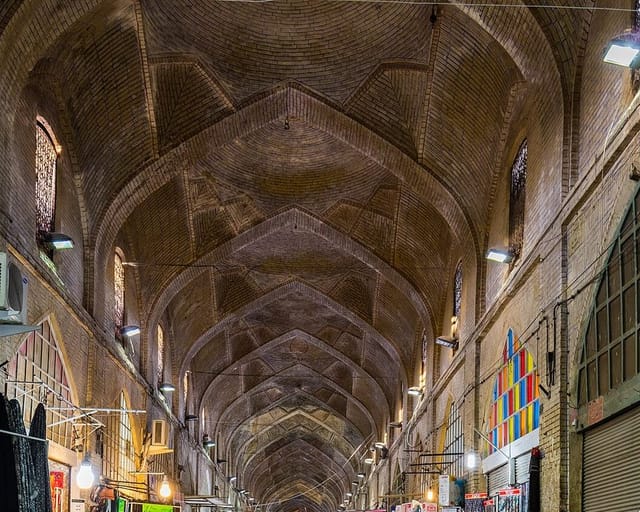
Image: Diego Delso, The Vakil Bazaar, Shiraz, 2016. CC BY-SA 4.0, via Wikimedia Commons.. Image credits
