Is it haram to take off the hijab?
Question 1152
Question
Is it permissible for a Muslim woman who has worn the hijab to stop wearing it, and how should she handle her family's reaction?
Summary of answer
Taking off the hijab is permissible. The Quran asks for modesty and for covering the bosom (24:31) and never names the hair, so covering it is a woman's own choice, and so is ceasing to cover it. No verse or hadith says that a woman who once wore the hijab must wear it forever. Allah looks at hearts and deeds (Sahih Muslim 2564c), and family is best met with patience and kindness.
Answer
الحمد لله Praise be to Allah.
Some women put on the hijab as girls and grew into adults who see it differently. Some chose it with joy and now find it no longer reflects their faith. Some wear it under pressure, or face harassment because of it. Many of them ask the same question: is it haram to take off the hijab? The stronger view (al-rājiḥ) is that taking off the hijab is permissible. Covering the hair is a woman’s own choice, and the choice to stop is hers as well.
Is it haram to take off the hijab once you have worn it?
The Quran asks believing women to draw their head-cloths over their bosoms (Quran 24:31), and it never names the hair. The reading that covering the hair is optional is set out in full in Is hijab mandatory?, and Khaled Abou El Fadl concluded in a 2016 fatwa that a woman in the United States may leave her hair uncovered. A woman who dresses modestly without a headscarf has done what the Quran asks.
Many women have heard that once a woman puts on the hijab she can never take it off, or that removing it is worse than never wearing it. No verse or hadith says this. In Islamic law a binding vow (nadhr) is a promise made explicitly to Allah; wearing a garment for a time creates no such promise. The Prophet ﷺ warned against making religion a weight that crushes:
«إِنَّ الدِّينَ يُسْرٌ، وَلَنْ يُشَادَّ الدِّينَ أَحَدٌ إِلاَّ غَلَبَهُ، فَسَدِّدُوا وَقَارِبُوا وَأَبْشِرُوا»
“This religion is ease. No one makes it harsh without being overcome by it. So aim for what is right, come as close as you can, and rejoice.”
Does taking off the hijab make me a bad Muslim?
Your relationship with Allah is measured in the heart and in what you do. The Prophet ﷺ said:
«إِنَّ اللَّهَ لاَ يَنْظُرُ إِلَى صُوَرِكُمْ وَأَمْوَالِكُمْ وَلَكِنْ يَنْظُرُ إِلَى قُلُوبِكُمْ وَأَعْمَالِكُمْ»
“Allah does not look at your appearance or your wealth. He looks at your hearts and your deeds.”
A woman without a headscarf prays, fasts, gives, and serves her community as a full member of it. Modesty remains a duty for every believer, men first (24:30), and it lives in the gaze, in speech, and in how we treat others. The Quran names the garment that matters most:
وَلِبَاسُ ٱلتَّقۡوَىٰ ذَٰلِكَ خَيۡرٞ
“And the garment of God-consciousness: that is the best.”
Taking off a scarf does not take you out of the mosque, the prayer line, or the community. Women without hijab are welcome in every mosque, and many keep a scarf in their bag for ṣalāh; see Can women go to the mosque?
How do I tell my family I want to take off my hijab?
For many women the hardest part is home. Parents often fear for their daughter’s faith, for the family’s name, or for what relatives will say. Their fear usually comes from love, and the Quran asks a child to keep parents company with kindness even when they disagree about religion:
وَصَاحِبۡهُمَا فِي ٱلدُّنۡيَا مَعۡرُوفٗا
“And keep them company in this world with kindness.”
Some practical steps:
- Choose a calm moment. Speak when no one is tired, rushed, or angry, and speak first to the parent who listens best.
- Begin with your faith. Tell them what Allah means to you and how you pray. Many parents fear that the scarf is the first step out of Islam, and they need to hear that it is a decision about dress.
- Share what the scholars say. Offer them the evidence and the scholars who hold hijab optional, and let them read in their own time.
- Listen to their fears. Ask what worries them most. Some fears can be eased with small steps, such as wearing a scarf to family gatherings or the mosque for a while.
- Give it time. Many families who first reacted with anger came to accept their daughter’s choice.
Kindness to parents and obedience in matters of your own body are different duties, explained in Do I have to obey my parents in everything? Forcing the hijab on a daughter is itself forbidden; see Can parents force their daughter to wear hijab?
What if I am harassed or threatened for removing it?
“There is no compulsion in religion” (Quran 2:256). Harassing a woman about her dress, at home or in the street, is haram; see Is it haram to harass women about hijab? If anyone threatens you, locks you in, takes your documents, or harms you, your safety comes first. Contact your local emergency number or a domestic violence hotline, and reach out to a trusted relative, teacher, imam, or counselor.
A closing word
The Quran closes its second and longest sūra with a promise and a prayer:
لَا يُكَلِّفُ ٱللَّهُ نَفۡسًا إِلَّا وُسۡعَهَا
“Allah does not burden any soul beyond what it can bear.”
Whether your hair is covered or uncovered, keep your heart turned toward Allah. He knows what you carry, and He is nearer to you than anyone who judges you.
And Allah knows best. والله أعلم
Frequently asked questions
Is taking off the hijab worse than never wearing it?
No verse or hadith says so. Covering the hair is a choice in either direction, and a woman's standing with Allah rests on her faith, her prayer, and her character.
Can I take off my hijab and wear it again later?
Yes. Some women wear it for a season of life, for Ramadan, or for the mosque, and others return to it after years. Each choice is yours to make before Allah.
Do I still have to cover my hair to pray?
The four Sunni schools ask women to cover the hair in ṣalāh, and many women who do not wear hijab outside keep a prayer scarf for this.
What if my family insists I keep wearing it?
Forcing hijab on anyone is haram, and you owe your parents kindness in every case. Explain your reasons calmly, give them time, and seek help from a trusted relative, imam, or counselor if the pressure turns into threats or harm.
Related questions
Sources
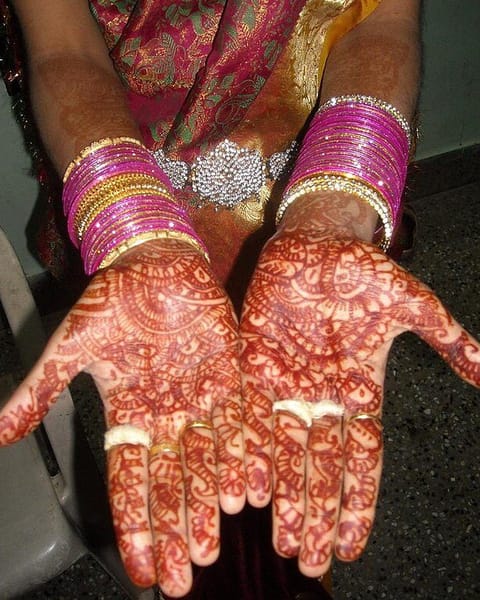
Image: Sistak, Henna on a Muslim bride's hands, Madurai, 2011. CC BY-SA 2.0, via Wikimedia Commons.. Image credits
