Is it haram to dye your hair?
Question 1014
Question
Is it permissible in Islam to dye or color your hair, including black or bright colors like blue or pink?
Summary of answer
Dyeing the hair is halal, in any color. The Prophet ﷺ urged Muslims to dye their grey hair and praised henna and katam, and Ibn ʿUmar dyed with yellow. The instruction to avoid black was given for one aged man and most jurists read it as a dislike at most; ʿUthman, al-Hasan and al-Husayn dyed black, and Imam Abu Yusuf permitted it so spouses could adorn themselves for each other.
Answer
الحمد لله Praise be to Allah.
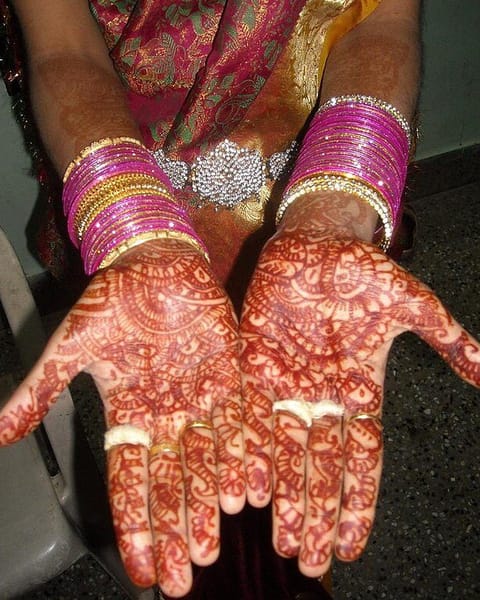
Covering the first grey hairs, adding henna’s red glow, or trying a bold new color: Muslims ask about all of these, and many have heard that some colors are forbidden. Dyeing the hair is halal, in any color, black included. The Prophet ﷺ encouraged Muslims to dye their grey hair, the Companions dyed theirs in several shades, and the great jurists who discussed black dye mostly treated it as a matter of preference.
Is it haram to dye your hair in Islam?
The Quran treats adornment as a gift and asks who would forbid it:
قُلۡ مَنۡ حَرَّمَ زِينَةَ ٱللَّهِ ٱلَّتِيٓ أَخۡرَجَ لِعِبَادِهِۦ
“Say: who has forbidden the adornment of Allah, which He brought forth for His servants?”
Dyeing the hair goes further: it is part of the Sunnah. The Prophet ﷺ told his community:
«إِنَّ الْيَهُودَ وَالنَّصَارَى لاَ يَصْبُغُونَ، فَخَالِفُوهُمْ»
“The Jews and the Christians do not dye their hair, so be different from them.”
In the Medina of his time, dyeing grey hair set the young Muslim community apart in its appearance. He also named the dyes he liked best: “The best things with which to change this grey hair are henna and katam” (Sunan Abi Dawud 4205, graded sahih). Henna gives a red to orange color, and katam, another plant dye, darkens it toward brown and black. Abu Bakr and ʿUmar dyed their hair with henna (Sahih Muslim 2341), and Ibn ʿUmar dyed with yellow, saying he loved to because he had seen the Prophet ﷺ use it (Sahih al-Bukhari 166).
Muslim physicians took the same interest. Abū al-Qāsim al-Zahrāwī of Córdoba (d. c. 1013) devoted a chapter of his medical encyclopedia, al-Taṣrīf, to cosmetics. Beauty and its care have a long, honored place in the tradition; see also Is makeup haram?
Is it haram to dye your hair black?
The question arises from one hadith. When Mecca was opened to the Muslims, Abu Bakr’s elderly father, Abu Quḥāfa, was brought to the Prophet ﷺ with his head and beard white as the thaghāma flower. The Prophet ﷺ said, “Change this with something, and avoid black” (Sahih Muslim 2102b).
The jurists read this instruction in its setting. It was given to a very old man, for whom jet-black hair would have looked false. Shaykh Abdullah bin Bayyah, the Maliki jurist, explains that Imam Malik, Abu Hanifa and Ahmad took it as a sign of dislike rather than a prohibition, and that most Shafiʿis agreed, with al-Nawawi alone holding it forbidden. He names ʿUthmān ibn ʿAffān, al-Ḥasan and al-Ḥusayn (may Allah be pleased with them) among the Companions who dyed black, along with the great Followers Ibn Sīrīn and Abu Burda. His conclusion is that black dye is permissible, except when it is used to deceive someone into marriage.
The Hanafi imam Abu Yusuf (d. 798), the leading student of Abu Hanifa, gave the most human reason for allowing it. Ibn ʿĀbidīn records his words in Radd al-Muḥtār: “Just as I like my wife to adorn herself for me, she likes me to adorn myself for her.” The modern Hanafi scholar Muhammad Taqi Usmani likewise holds black dye disliked at most and not haram.
Some cite a second hadith, which says that at the end of time a people will dye their hair black like the breasts of pigeons and will not smell the fragrance of Paradise (Sunan Abi Dawud 4212). Al-Albani judged its chain sound, while Ibn al-Jawzi listed it in his collection of forged reports (al-Mawḍūʿāt). Even taken as sound, it describes a particular people of the last days, and the jurists who held black dye merely disliked did not read it as a general prohibition. On how scholars weigh such reports, see Are all hadith authentic?
Can you dye your hair blue, pink or any other color?
Yes. No verse and no hadith forbids any color. The Prophet ﷺ praised red henna and darker katam, and Ibn ʿUmar loved yellow. Blue, pink, silver, or green are further shades of the same adornment. The Quran points to the many colors of creation as signs of Allah’s artistry:
وَمِنَ ٱلۡجِبَالِ جُدَدُۢ بِيضٞ وَحُمۡرٞ مُّخۡتَلِفٌ أَلۡوَٰنُهَا وَغَرَابِيبُ سُودٞ
“And in the mountains are streaks of white and red, of many shades, and others raven-black.”
The guidance of the tradition is dignity and good sense: choose what suits your life, your work, and your community, and wear it without pride.
Is it haram for women to dye their hair?
Women may dye their hair in any color, cover grey, add highlights, or lighten it. Everything said above applies to them, and the jurists who discussed adornment between spouses had both husbands and wives in view. A woman may also tint her eyebrows; on shaping them, see Is plucking eyebrows haram? Men may dye their beards as the Companions did, and the ruling on the beard itself is in Is it haram to shave your beard?
Does hair dye affect wudu and ghusl?
Hair dye, including permanent and semi-permanent color, soaks into the hair and leaves no layer on top. Water reaches the hair, so wudu and the ritual bath (ghusl) are complete. The same is true of henna once its paste is washed off. Only products that coat the hair, such as hair paint, glitter sprays, or thick gels, should be rinsed out before ghusl. The steps of purification are set out in How to make wudu.
A closing word
Whether you color your hair or let the grey show, every season of your life is a gift. The Prophet ﷺ told his community not to pluck out their grey hairs, and said:
«مَا مِنْ مُسْلِمٍ يَشِيبُ شَيْبَةً فِي الإِسْلاَمِ … إِلاَّ كَانَتْ لَهُ نُورًا يَوْمَ الْقِيَامَةِ»
“No Muslim grows a grey hair in Islam … but it will be a light for him on the Day of Resurrection.”
Dye it red, dye it black, or wear it silver with joy: may Allah make every strand a light for you.
And Allah knows best. والله أعلم
Frequently asked questions
Is it haram to dye your hair black?
The stronger view is that it is permissible. Most jurists read the words of the Prophet ﷺ to Abu Quhafa as a dislike at most, several Companions dyed black, and the Hanafi imam Abu Yusuf allowed it. Using dye to deceive a future spouse about one's age is the case the scholars single out as wrong.
Does hair dye affect wudu or ghusl?
No. Dye colors the hair itself and leaves no layer on top, so water reaches the hair and your wudu and ghusl are complete. Wash out henna paste or any coating product before washing for prayer.
Is it haram to dye your hair blue, pink or green?
No text forbids any color. Bright colors are adornment, and the only measures are dignity and the setting you live and work in.
What does the Hanafi school say about dyeing hair?
Hanafi scholars recommend dyeing grey hair with henna and similar colors. On black they differ: many call it disliked, and Imam Abu Yusuf, the student of Abu Hanifa, permitted it as adornment between spouses, as Ibn ʿĀbidīn records in Radd al-Muḥtār.
Related questions
Sources
- Sahih al-Bukhari 3462 and 166
- Sahih Muslim 2102b
- Sunan Abi Dawud 4205, 4212 and 4202
- Ibn ʿĀbidīn, Radd al-Muḥtār (the view of Abu Yusuf)
- Shaykh Abdullah bin Bayyah, on dyeing the hair
Image: Sistak, Henna on a Muslim bride's hands, Madurai, 2011. CC BY-SA 2.0, via Wikimedia Commons.. Image credits
