Is nail polish haram, and does it affect wudu?
Question 1013
Question
Is it permissible to wear nail polish, and is wudu valid with nail polish on?
Summary of answer
Nail polish is halal: it is adornment, and the earliest commentators counted the dye of the hands among the adornment a woman may show. For wudu, most scholars ask that polish be removed so water reaches the nails. Others, following Ibn Taymiyya's ruling that a small barrier does not spoil purification, excuse a thin coat, and many women apply polish after making wudu.
Answer
الحمد لله Praise be to Allah.
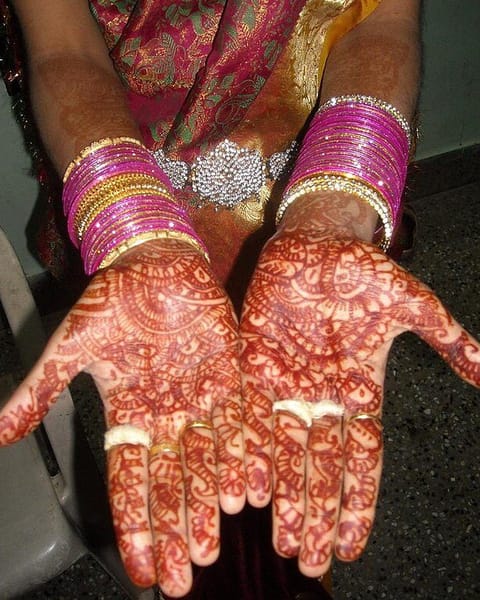
Painted nails are among the small joys of getting dressed, and many Muslim women hesitate before them because of prayer. Nail polish is halal. It is adornment, and adornment is a gift of Allah. The real question concerns wudu, and here the scholars give more than one answer, each with good evidence. This answer sets them out, then gives practical ways to wear polish and pray with a settled heart.
Is nail polish haram in Islam?
The Quran calls adornment a gift and invites the believers to wear it even in worship:
خُذُواْ زِينَتَكُمۡ عِندَ كُلِّ مَسۡجِدٖ
“Take your adornment to every place of prayer.”
Coloring the nails is an old Muslim custom. In al-Ṭabarī’s commentary on Quran 24:31, Ibn ʿAbbās (may Allah be pleased with him) counts the dye of the hand (khiḍāb al-kaff) among the adornment a woman may show, along with kohl and the ring. ʿAisha reported that when a woman handed the Prophet ﷺ a letter from behind a curtain, he remarked that a woman would have colored her nails, meaning with henna (Sunan Abi Dawud 4166, graded hasan by al-Albani and weak by others). Polish is the modern form of that adornment, and the same reasoning as for other cosmetics applies (Is makeup haram?).
Does nail polish affect wudu?
Polish does not make anyone impure, and it has no effect on a fast. The only question is whether water reaches the nail. Wudu asks the believer to wash the hands up to the elbows (Quran 5:6), and the nails are part of the hand. Ordinary polish dries into a film that water cannot pass through. For this reason the majority of scholars in the four Sunni schools and the Jaʿfari school hold that polish must be removed before wudu and before the major ritual bath (ghusl).
They cite the report of ʿUmar that a man made wudu and left a spot the size of a fingernail dry on his foot. The Prophet ﷺ saw it and told him, “Go back and do your wudu well” (Sahih Muslim 243). This is the careful view, and many women follow it, keeping a bottle of remover near the sink.
Is there a view that wudu is valid with nail polish?
Yes. The jurists discussed small things that keep water from the skin long before nail polish existed, and several excused them:
- Dirt under the nails. Hanafi authorities such as al-Shurunbulālī and Ibn ʿĀbidīn ruled that dirt under the nails does not spoil wudu. Among the Shāfiʿīs, al-Ghazālī, al-Juwaynī, and al-Qaffāl held that such dirt does not spoil the washing either.
- Stains with no body. The Hanafi jurists held that things with no perceptible body (jirm), such as ink or a dye stain on the skin, are no barrier at all, since water passes through them.
- Small barriers in general. Ibn Taymiyya (d. 1328) wrote in al-Fatāwā al-Kubrā that if a little dirt under the nail, or something like it, keeps water out, the purification is still valid.
Some contemporary teachers extend this reasoning to a thin coat of polish. The amount is small, it is fixed to the nail, and it covers the hard surface of the nail. Purification in Islam is a mercy, and the verse of wudu ends by saying so:
مَا يُرِيدُ ٱللَّهُ لِيَجۡعَلَ عَلَيۡكُم مِّنۡ حَرَجٖ
“Allah does not wish to lay any hardship on you.”
A woman who follows this view in good faith, after learning its evidence, may pray with a settled heart. One who prefers the majority view loses nothing by removing her polish. Both are within the tradition (ikhtilāf).
What about breathable polish?
Since the 2010s several brands have sold polishes marketed as water-permeable or “breathable.” Scholars who require water to reach the nail accept such a polish if water truly passes through it. Independent tests have reached different results, so check the product before relying on it.
How can I wear nail polish and still pray?
- Make wudu, then paint. Polish applied while you are in a state of wudu does not affect prayers made with that wudu. Many women paint their nails after ʿIshāʾ or after a fresh wudu and pray until it breaks.
- Use the days of your period. Women who do not pray during menstruation can wear polish freely, and remove it before the ghusl at the end. On what a woman may do in these days, see Can women read the Quran on their period?
- Choose henna or a stain. Henna and similar dyes leave color without a layer, so wudu is complete with them. Henna is also used for the hair, as explained in Is it haram to dye your hair?
- Follow the view you trust. If you hold the view that a thin layer is excused, pray in peace. If you follow the majority, remove and reapply as needed.
The full steps of wudu, and what breaks it, are in How to make wudu.
A closing word
Wudu is a gift before it is a rule. Each time you wash, Allah washes away more than you can see:
«مَنْ تَوَضَّأَ فَأَحْسَنَ الْوُضُوءَ خَرَجَتْ خَطَايَاهُ مِنْ جَسَدِهِ حَتَّى تَخْرُجَ مِنْ تَحْتِ أَظْفَارِهِ»
“Whoever makes wudu and does it well, his sins leave his body, even from beneath his nails.”
Paint your nails with gratitude, wash with care, and let both be ways of returning to the One who made you beautiful.
And Allah knows best. والله أعلم
Frequently asked questions
Can I pray with nail polish on?
Yes, if your wudu is sound. The simplest way is to make wudu first and then apply polish: your prayers remain valid for as long as that wudu lasts.
Can I wear nail polish on my period?
Yes. Many women enjoy polish during the days they do not pray. Most scholars ask that it be removed before the ghusl at the end of the period so water reaches the nails.
Is nail polish haram in Ramadan?
No. Nail polish has no effect on the fast. The only question it raises, in Ramadan as at any time, is the one about wudu.
Is nail polish haram for men?
Clear or strengthening polish is grooming and is fine for anyone. Colored polish for men falls under custom (ʿurf), which the scholars made the measure of what belongs to men's and women's adornment, and that custom differs from place to place.
Does henna affect wudu?
No. Henna leaves a stain with no layer on top of the nail, so water reaches it and wudu is complete. The scholars agree on this.
Related questions
Sources
- Ibn Taymiyya, al-Fatāwā al-Kubrā (on small barriers in purification)
- Ibn ʿĀbidīn, Radd al-Muḥtār (on dirt under the nails)
- Sahih Muslim 243 and 245
- Sunan Abi Dawud 4166
- al-Ṭabarī, Jāmiʿ al-Bayān, commentary on Quran 24:31
- Nizami, Nail Polish and Ablution: A Colourful Conversation
Image: Sistak, Henna on a Muslim bride's hands, Madurai, 2011. CC BY-SA 2.0, via Wikimedia Commons.. Image credits
