What is mahr (dowry) in Islam?
Question 1136
Question
What is the mahr in an Islamic marriage, who receives it, and how much should it be?
Summary of answer
Mahr is the marriage gift the groom gives the bride, commanded in the Quran as a free gift (4:4). It belongs to her alone: neither her father nor her husband may take it without her consent. The Quran sets no maximum (4:20), and the Prophet ﷺ urged ease, accepting a poor groom's teaching of the Quran as the mahr (Bukhari 5135). The dowry some cultures demand from a bride's family has no basis in Islam.
Answer
الحمد لله Praise be to Allah.
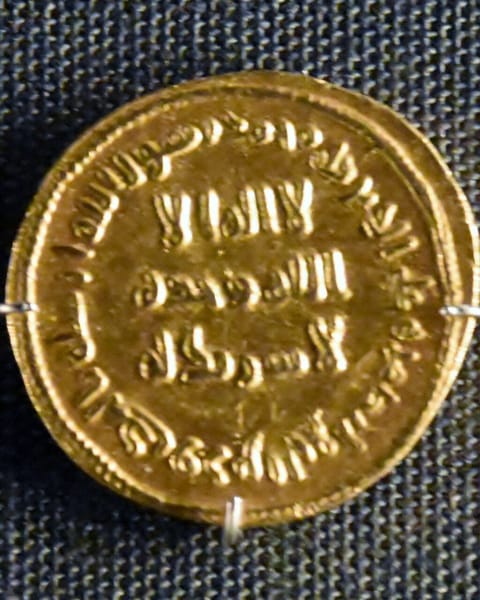
Every Islamic marriage includes a gift from the groom to the bride, called the mahr (مهر) or ṣadāq (صداق). The word ṣadāq comes from the same root as ṣidq, truthfulness: the gift is a sign of the sincerity of the one who offers it. Mahr is the bride’s own property, commanded by the Quran, with no upper limit, and the Prophet ﷺ taught that the best marriages are the easiest ones.
What does the Quran say about mahr?
The Quran commands it in Sūrat al-Nisāʾ:
وَءَاتُواْ ٱلنِّسَآءَ صَدُقَٰتِهِنَّ نِحۡلَةٗۚ فَإِن طِبۡنَ لَكُمۡ عَن شَيۡءٖ مِّنۡهُ نَفۡسٗا فَكُلُوهُ هَنِيٓـٔٗا مَّرِيٓـٔٗا
“Give women their bridal gifts as a free gift. If they are happy to give you any of it of their own accord, enjoy it with pleasure and ease.”
The word niḥla (نحلة) means a gift given freely, with nothing expected in return. The mahr is the husband’s gift to his wife and a sign of the solemn covenant they are entering. The amount is set by agreement. If none is named in the contract, the marriage is still valid and the wife is owed a mahr like that of women of her standing (mahr al-mithl).
Who does the mahr belong to?
The mahr belongs to the bride alone. The Quran addresses the gift to women themselves, and only she can choose to share it. Her father, brothers, and husband have no right to it, and a husband may never take it back. The Quran says that even if a husband had given his wife a qinṭār, a heap of gold, he must take back none of it (Quran 4:20).
She may keep it, spend it, invest it, or give it away. Since a husband is responsible for the household’s expenses, the mahr remains her own security and independence within the marriage.
How much should the mahr be?
The Quran sets no maximum, and the jurists agreed that a large mahr is lawful. A famous report tells that the caliph ʿUmar once proposed capping the mahr, and a woman in the mosque answered him with the verse of the qinṭār; he is said to have replied, “A woman is right and ʿUmar is wrong.” Hadith critics have questioned its chains, but its lesson rests on the verse itself.
The schools differed on a minimum. The Hanafis set it at ten silver dirhams and the Malikis at a quarter of a gold dinar. The Shafiʿis, Hanbalis, and the Jaʿfari (Shia) school set no minimum: anything of value the bride accepts is valid.
The Sunnah leans toward ease. The Prophet ﷺ said, “The best marriage is the easiest” (Sunan Abi Dawud 2117, graded sahih by al-Albani). When a poor man asked to marry a woman and had nothing but the cloth he wore, the Prophet ﷺ told him:
«الْتَمِسْ وَلَوْ خَاتَمًا مِنْ حَدِيدٍ»
“Look for something, even an iron ring.”
When he found nothing, the Prophet ﷺ asked what he knew of the Quran, and married them on the mahr of teaching it to her.
Other mahrs from the first community show the same range:
- The Prophet’s ﷺ wives received about five hundred silver dirhams each, according to Aisha (Sahih Muslim 1426).
- Fāṭima, the Prophet’s ﷺ daughter, received ʿAlī’s coat of armor (Sunan Abi Dawud 2125).
- Umm Sulaym told Abū Ṭalḥa that his acceptance of Islam would be her only mahr. The narrator Thābit said he never heard of a woman with a more honorable mahr (Sunan al-Nasāʾī 3341).
When is the mahr paid?
The couple may agree to pay the mahr all at once or in parts. The part paid at the wedding is called the prompt mahr (muʿajjal or muqaddam). The part postponed, often written in the contract as a larger sum, is the deferred mahr (muʾajjal or muʾakhkhar), which becomes due on divorce or on the husband’s death, as a debt on his estate. In South Asia the two are often spelled muajjal and muwajjal. Divorce itself is a lawful door when a marriage cannot continue (Is divorce haram in Islam?).
If a marriage ends before it is consummated, the wife receives half the agreed mahr (2:237). In a divorce she initiates through khulʿ, she usually returns the mahr (Can a Muslim woman divorce her husband?).
Is mahr the same as dowry?
No. The mahr goes from the groom to the bride. In parts of South Asia, a custom called dowry (jahez or dahej) runs in the opposite direction: the bride’s family is pressed to give money and goods to the groom and his family. This custom has no basis in the Quran or the Sunnah. It burdens poor families, delays marriages, and has led to abuse, which is why India outlawed demanding dowry in 1961. Gifts that parents give their own daughter freely, to help her set up her home, are a separate matter and a kindness.
Can the mahr be symbolic?
Yes. Many couples today choose a modest or symbolic mahr: a copy of the Quran, a ring, a book of poetry, a pilgrimage, a donation to a cause the bride loves, or a promise to teach her something of value. Others agree on a larger sum as financial security. Both follow the Sunnah, so long as the bride agrees freely, as she must agree to the marriage itself (Is forced marriage allowed in Islam?), and the gift is truly hers. Some couples also exchange gifts with each other, so that the covenant is honored on both sides. The nikah itself is described in What happens at a Muslim wedding?, and a woman’s own right to contract it in Can a Muslim woman marry without a wali?
A closing word
The Quran calls marriage a weighty covenant:
وَأَخَذۡنَ مِنكُم مِّيثَٰقًا غَلِيظٗا
“And they have taken from you a solemn covenant.”
The mahr is the first gift of that covenant. May Allah bless every couple with a marriage whose beginning is generous and whose life together is full of mercy.
And Allah knows best. والله أعلم
Frequently asked questions
What happens to the mahr after divorce?
If the marriage was consummated, the whole mahr is hers, and any deferred part becomes due. If divorce comes before consummation, she receives half (2:237). In khulʿ, a wife usually returns the mahr or an agreed amount to end the marriage.
Can the bride choose her own mahr?
Yes. The mahr is her right, so she names it or agrees to it freely. Her family may advise, but they cannot impose an amount against her wishes or keep it for themselves.
What is the minimum mahr in Hanafi fiqh?
The Hanafi school set the minimum at ten silver dirhams, and the Maliki school at a quarter of a gold dinar. The Shafiʿi, Hanbali, and Jaʿfari schools set no minimum: anything of value that the bride accepts is valid.
Is the mahr paid to the wife or her father?
To the wife. The Quran addresses the gift to women themselves, and it is her property to keep, spend, or give as she wishes.
Related questions
Sources
- Sahih al-Bukhari 5135
- Sahih Muslim 1426
- Sunan al-Nasāʾī 3341; Sunan Abi Dawud 2125, 2117
- Ibn Rushd, Bidāyat al-Mujtahid, Book of Marriage (on the amount of the ṣadāq)
- India, Dowry Prohibition Act, 1961
Image: Richard Mortel, Gold dinar of ʿAbd al-Malik ibn Marwan, dated AH 78 (697–698), 2017. David Collection, Copenhagen. CC BY 2.0, via Wikimedia Commons.. Image credits
,_The_David_Collection,_Copenhagen_(36240895662).jpg)