Can zakat be given to non-Muslims?
Question 1211
Question
Is it permissible to give zakat, or other charity, to people in need who are not Muslim?
Summary of answer
The scholars differed. Many limited the yearly zakat on wealth to Muslims, but the Quran's list of recipients (9:60) never names a religion, and it includes "those whose hearts are to be won," a share the Prophet ﷺ gave to men who were not yet Muslim. Umar is reported to have read "the needy" in the same verse to include a poor Jewish man. Voluntary charity (ṣadaqa) may go to anyone in need, by agreement of the scholars.
Answer
الحمد لله Praise be to Allah.
Zakat (زكاة) is the yearly alms that Allah made a right of the poor in the wealth of those who have more than they need. Muslims who pay it often ask whether it may reach a neighbor, a coworker, or a refugee family who is not Muslim. The scholars differed (ikhtalafa al-ʿulamāʾ) on this. The stronger view is that zakat may reach non-Muslims in need through the categories the Quran itself names, and voluntary charity may go to anyone. The verse that sets out who receives zakat does not mention religion at all:
۞إِنَّمَا ٱلصَّدَقَٰتُ لِلۡفُقَرَآءِ وَٱلۡمَسَٰكِينِ وَٱلۡعَٰمِلِينَ عَلَيۡهَا وَٱلۡمُؤَلَّفَةِ قُلُوبُهُمۡ وَفِي ٱلرِّقَابِ وَٱلۡغَٰرِمِينَ وَفِي سَبِيلِ ٱللَّهِ وَٱبۡنِ ٱلسَّبِيلِۖ فَرِيضَةٗ مِّنَ ٱللَّهِۗ وَٱللَّهُ عَلِيمٌ حَكِيمٞ
“The alms are for the poor, the needy, those who work to collect them, those whose hearts are to be won, freeing those in bondage, those in debt, the cause of Allah, and the stranded traveler: a duty from Allah. Allah is All-Knowing, All-Wise.”
What did most scholars say?
Many jurists of the four Sunni schools held that the zakat on wealth (zakāt al-māl) goes to Muslims, with one clear exception. Their main evidence is the instruction the Prophet ﷺ gave Muʿādh ibn Jabal when he sent him to Yemen: tell the people that Allah has made alms due on their wealth, “taken from their rich and returned to their poor” (Sahih al-Bukhari 1395). They read “their poor” as the poor of the Muslims who pay it, so that zakat circulates within the community that owes it.
This is a serious view, and a Muslim who follows it acts well. The same jurists agreed that voluntary charity (ṣadaqa) may be given to anyone at all, and that a Muslim’s generosity should never stop at the edge of their own faith.
Who are “those whose hearts are to be won”?
The exception is written into the verse. Al-muʾallafa qulūbuhum, “those whose hearts are to be brought together,” are people whose goodwill toward Muslims is sought, and in the Prophet’s lifetime many of them were not Muslim. After the battle of Ḥunayn he gave Ṣafwān ibn Umayya, who had not yet accepted Islam, a hundred camels, then a hundred more, then a hundred more. Ṣafwān later said:
«وَاللَّهِ لَقَدْ أَعْطَانِي رَسُولُ اللَّهِ صلى الله عليه وسلم مَا أَعْطَانِي وَإِنَّهُ لأَبْغَضُ النَّاسِ إِلَىَّ فَمَا بَرِحَ يُعْطِينِي حَتَّى إِنَّهُ لأَحَبُّ النَّاسِ إِلَىَّ»
“By Allah, the Messenger of Allah gave me what he gave me when he was the most hateful of people to me, and he kept on giving to me until he became the most beloved of people to me.”
Some jurists, the Hanafis chief among them, held that this share lapsed once Islam was secure, since Umar stopped paying it once the community was strong. Others held that it remains wherever it serves the community. The stronger view is that it remains. Muslims living as minorities, or as neighbors in diverse cities, have every reason to win hearts with the open hand the Prophet ﷺ showed Ṣafwān.
Did Umar give zakat to a non-Muslim?
The judge Abu Yusuf (d. 798), the student of Abu Hanifa, records in his Kitāb al-Kharāj that Umar ibn al-Khaṭṭāb once saw an old blind man begging at a door. He learned that the man was Jewish and that age, need, and the poll tax had brought him to beg. Umar took him by the hand to his own house and gave him something, then sent word to the keeper of the treasury: look after this man and those like him, for it is not justice to take from a man in his youth and abandon him in his old age. He recited “the alms are for the poor and the needy,” and said that the poor are the Muslims and this man is one of the needy among the People of the Book. Then he lifted the tax from him and from others like him.
In this report the second caliph read the word “needy” (al-masākīn) in 9:60 to include a poor man of another faith. The sharia’s alms were meant to keep anyone in a Muslim society from destitution, as What is sharia? and What does Islam say about poverty? explain.
Can sadaqa be given to non-Muslims?
Yes, by agreement of the scholars. The Quran praises the righteous who “feed the needy, the orphan, and the captive, for the love of Him” (76:8), and the captives of that time were not Muslim. It places no limit on kindness toward people of other faiths who live in peace:
لَّا يَنۡهَىٰكُمُ ٱللَّهُ عَنِ ٱلَّذِينَ لَمۡ يُقَٰتِلُوكُمۡ فِي ٱلدِّينِ وَلَمۡ يُخۡرِجُوكُم مِّن دِيَٰرِكُمۡ أَن تَبَرُّوهُمۡ وَتُقۡسِطُوٓاْ إِلَيۡهِمۡۚ إِنَّ ٱللَّهَ يُحِبُّ ٱلۡمُقۡسِطِينَ
“Allah does not forbid you from being good and just to those who have not fought you over religion or driven you from your homes. Allah loves the just.”
The Prophet ﷺ taught that “in every living, breathing creature there is a reward” (Sahih al-Bukhari 2363), in a hadith about a man forgiven for giving water to a thirsty dog. If a dog’s thirst is a door to Allah’s forgiveness, a hungry human being of any faith is a wider one. More on these friendships in Can Muslims be friends with non-Muslims?
How should I give my zakat?
- Give to those in need around you. The poor and the needy come first in the verse, and your own city is the first place to look.
- Count non-Muslims in need under the Quran’s categories when your giving wins hearts and relieves hardship: a refugee family, a disaster appeal, a neighbor in debt.
- Give your other charity without borders. Food banks, hospitals, and shelters for everyone are a sadaqa that continues.
- If you are unsure, divide. Give your zakat to Muslims in need and add generous sadaqa for others. The rules of calculation are in How does zakat work?
A closing word
The Quran reminds the believers that guiding people is Allah’s work, and that whatever they spend in good comes back to them:
وَمَا تُنفِقُواْ مِنۡ خَيۡرٖ يُوَفَّ إِلَيۡكُمۡ وَأَنتُمۡ لَا تُظۡلَمُونَ
“Whatever good you spend will be repaid to you in full, and you will not be wronged.”
May Allah make our wealth a mercy for everyone it reaches.
And Allah knows best. والله أعلم
Frequently asked questions
Can sadaqa be given to non-Muslims?
Yes. Voluntary charity may be given to anyone in need, Muslim or not, and the Quran praises those who feed the needy, the orphan, and the captive for the love of Allah (76:8).
Can zakat al-fitr be given to non-Muslims?
Most jurists direct zakat al-fitr to poor Muslims so that every Muslim household can celebrate Eid. Where Muslim families in need are already provided for, giving to needy neighbors of other faiths is a recognized view and a beautiful practice.
Can I give zakat to my non-Muslim relatives?
You may give them voluntary charity freely, and the Prophet ﷺ told Asmāʾ to keep the bond with her mother, who was not Muslim (Sahih al-Bukhari 2620). For zakat itself, the same rules apply as to any recipient: not to those you are already obliged to support, such as your parents or children.
Does zakat given to a non-Muslim count?
When it is given under one of the eight categories of 9:60, such as winning hearts or relieving the needy as Umar did, the stronger view is that it counts as zakat. If you are unsure, give your zakat to Muslims in need and give non-Muslims generously from your other charity.
Related questions
Sources
- Abu Yusuf, Kitāb al-Kharāj (Umar and the elderly Jewish man)
- Abu ʿUbayd al-Qasim ibn Sallam, Kitāb al-Amwāl
- Sahih al-Bukhari 1395 (Muʿādh sent to Yemen)
- Sahih Muslim 2313 (the Prophet's gifts to Ṣafwān ibn Umayya)
- Sahih al-Bukhari 2363 (a reward for every living being)
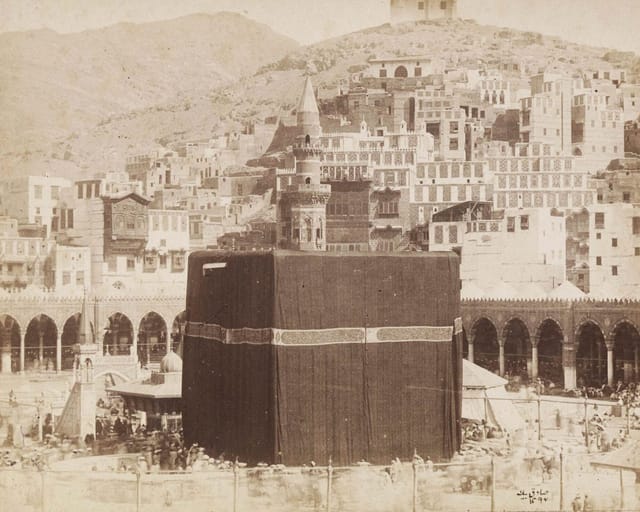
Image: Muhammad Sadiq Bey, The Kaaba, 1880. Khalili Collections (ARC.pp 211.4). Public domain, via Wikimedia Commons.. Image credits
