Can non-Muslims go to Mecca?
Question 1210
Question
Are non-Muslims allowed to visit Mecca or enter the Sacred Mosque, and what does Islamic law say about it?
Summary of answer
Saudi law today does not allow non-Muslims to enter Mecca, and visitors must respect it. The Islamic ruling is wider than the law. Quran 9:28 barred the idolaters of Arabia from the Sacred Mosque after the year 9 AH, when the pilgrimage was cleansed of pagan rites. The Hanafi school held that Jews and Christians may enter it, the Prophet ﷺ hosted non-Muslims in his own mosque, and the Quran calls the Kaʿba a house set up for all people (3:96).
Answer
الحمد لله Praise be to Allah.
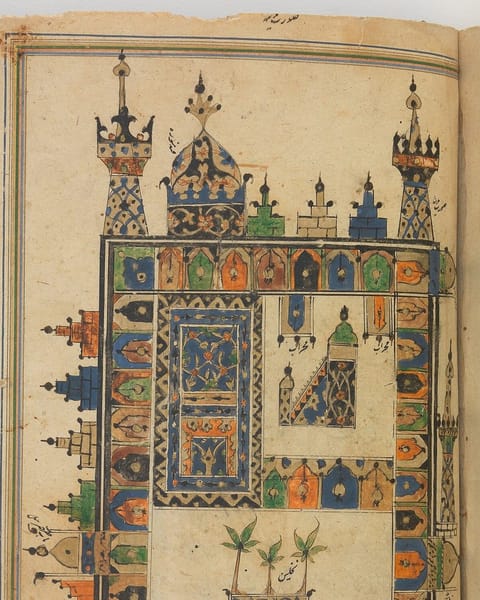
Non-Muslims cannot go to Mecca today, because Saudi law does not allow it. Checkpoints on the highways into the city turn back travelers who are not Muslim, and pilgrims applying for Hajj or Umrah visas must be Muslim. Every visitor should respect that law. The Islamic ruling behind it is a question on which the scholars differed (ikhtilāf), and the tradition is wider than the modern rule. The Quran calls the Kaʿba a house set up for all humanity:
إِنَّ أَوَّلَ بَيۡتٖ وُضِعَ لِلنَّاسِ لَلَّذِي بِبَكَّةَ مُبَارَكٗا وَهُدٗى لِّلۡعَٰلَمِينَ
“The first house set up for people is the one at Bakka, blessed, and a guidance for all the worlds.”
Why can’t non-Muslims enter Mecca?
The ban rests on one verse of Sūrat al-Tawba, revealed in the ninth year after the Hijra: “The idolaters are impure, so let them not come near the Sacred Mosque after this year of theirs” (Quran 9:28). Mecca had come under Muslim rule a year earlier, but the old pilgrimage of the Arabian tribes still went on around the Kaʿba, with its idols and its rites, and some pilgrims circled the House naked. That year Abu Bakr led the pilgrimage and sent heralds to announce the new rule in Mina, and the Prophet ﷺ sent ʿAlī to join them. Abu Hurayra (may Allah be pleased with him) was one of the heralds:
«أَنْ لاَ يَحُجَّ بَعْدَ الْعَامِ مُشْرِكٌ، وَلاَ يَطُوفَ بِالْبَيْتِ عُرْيَانٌ»
“That after this year no idolater shall make the pilgrimage, and no one shall circle the House naked.”
Read with this report, the verse speaks to a particular people, the idolaters of Arabia who were at war with the Muslims, and a particular practice, the pagan pilgrimage. It restored the House of Abraham to the worship of the One God.
Most jurists understood the word najas, “impure,” in the verse as the impurity of idolatrous belief, and not of the human body. The Quran itself allows Muslims to eat the food of the People of the Book and to marry from among them (Quran 5:5), which would make no sense if their bodies were unclean.
What did the classical schools say?
The schools differed on who the verse covers and how far the ban reaches.
- The Hanafi school, following Abu Hanifa (d. 767), held that the verse concerns the idolaters’ pilgrimage and their control of the sanctuary. On this view Jews, Christians, and other protected non-Muslims (ahl al-dhimma) may enter the Sacred Mosque itself, as they may enter any mosque. The Hanafi jurist al-Jaṣṣāṣ (d. 981) set out this reading in his Aḥkām al-Qurʾān.
- The Shafiʿi and Hanbali schools held that no non-Muslim may enter the sacred precinct (ḥaram) of Mecca, while allowing them into other mosques with permission.
- The Maliki school went further and kept non-Muslims out of every mosque.
The modern Saudi rule follows the stricter view and applies the ban to the whole city.
Did the Prophet ﷺ let non-Muslims into mosques?
He did, in Medina. When Thumāma ibn Uthāl, a chief of Banū Ḥanīfa, was brought in as a captive, he was kept inside the Prophet’s mosque for three days. Then the Prophet ﷺ set him free, and Thumāma bathed, came back into the mosque, and accepted Islam (Sahih al-Bukhari 4372). Delegations of Christians and of Arab tribes came to the Prophet ﷺ in Medina, and he received them with courtesy. His mosque was a place where people who did not share his faith could see it lived. Today mosques around the world hold open days for the same reason, as Can non-Muslims enter a mosque? explains.
What is the stronger view?
The view that best fits the Quran and the Sunnah is the Hanafi one. The Kaʿba was raised by Abraham (peace be upon him), the father of the prophets honored by Jews, Christians, and Muslims alike, and the Quran describes it as a sanctuary for humanity:
وَإِذۡ جَعَلۡنَا ٱلۡبَيۡتَ مَثَابَةٗ لِّلنَّاسِ وَأَمۡنٗا
“And remember when We made the House a place of return for people, and a place of safety.”
Quran 9:28 protected the House from the idolatrous rites of a people at war. It did not declare every person of another faith unclean, and it says nothing about a respectful guest who comes to see the place toward which Muslims turn in prayer. The Quran describes the People of the Book with respect and says that the good the righteous among them do will never be denied them (3:113–115; see What does the Quran say about Christians and Jews?).
At the same time, the law of the land binds its guests. A Muslim who holds the Hanafi view still respects Saudi rules, and a non-Muslim should never try to enter Mecca in disguise. A sanctuary’s dignity is kept by those who honor its keepers.
What about Medina?
Medina, the city of the Prophet ﷺ, has always been treated differently. The Quranic verse names only the Sacred Mosque of Mecca, and the Prophet ﷺ received visitors of every faith there. Non-Muslim visitors may enter Medina today, and the area immediately around the Prophet’s Mosque is reserved for Muslims.
A closing word
Many non-Muslims who ask this question have a Muslim friend, spouse, or parent who has made the pilgrimage, and they want to share what it meant. They can share it in other ways: by listening, by looking at photographs and videos of the Kaʿba, by visiting a local mosque, by the ordinary friendship the Quran encourages (Can Muslims be friends with non-Muslims?), and by joining a family’s Eid when the pilgrims come home. The House was built for the worship of the One God, and the Quran says of Him: “To Allah belong the east and the west; wherever you turn, there is the face of Allah” (2:115).
And Allah knows best. والله أعلم
Frequently asked questions
Can non-Muslims visit Medina?
Medina has never been treated the same way as Mecca. The Prophet ﷺ received non-Muslim visitors and delegations in Medina and even in his mosque, and visitors who are not Muslim may enter the city today, while the area around the Prophet's Mosque is reserved for Muslims.
What happens if a non-Muslim enters Mecca?
Saudi authorities enforce the ban, and a non-Muslim found in the city can face penalties and removal. No one should enter in disguise or with false papers: the rule of the host country binds its guests.
Is the ban on non-Muslims in Mecca in the Quran?
The Quran barred the idolaters of Arabia from the Sacred Mosque after the year 9 AH (9:28). Whether the ban also covers Jews, Christians, and others, and the whole city, is a question on which the schools of law differed.
Does Quran 9:28 mean non-Muslims are dirty?
No. Most jurists read the word najas in the verse as the impurity of idolatrous belief and practice, since the Quran allows Muslims to eat the food of the People of the Book and marry from among them (5:5).
Related questions
Sources
- Sahih al-Bukhari 369 (no idolater shall make the pilgrimage after this year)
- Sahih al-Bukhari 462, 4372 (Thumama in the Prophet's mosque)
- Abu Bakr al-Jaṣṣāṣ, Aḥkām al-Qurʾān, on Sūrat al-Tawba 9:28
- al-Kāsānī, Badāʾiʿ al-Ṣanāʾiʿ (Hanafi rulings on non-Muslims in mosques)
Image: Unknown painter, The Great Mosque of Mecca, from the Futuh al-Haramayn of Muhyi al-Din Lari, 16th century. Metropolitan Museum of Art, New York. CC0, via Wikimedia Commons.. Image credits
_MET_DP231710.jpg)