Can non-Muslims enter a mosque?
Question 1247
Question
Are non-Muslims allowed to enter a mosque, attend prayers or events there, and what should a visitor know?
Summary of answer
Non-Muslims may enter mosques, and most mosques welcome them gladly. The Prophet ﷺ kept Thumāma ibn Uthāl, a non-Muslim chief, in his mosque for three days, and received delegations of other faiths in Medina. The Hanafi school allows non-Muslims into any mosque, the Shafiʿi and Hanbali schools allow it outside the sanctuary of Mecca, and mosques around the world hold open days. Visitors remove their shoes, dress modestly, and are invited to ask questions.
Answer
الحمد لله Praise be to Allah.
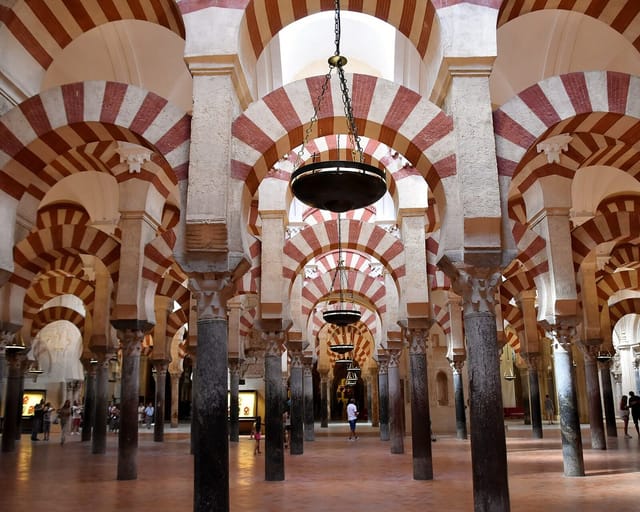
Non-Muslims can enter a mosque, and most mosques are delighted when they do. Neighbors come for an open day, students on a school trip, colleagues to share an iftar, tourists to admire the great mosques of Istanbul or Cairo, and friends to see where a Muslim friend prays. The Prophet ﷺ himself kept non-Muslim guests in his mosque in Medina. The Hanafi school allows non-Muslims into any mosque, and the stronger view (al-rājiḥ) is that every mosque may open its doors to visitors of any faith, with the one exception of the sanctuary of Mecca, which Saudi law closes to them.
Did the Prophet ﷺ let non-Muslims into his mosque?
He did. Horsemen of the Muslims brought in a chief of the tribe of Banū Ḥanīfa named Thumāma ibn Uthāl, and he was kept in the Prophet’s own mosque:
فَرَبَطُوهُ بِسَارِيَةٍ مِنْ سَوَارِي الْمَسْجِدِ
“They tied him to one of the pillars of the mosque.”
For three days Thumāma watched the life of the mosque, the prayers and the gatherings, and each day the Prophet ﷺ came to speak with him. On the third day he set him free. Thumāma went to a palm grove nearby, bathed, came back into the mosque, and declared his faith. He told the Prophet ﷺ that no face on earth had been more hateful to him, and now no face was more beloved (Sahih al-Bukhari 4372). The mosque had opened his heart.
Other delegations came too. A report in Sunan Abi Dawud says the Prophet ﷺ lodged the delegation of Thaqīf, who had not yet accepted Islam, in the mosque “so that their hearts would soften” (Sunan Abi Dawud 3026); al-Albani graded its chain weak. The early biographer Ibn Isḥāq reports that a Christian delegation from Najran prayed in the Prophet’s mosque, and Ibn Qayyim al-Jawziyya drew from it that the People of the Book may enter mosques. Its chain is also weak, and its spirit matches the authentic report of Thumāma.
The Quran itself commands Muslims to give safe conduct to anyone who wishes to hear the word of Allah:
وَإِنۡ أَحَدٞ مِّنَ ٱلۡمُشۡرِكِينَ ٱسۡتَجَارَكَ فَأَجِرۡهُ حَتَّىٰ يَسۡمَعَ كَلَٰمَ ٱللَّهِ ثُمَّ أَبۡلِغۡهُ مَأۡمَنَهُۥ
“If any of the idolaters seeks your protection, grant it, so that he may hear the word of Allah, then escort him to his place of safety.”
What do the schools of law say?
- The Hanafi school allows non-Muslims to enter any mosque, reading the ban in Quran 9:28 as concerning the idolaters’ pilgrimage at the Sacred Mosque of Mecca.
- The Shafiʿi and Hanbali schools allow non-Muslims into mosques with the permission of Muslims, excepting the sanctuary (ḥaram) of Mecca.
- The Maliki school held a stricter view and kept non-Muslims out of mosques.
The Sunnah of Thumāma supports the Hanafi view, and so does the purpose of a mosque as a house where Allah’s name is remembered and His message heard. The ruling on Mecca is explained in Can non-Muslims go to Mecca?, and the mirror question, Muslims in churches, in Can Muslims go to church?
Do mosques today welcome visitors?
Very many do. In the United Kingdom, the Muslim Council of Britain first organized Visit My Mosque day in 2015 with about twenty mosques, and by February 2018 more than 200 mosques were opening their doors on the same weekend. Mosques in many countries hold similar open days, interfaith iftars in Ramadan, and guided tours, and the great historic mosques from Istanbul to Abu Dhabi receive visitors of every faith outside prayer times. Some communities go further and make inclusion part of their founding vision (Are there LGBTQ-friendly and inclusive mosques?).
What is the etiquette for visiting a mosque?
- Take off your shoes before stepping onto the prayer carpet; there are racks by the door.
- Dress modestly: long sleeves and trousers or a long skirt. Many mosques ask women to cover their hair in the prayer hall and lend scarves at the entrance.
- No wudu is needed for a visitor. You may sit and watch the prayer, but avoid walking directly in front of someone who is praying.
- Ask before taking photographs, especially of people.
- Ask questions. Imams and volunteers love to explain the prayer, the direction of Mecca, and the calligraphy. If you would like to understand the movements, see How to pray in Islam.
A closing word
The Quran describes the mosques as houses Allah has allowed to be raised:
فِي بُيُوتٍ أَذِنَ ٱللَّهُ أَن تُرۡفَعَ وَيُذۡكَرَ فِيهَا ٱسۡمُهُۥ يُسَبِّحُ لَهُۥ فِيهَا بِٱلۡغُدُوِّ وَٱلۡأٓصَالِ
“In houses that Allah has allowed to be raised, where His name is remembered, He is glorified there morning and evening.”
A house where Allah is remembered is a house where guests are honored. If you are a Muslim, invite a neighbor to your mosque this year. If you are a visitor, you will find a cup of tea, a warm welcome, and people glad to see you.
And Allah knows best. والله أعلم
Frequently asked questions
Do non-Muslim women have to cover their hair in a mosque?
Many mosques ask women visitors to cover their hair in the prayer hall as a courtesy, and some lend scarves at the door. Customs differ, so check with the mosque, and dress modestly in any case.
Can non-Muslims attend Friday prayer?
Yes. A visitor may take a place at the back or the side, listen to the sermon (khuṭba), and watch the prayer. Friday is busy, so a calmer time or an open day is better for a first visit with questions.
Do non-Muslims need to do wudu before entering a mosque?
No. Wudu is the Muslim's preparation for prayer. A visitor who does not join the prayer needs only to remove their shoes.
Can non-Muslims enter the mosques of Mecca and Medina?
Saudi law keeps non-Muslims out of Mecca, and the area around the Prophet's Mosque in Medina is reserved for Muslims. The question is discussed in the answer on Mecca.
Related questions
Sources
- Sahih al-Bukhari 462 and 4372 (Thumāma ibn Uthāl in the Prophet's mosque)
- Sunan Abi Dawud 3026 (the delegation of Thaqīf lodged in the mosque), graded weak by al-Albani
- Abu Bakr al-Jaṣṣāṣ, Aḥkām al-Qurʾān, on Sūrat al-Tawba 9:28
- Ibn Qayyim al-Jawziyya, Zād al-Maʿād, on the delegation of Najran
- Muslim Council of Britain, Visit My Mosque day (since 2015)
Image: Richard Mortel, The prayer hall of the Great Mosque of Córdoba, 2016. CC BY 2.0, via Wikimedia Commons.. Image credits
_(29721130342).jpg)