Is food cooked with wine or vanilla extract halal?
Question 1236
Question
Is it permissible to eat food cooked with wine, desserts made with vanilla extract, or dishes made with wine vinegar, given that alcohol is haram?
Summary of answer
Food is halal when it cannot intoxicate. Vanilla extract in baking, flavorings with traces of alcohol, and wine vinegar are halal, and the Prophet ﷺ praised vinegar as an excellent relish (Muslim 2051a). Dishes cooked with wine are halal on the stronger view, because a stew or sauce cannot intoxicate and many jurists held alcohol to be ritually pure. A stricter view avoids any dish made with wine, and desserts soaked in raw spirits are best avoided.
Answer
الحمد لله Praise be to Allah.
Many recipes call for a splash of wine, a spoonful of vanilla extract, or a dressing of red wine vinegar, and Muslims eating out or cooking at home want to know where the line falls. Is food cooked with alcohol halal? The answer turns on the reason alcohol is forbidden: it intoxicates. Vanilla extract in baking, flavorings with traces of alcohol, and every kind of wine vinegar are halal. Dishes cooked with wine are halal on the stronger view when the food cannot intoxicate, and the scholars who take a stricter line deserve a fair hearing too.
Why does intoxication decide the ruling?
The Quran forbids khamr because it clouds the mind and turns people from the remembrance of Allah and from prayer (5:90–91). The Prophet ﷺ gave the measure for what is forbidden:
«مَا أَسْكَرَ كَثِيرُهُ فَقَلِيلُهُ حَرَامٌ»
“Whatever intoxicates in a large amount, a small amount of it is forbidden.”
Sunan Abi Dawud 3681, graded hasan sahih by al-Albani
A glass of wine is haram, because a bottle of it makes a person drunk. A plate of beef stew is a different thing. No one can become intoxicated from eating it, however much they eat. The question for food is whether the dish itself can intoxicate, and whether anything impure remains in it. The ruling on drinking alcohol is explained in Is alcohol haram?
Does cooking burn off the alcohol?
Only partly. Measurements published by the U.S. Department of Agriculture found that a dish simmered for an hour keeps about a quarter of the alcohol added to it, and one simmered for two and a half hours about a twentieth, while flaming or adding wine at the end of cooking leaves much more. Since the alcohol was a small part of the dish to begin with, what reaches a person’s plate after long cooking is a trace, and the dish cannot intoxicate.
What do the scholars say about cooking with wine?
The scholars differed (ikhtalafa al-ʿulamāʾ). The stricter view holds that wine is khamr in itself and that adding it to food is making use of something forbidden. Those who hold it point to the hadith in which the Prophet ﷺ was asked about turning wine into vinegar and said no (Sahih Muslim 1983), and they advise Muslims to avoid any dish made with wine.
The stronger view (al-rājiḥ) permits a dish in which the wine has been cooked in and cannot intoxicate, for three reasons. First, the prohibition is tied to intoxication, and the dish does not intoxicate. Second, a number of early jurists, among them Rabīʿa al-Raʾy, al-Layth ibn Saʿd, and al-Muzanī, held that alcohol is not ritually impure, so a trace of it does not make food impure. Third, the Hanafi and Maliki schools, with Ibn Hazm and Ibn Taymiyya, held that a substance transformed in its nature (istiḥāla) takes a new ruling, and the Hanafi jurists added that a small quantity fully absorbed into a larger lawful one (istihlāk) loses its own ruling. The same principles underlie the rulings on gelatin and on wine vinegar.
In practice: when you cook at home, it is easy to use stock, grape juice, or a little vinegar instead of wine. When a long-cooked dish made with wine is served by a friend or at a restaurant, it is halal on the stronger view, and choosing to avoid it out of personal caution (waraʿ) is also good. The Quran made the food of Christians and Jews lawful for Muslims (5:5), and sharing their table is part of that kindness (Can Muslims eat kosher or non-halal-certified meat?).
Is vanilla extract halal?
Pure vanilla extract is made by steeping vanilla beans in alcohol and water, because alcohol draws out the flavor. The alcohol is a solvent, usually produced industrially and not as a drink. A teaspoon of it in a cake batter cannot intoxicate anyone, and much of it evaporates in the oven. Malaysia’s national fatwa committee ruled in 1984 that alcohol produced outside the making of alcoholic drinks is not impure, and that natural traces of alcohol in food are permitted. Vanilla extract, and flavorings carried in alcohol, are halal. Natural fermentation also leaves traces of alcohol in soy sauce, ripe fruit, and fresh bread, and these too are halal (Is non-alcoholic beer halal?).
Is wine vinegar halal?
Yes. Wine that turns into vinegar becomes a new substance, and the jurists agree that it is lawful. The Prophet ﷺ loved vinegar:
«نِعْمَ الأُدُمُ - أَوِ الإِدَامُ - الْخَلُّ»
“What an excellent relish vinegar is.”
The schools debated whether a Muslim may deliberately turn wine into vinegar. The Hanafis permitted it, while the Shafiʿi and Hanbali schools held that only wine which turns into vinegar by itself becomes lawful. On every view, vinegar bought from a shop, whether balsamic, red wine, or white wine vinegar, is halal to eat.
What about desserts with rum or liqueur?
Desserts such as rum cake, tiramisu soaked in Marsala, sauces finished with brandy, and fruit steeped in liqueur are a different case. The alcohol is added raw or barely heated, it can be strong enough to taste and feel, and it remains in the food. These are best avoided, and most bakeries will happily make an alcohol-free version.
Eating with gratitude
The Quran invites every person to the good things of the earth:
يَـٰٓأَيُّهَا ٱلنَّاسُ كُلُواْ مِمَّا فِي ٱلۡأَرۡضِ حَلَٰلٗا طَيِّبٗا
“People, eat of what is on the earth, lawful and good.”
The sharia’s wisdom is to keep the mind clear and the heart grateful, and to keep Muslims at the tables of their neighbors in friendship (Can Muslims be friends with non-Muslims?). May Allah bless our food, make it lawful and good for us, and make every meal a reason to remember Him.
And Allah knows best. والله أعلم
Frequently asked questions
Is vanilla extract halal?
Yes, on the view of most contemporary scholars and councils. The alcohol in vanilla extract is a solvent used to draw out flavor, a teaspoon in a cake cannot intoxicate anyone, and much of it evaporates in baking. Alcohol-free vanilla and vanilla powder are available for those who prefer them.
Is balsamic or red wine vinegar halal?
Yes. Wine that has turned into vinegar has become a new substance, and the Prophet ﷺ praised vinegar as an excellent relish (Sahih Muslim 2051a). Balsamic, red wine, and white wine vinegars are all halal.
Does alcohol burn off completely when cooking?
No. Long simmering removes most of it, while quick cooking or flaming leaves much more. The ruling rests on whether the food can intoxicate, which a long-cooked dish cannot.
Is tiramisu halal?
Tiramisu made with coffee alone is halal. Versions soaked in Marsala, rum, or liqueur carry raw alcohol that was never cooked, so it is best to ask and choose an alcohol-free version.
Related questions
Sources
- Sahih Muslim 1983, 2051a; Sunan Abi Dawud 3681
- Fatwa Committee of the National Council for Islamic Religious Affairs Malaysia, 7th Muzakarah (April 1984), on alcohol
- al-Mawsūʿa al-Fiqhiyya al-Kuwaytiyya, entries on istiḥāla and the purity of khamr
- Ibn ʿĀbidīn, Radd al-Muḥtār, Bāb al-Anjās (Hanafi rulings on transformation)
- U.S. Department of Agriculture, USDA Table of Nutrient Retention Factors, Release 6 (2007)
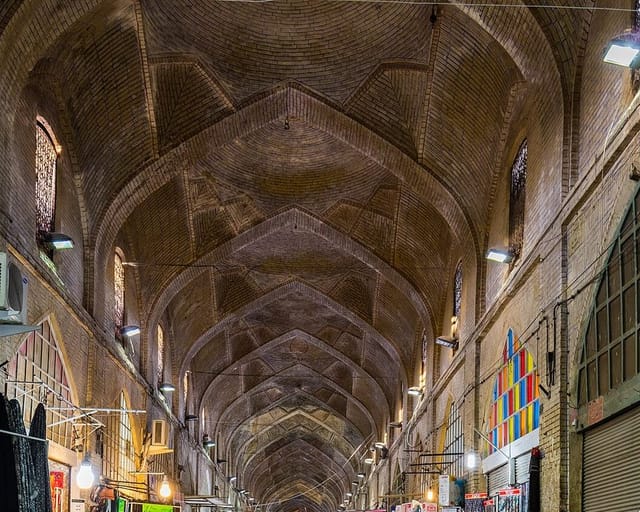
Image: Diego Delso, The Vakil Bazaar, Shiraz, 2016. CC BY-SA 4.0, via Wikimedia Commons.. Image credits
