Can Muslims drink coffee and caffeine?
Question 1234
Question
Is it permissible for Muslims to drink coffee, tea, energy drinks, and other drinks with caffeine?
Summary of answer
Coffee and other caffeinated drinks are halal. They do not intoxicate, and what Allah created for people is permitted unless a text forbids it (2:29, 7:32). Coffee spread through the Muslim world from the Sufis of Yemen, who drank it to stay awake for night prayer, and an early ban in Mecca did not last. Energy drinks are halal as well; the only limit is the harm of excess (7:31).
Answer
الحمد لله Praise be to Allah.
Can Muslims drink coffee? Yes. Coffee, tea, and other caffeinated drinks are halal, and Muslims have been brewing coffee for over five centuries. Caffeine sharpens the mind and does not cloud it, so it falls outside the prohibition of intoxicants. The cup of coffee shared after prayer, at a wedding, or at a house of mourning belongs to the hospitality of the Muslim world from Yemen to Istanbul.
Is coffee halal in Islam?
The basic rule of Islamic law is that whatever Allah created for people is permitted until a clear text forbids it. “He is the One who created for you all that is on the earth” (Quran 2:29). The Quran rebukes those who forbid the good things Allah has given:
قُلۡ مَنۡ حَرَّمَ زِينَةَ ٱللَّهِ ٱلَّتِيٓ أَخۡرَجَ لِعِبَادِهِۦ وَٱلطَّيِّبَٰتِ مِنَ ٱلرِّزۡقِ
“Say: Who has forbidden the beauty Allah has brought forth for His servants, and the good things of provision?”
The Prophet ﷺ taught that Allah’s silence on a matter is itself a mercy:
«وَسَكَتَ عَنْ أَشْيَاءَ رَحْمَةً لَكُمْ غَيْرَ نِسْيَانٍ فَلَا تَبْحَثُوا عَنْهَا»
“He has kept silent about some things out of mercy for you, and not out of forgetfulness, so do not go searching into them.”
Forty Hadith of al-Nawawi 30, graded hasan by al-Nawawi
No verse or hadith forbids coffee. It is a roasted bean steeped in water, and it is halal.
Does caffeine count as an intoxicant?
No. The Quran’s prohibition is aimed at khamr, and ʿUmar ibn al-Khaṭṭāb (may Allah be pleased with him) defined it from the pulpit of Medina: “Khamr is whatever clouds the mind” (Sahih al-Bukhari 5581). The Prophet ﷺ said, “Every intoxicant is khamr, and every intoxicant is forbidden” (Sahih Muslim 2003a). Caffeine does the opposite of clouding the mind. It keeps a person alert, and no amount of coffee makes a person drunk. The reasoning behind the prohibition of alcohol is set out in Is alcohol haram?
How did coffee come to the Muslim world?
The coffee house is a Muslim gift to the world. Coffee drinking spread in the fifteenth century from the Sufis of Yemen, who drank it to stay awake through the night for prayer and the remembrance of Allah (dhikr) (What is Sufism?). From Yemen it reached Mecca, Cairo, and Istanbul.
New things often meet suspicion. In 1511 the governor of Mecca, Khāʾir Beg, gathered jurists who condemned coffee and banned it, partly because of the rowdy gatherings in the new coffeehouses. The ban did not last, and in the sixteenth century the scholar ʿAbd al-Qādir al-Jazīrī wrote a treatise defending its lawfulness. In Istanbul, Sultan Murad IV (r. 1623–1640) later banned the coffeehouses along with tobacco (Is smoking haram?), yet coffee outlasted every ban. The scholars came to agree that the drink is halal, and any ruling against a café concerns what happens there.
Are energy drinks and caffeine pills halal?
Energy drinks, caffeine tablets, and pre-workout powders are halal when their ingredients are lawful, which is true of the well-known brands. The only question they raise is harm. The Prophet ﷺ said:
«لاَ ضَرَرَ وَلاَ ضِرَارَ»
“There is no harming oneself and no harming others.”
Sunan Ibn Majah 2341, graded sahih by al-Albani
Large amounts of caffeine and sugar can strain the heart, disturb sleep, and fuel anxiety. Children, pregnant women, and people with heart conditions should follow their doctors’ advice. Moderation is the Quran’s own rule for food and drink: “Eat and drink, and do not waste; He does not love the wasteful” (7:31). Caffeine taken to stay alert for study, work, or the night prayer is a use of a good thing, and drinking so much that it harms you is the excess the Quran warns against.
Can you drink coffee while fasting?
Drinking during the daylight hours of a fast breaks it, coffee included. Enjoy it at suhur and after iftar. Many Muslims reduce their caffeine in the weeks before Ramadan so that the first days of fasting bring fewer headaches (What breaks your fast?).
A cup with gratitude
The Prophet ﷺ taught that even a drink can draw a servant closer to his Lord:
«إِنَّ اللَّهَ لَيَرْضَى عَنِ الْعَبْدِ أَنْ يَأْكُلَ الأَكْلَةَ فَيَحْمَدَهُ عَلَيْهَا أَوْ يَشْرَبَ الشَّرْبَةَ فَيَحْمَدَهُ عَلَيْهَا»
“Allah is pleased with a servant who eats a meal and praises Him for it, or drinks a drink and praises Him for it.”
Say bismillāh over your morning cup and al-ḥamdu lillāh when it is done. May Allah make our coffee a help to our prayer, as it was for the Sufis of Yemen, and fill our tables with friends and our hearts with gratitude.
And Allah knows best. والله أعلم
Frequently asked questions
Are energy drinks haram?
Energy drinks are halal when their ingredients are halal, which is the case for the major brands. Because large amounts of caffeine and sugar can harm the heart and sleep, drink them in moderation, and children and people with heart conditions should avoid them.
Can you drink coffee while fasting in Ramadan?
Drinking anything during the daylight hours of a fast breaks it, coffee included. Coffee at suhur and after iftar is permitted, and many people cut down in the weeks before Ramadan to avoid withdrawal headaches.
Was coffee ever haram?
Some jurists of the sixteenth century doubted it, chiefly because of the gatherings in early coffeehouses, and the governor of Mecca banned it in 1511. The ban did not last, and the scholars came to agree that coffee is halal.
Is tea halal?
Yes. Tea, coffee, cocoa, and every other non-intoxicating drink made from lawful plants are halal.
Related questions
Sources
- Sahih al-Bukhari 5581; Sahih Muslim 2003a, 2734a
- Sunan Ibn Majah 2341 (no harm and no harming)
- al-Nawawi, Forty Hadith, no. 30
- ʿAbd al-Qādir al-Jazīrī, ʿUmdat al-Ṣafwa fī Ḥill al-Qahwa (16th century)
- Ralph S. Hattox, Coffee and Coffeehouses: The Origins of a Social Beverage in the Medieval Near East (University of Washington Press, 1985)
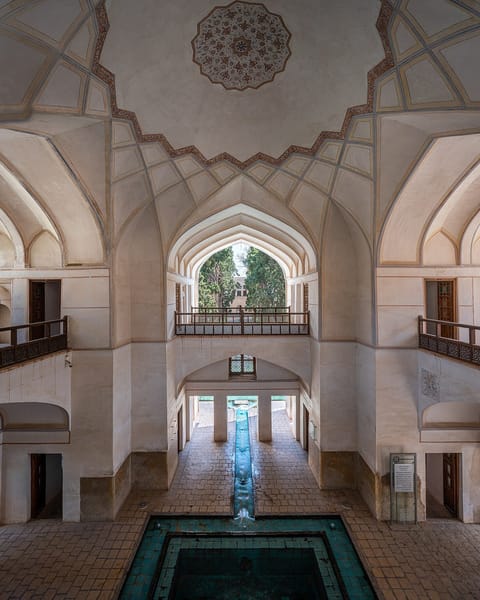
Image: Amirpashaei, Pavilion in the Fin Garden, Kashan, 2020. CC BY-SA 4.0, via Wikimedia Commons.. Image credits
